Comparisons
BPC-157 oral vs injection: what the bioavailability data actually shows
Animal studies show gastrointestinal effects after oral BPC-157 exposure, but they do not establish how much intact peptide reaches human circulation. The available pharmacokinetic work is in rats and dogs, and there is no controlled human trial comparing oral, sublingual, subcutaneous, and intramuscular routes.
Published by PeptideSchool Editorial Desk
The question, stated honestly
Marketing for oral BPC-157 capsules likes to imply that gastric-juice stability means the peptide survives digestion, gets into the bloodstream, and matches what an injection does. Part of that chain holds up. Part of it does not. Gastric stability is real and demonstrated. Systemic absorption in humans is not, and the two get blended together in a way that misleads anyone reading a product page. This article looks at what the published rat and stability data show, separate from what the capsule listings claim.
Search "BPC-157 oral" and the first page of results is packed with capsule products, many sitting next to a line claiming the pentadecapeptide "works orally because it was isolated from gastric juice." The implication is simple: swallow the capsule, the peptide survives the stomach, it absorbs into circulation, and it produces the same effect an injection would. That would be a genuinely remarkable finding, because getting peptides across the gut wall intact is one of the hardest problems in pharmacology.
The actual research sits somewhere between the marketing story and the reflexive dismissal that "peptides never work orally." BPC-157 does behave unusually in gastric juice, and rat studies have dosed it in drinking water with measurable effects on the gut. But behaving unusually in a stomach is not the same as being absorbed into the bloodstream, and a rat drinking-water study is a long way from an adult human swallowing a capsule with breakfast.
What BPC-157 is
BPC-157 is a synthetic 15-amino-acid peptide, sequence Gly-Glu-Pro-Pro-Pro-Gly-Lys-Pro-Ala-Asp-Asp-Ala-Gly-Leu-Val, with a molecular weight around 1419 daltons. The name stands for "body protection compound." It comes from a gastric protein the Sikiric group at the University of Zagreb isolated in the early 1990s, and BPC-157 was picked out as the smallest fragment of that protein still producing gastroprotective effects in their rat ulcer models.
Two features of the sequence matter for the oral question. It is heavy on proline, four of the fifteen residues, including a run of three prolines in a row. Proline's side chain loops back to its own backbone nitrogen, which locks down peptide bond geometry and makes proline-rich stretches naturally resistant to pepsin. The sequence also has no aromatic residues, no phenylalanine, tyrosine, or tryptophan, which are exactly the spots pepsin prefers to cut. Built mostly from proline, glycine, and small aliphatic residues, this is a poor substrate for stomach enzymes. That part is not in dispute. But it is not evidence of oral bioavailability either. A peptide can shrug off pepsin in a test tube and still never make it across the intestinal wall, because surviving the stomach and entering circulation are two separate biological hurdles.
Side note: BPC-157 is not naturally present in the body as a 15-mer
The claim that BPC-157 "was isolated from gastric juice" is true of the parent protein, not of the fragment sold in capsules. The synthetic 15-mer is a designed piece of that protein, not a free peptide ever shown to occur naturally in human tissue. That distinction matters when a listing implies that taking the capsule is just eating something your stomach already makes.
The gastric stability claim, examined
The claim you'll see repeated on nearly every product page selling oral BPC-157 traces back to review papers out of the Sikiric research group, which describe the peptide surviving in aspirated human gastric juice for roughly 24 hours without breaking down. That's a real finding, and it's worth taking seriously. But it answers one narrow question: does BPC-157 resist pepsin in the stomach. It does not tell you whether the peptide survives the trip through the small intestine, where pancreatic enzymes like trypsin, chymotrypsin, elastase, and a set of carboxypeptidases handle the bulk of protein breakdown, along with brush-border peptidases lining the intestinal wall. Gastric resistance and small-intestinal resistance are not the same property, and nothing in the published record measures the second one directly.
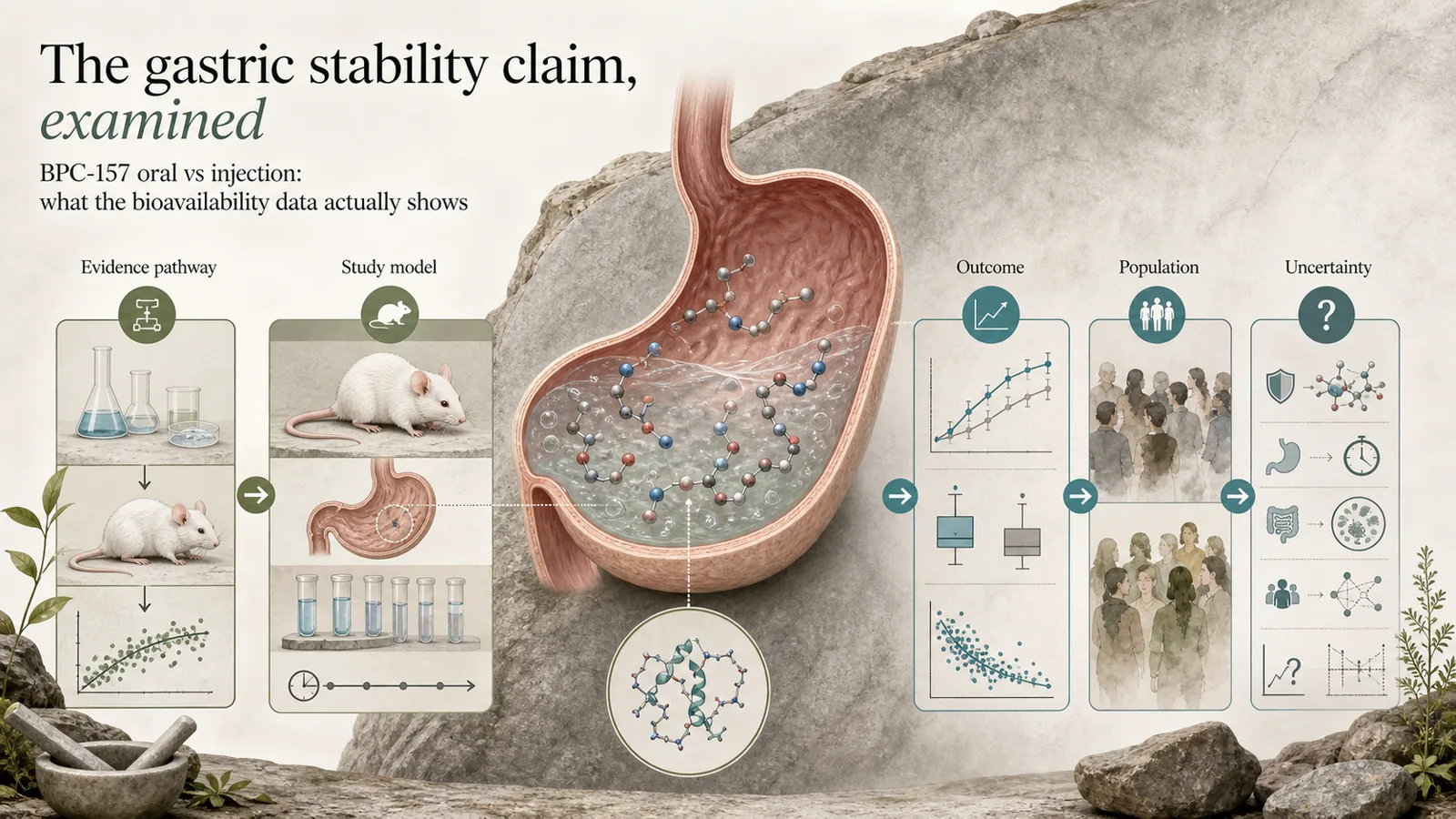
There's no clean study tracking how much intact BPC-157 makes it past the duodenum in dogs or humans. The rat studies that follow an oral dose don't measure plasma levels of the peptide either. They look at outcomes downstream: how much an ulcer shrank, how strong a surgical anastomosis held, how fast material moved through the gut. Those are useful measurements, but they're indirect. So when a marketing page jumps from "stable in gastric juice" to "high oral bioavailability," it's collapsing three distinct questions, stomach survival, intestinal survival, and systemic absorption, into one, when the research has only ever addressed the first.
Where the rat oral data is strongest
Where the evidence holds up is local gut healing in rats, and it holds up well. Across a long run of experiments, the Sikiric lab dosed BPC-157 in drinking water and found the oral arm matching intraperitoneal injection on outcome after outcome. In cysteamine-induced duodenal ulcers and cysteamine colitis, both oral and injected BPC-157 cut down ulcer size and colon damage scores compared to untreated controls. In rat models of intestinal and esophagogastric anastomosis, both routes increased how much force the healed tissue could withstand before rupturing and raised the pressure needed to cause a leak. Oral dosing also reduced damage from perforated cecum injuries, and after major small bowel resection it improved villus height, crypt depth, and weight recovery in a short bowel syndrome model tracked over four weeks. The same body of review literature reports BPC-157 healing fistulas running from the stomach and colon out through the skin in rats.
That's a consistent, repeated pattern for one specific application: acting locally on gut tissue, in rats, with continuous oral exposure through drinking water. This is the honest starting point for anyone defending oral BPC-157, not a claim about it flooding the bloodstream. A peptide sitting in the gut lumen doesn't need to cross into the portal vein intact to affect the epithelium it's already touching, which is the same reason drugs like rifaximin or oral vancomycin work locally in the gut without showing up in measurable plasma concentrations.
The local-action argument
Local action changes the shape of the bioavailability debate. A compound that acts directly on gut tissue it touches on its way through the digestive tract does not need to show up in blood plasma to be doing something. If you accept the evidence for effects on gut mucosa, then low systemic absorption is not necessarily a failure. It might be exactly how the peptide is supposed to work in that setting: staying in the lumen, acting on enterocytes and the small vessels feeding the gut wall, then getting broken down into amino acids like any other digested protein. That is reasonable pharmacology for a gut-specific use.
The catch is that almost nobody is buying BPC-157 capsules for gut health. The demand driving this market is tendon pain, joint pain, soft-tissue injuries, muscle strains, and general recovery. None of those targets sit inside the intestinal lumen. For the peptide to do anything meaningful there, it has to survive digestion intact, get absorbed into the bloodstream, make it past the liver on first pass, circulate at a high enough concentration, and reach tendon or muscle tissue where it can engage the receptor pathways believed to drive its regenerative effects. Every one of those steps remains unproven for an oral dose. No published pharmacokinetic study has shown it happening.
Animal pharmacokinetics: what we know
There is exactly one solid pharmacokinetic study on BPC-157, and it did not test oral dosing at all. Published in 2022 in Frontiers in Pharmacology, it tracked intravenous and intramuscular administration in rats and beagle dogs using labeled peptide and a validated lab assay. The numbers were not encouraging even for injection: intramuscular bioavailability landed around 14 to 19 percent in rats and 45 to 51 percent in dogs, with the peptide clearing from plasma in under 30 minutes and peak concentration hitting within 3 to 9 minutes. By the four-hour mark, no BPC-157 could be detected in blood at all. It gets chopped into smaller pieces and eventually into free amino acids that rejoin the body's normal amino acid supply.
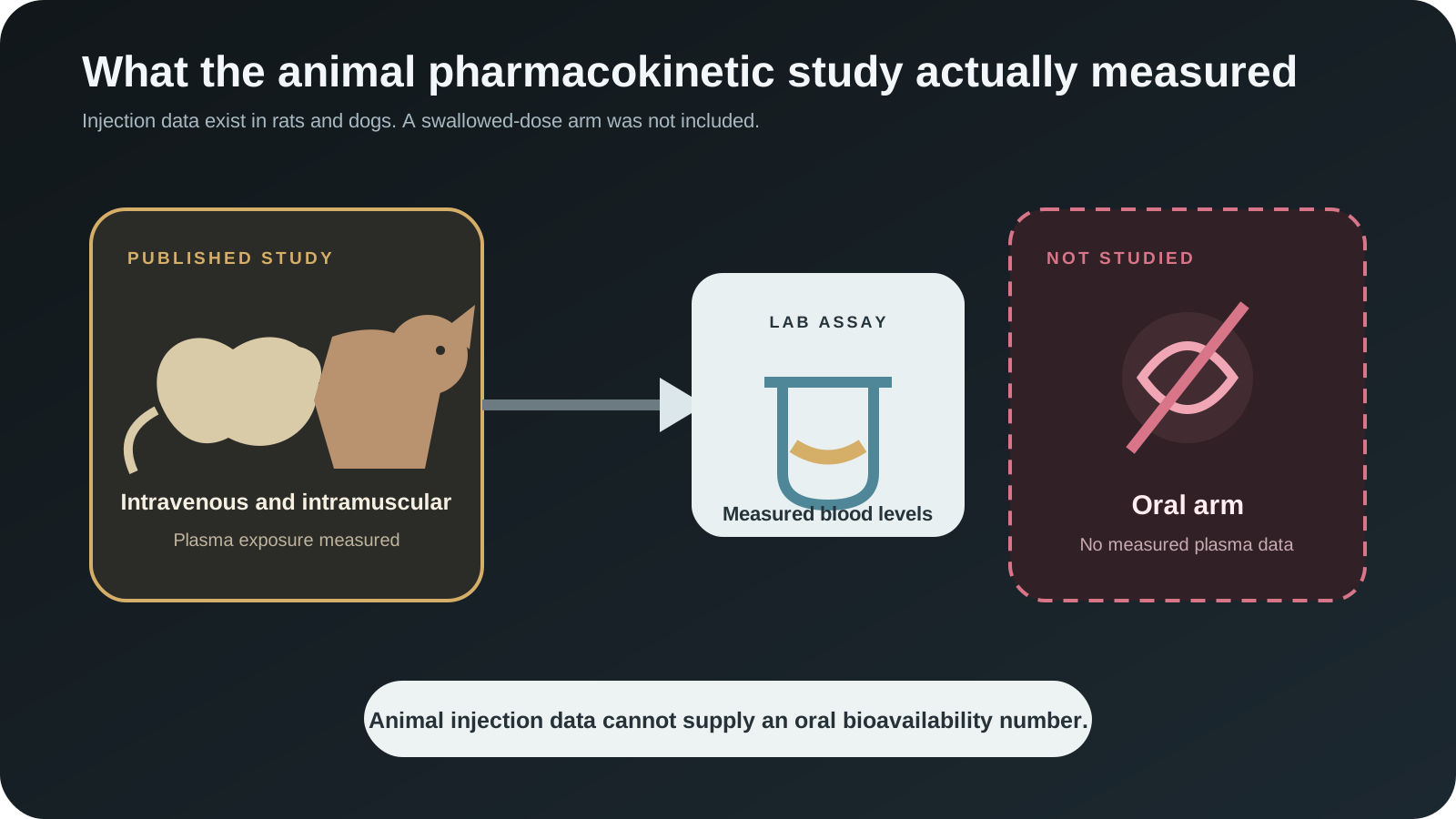
What that study did not include, and what no other study has included since, is an oral arm. Nobody has published plasma concentration data from a swallowed dose of BPC-157 in any species. A 2026 review of the compound's translational hurdles confirms this gap is still open. So when a product page quotes a specific oral bioavailability figure, something like 3 percent for the acetate form or up to 90 percent for the arginate salt, that number is coming from a manufacturer's technical sheet or a formulation patent, not from actual pharmacokinetic research.
The honest evidence ceiling
Here is the sentence that matters more than anything else in this article: there is no randomized controlled trial of BPC-157 in humans, by any route, for any indication, with full published primary efficacy data. Croatia's PL-14736 program for ulcerative colitis in the 2000s gets cited constantly in review papers from the Sikiric research group, often described as a completed Phase II trial with a favorable safety record, but the actual standalone clinical trial publication, the one that would let outside reviewers check endpoints, dropout numbers, and statistical methods, has never shown up in the peer-reviewed record. That gap is the real ceiling on what anyone can honestly claim about this peptide.
A 2025 systematic review in the HSS Journal looked specifically at BPC-157 in orthopaedic and sports medicine. Researchers screened 544 articles and found exactly one clinical study worth including. The other 35 papers that made the cut were all animal research. A separate 2026 review of BPC-157's development as a drug candidate landed on a similar number from a different angle, putting the entire human evidence base at fewer than 30 subjects spread across three uncontrolled pilot studies. Those three are a 16-patient knee pain series using injections, a 12-patient interstitial cystitis study using bladder injections, and a 2-subject intravenous tolerability pilot that pushed doses up to 20 mg. Not one of these three used the oral route. None of them comes close to establishing that swallowed BPC-157 does what capsule sellers say it does.
Evidence tier breakdown
The clearest way to think about BPC-157 oral is to separate the claim from the route and place each combination on an evidence ladder, the same ladder used to judge every compound on this site, running from regulatory approval down to plain anecdote.
At the top, Tier 1 regulatory approval, there is nothing. No agency has approved BPC-157 by any route for any condition. Tier 2, a published randomized controlled trial, is also empty by any route. Tier 3, open-label or pilot studies in humans, holds exactly the three small reports already described, and every one of them is parenteral, meaning none oral. Drop down to preclinical work and the picture splits. Oral dosing for local gut problems in rats, ulcers, colitis, surgical anastomosis, short bowel syndrome, is a strong and consistent body of research. Oral dosing aimed at systemic musculoskeletal or brain effects is weak, because the rat tendon, ligament, and brain studies behind those claims are almost entirely done by injection, not by mouth. Everything below that, the entire consumer capsule market built on borrowed injection data, sits at Tier 5, anecdote and marketing.
Route comparison: oral vs sublingual vs subcutaneous vs intramuscular
When you line up oral, sublingual, subcutaneous, and intramuscular BPC-157 side by side, only one of them has actual published animal pharmacokinetic numbers behind it. Intramuscular dosing in rats showed 14 to 19 percent bioavailability, and in dogs that number climbed to 45 to 51 percent, with a plasma half-life under 30 minutes. That is the only route with a formal PK characterization in the literature. Everything else is inference.
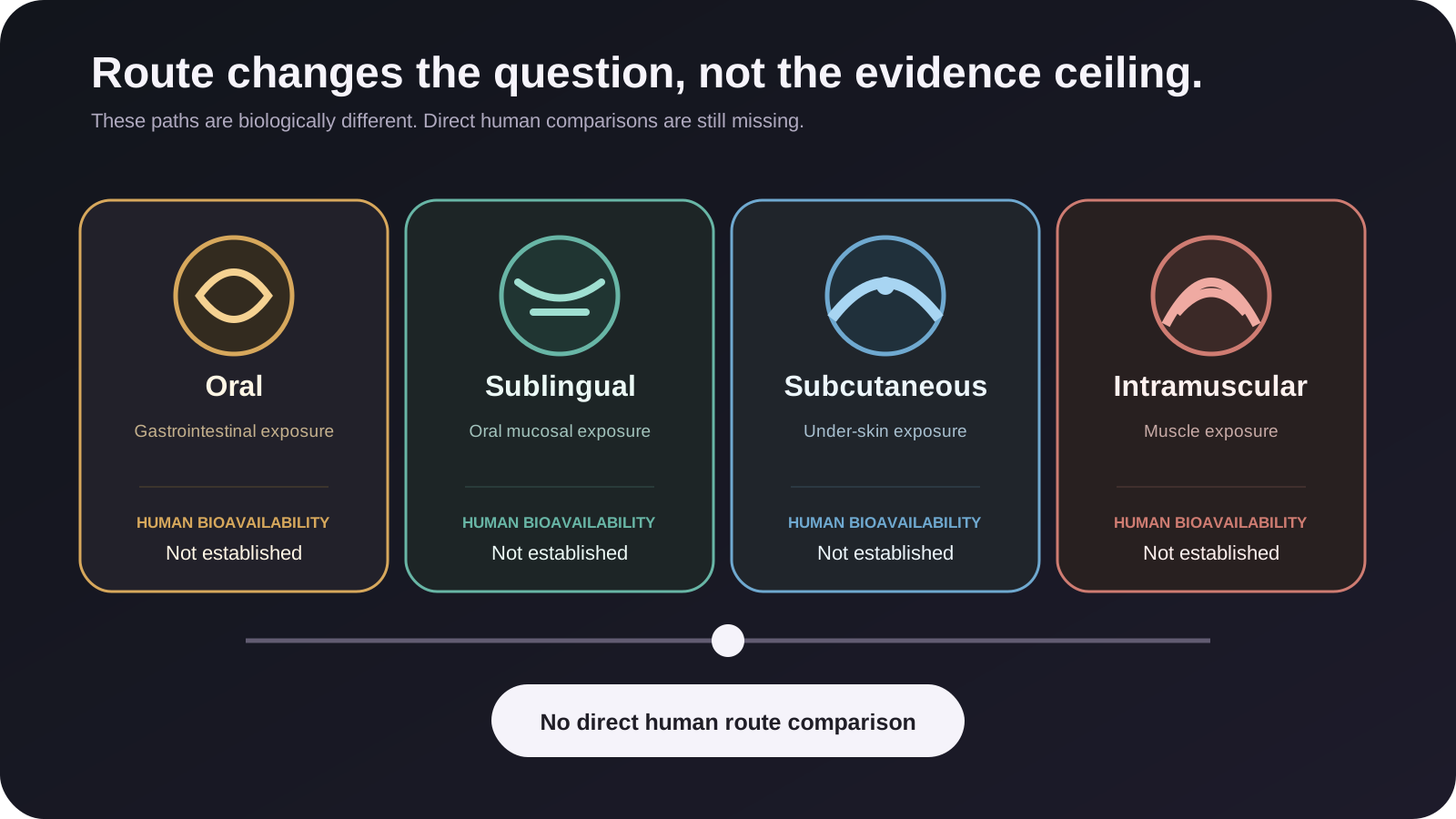
Oral capsules, whether they use the acetate or arginate salt form, have no published plasma data in any species after a swallowed dose. Marketing claims about arginate salt improving absorption trace back to manufacturer sheets, not to any peer-reviewed comparison against acetate. What support oral use does have comes from rat drinking-water studies looking at local gut mucosa effects, which is a different question than systemic bioavailability. Capsule potency also rarely gets verified by independent lab testing, so even the dose on the label is not always something you can trust.
Sublingual and buccal products fare no better. The idea that holding drops or a lozenge under the tongue bypasses stomach acid and liver metabolism sounds reasonable on paper, but BPC-157 is a 1419-dalton peptide, and molecules that size do not cross oral mucosa efficiently. No published data backs sublingual absorption claims; they rest on analogy rather than measurement.
Subcutaneous injection sits closest to the real preclinical literature, since most animal studies used intraperitoneal or subcutaneous dosing rather than intramuscular. Still, no direct subcutaneous bioavailability figure has been published on its own; the comparison leans on extrapolation from the intramuscular rat data. Subcutaneous also demands sterile technique and a supplier you can trust, since these products are sold strictly for research use.
The "stable gastric pentadecapeptide" framing vs consumer marketing
The academic side of this uses the phrase "stable gastric pentadecapeptide" for one narrow reason: pepsin resistance in aspirated gastric juice, nothing more. It shows up in paper titles and abstracts as a descriptive label, and it's usually followed a few paragraphs later by a methods section where the same rats are dosed intraperitoneally with a reconstituted solution. The phrase describes stability in a specific fluid under specific test conditions. It does not describe what happens when a person swallows a capsule.
Consumer marketing takes that narrow phrase and stretches it three ways, and each stretch drops a qualifier the original paper kept. "Stable in gastric juice" turns into "survives the entire GI tract," which is a bigger claim than the source experiment supports. "Isolated from gastric juice" turns into "naturally present in your stomach," which quietly swaps the parent BPC protein for the synthetic 15-mer peptide, two different things. And "oral dosing worked in a rat ulcer model" turns into "oral dosing equals injection for any indication," which breaks down on both the species and the indication.
None of this means oral BPC-157 is worthless or that the science is fake. It means there's a real gap between what the underlying paper measured and what the label on a bottle implies. That gap matters most at the register, since injection-grade evidence should not be used to justify an injection-grade price on a capsule.
Practical verdict: what this means if you are deciding
Oral BPC-157 has real preclinical backing for gut-targeted use, and it lines up with the historical human program's context. For tendon, ligament, or muscle targets, the oral route has zero pharmacokinetic support. For general systemic use, neither route has real evidence behind it, though injection at least has a measured absorption fraction to point to.
A few conclusions fall out of the literature pretty cleanly. If the target is the gut itself, reflux-like symptoms, post-surgical anastomosis healing, IBD-spectrum complaints, or NSAID-related gastric irritation, oral BPC-157 has the strongest case. The rat data is consistent, the local-action mechanism makes sense, and this is the only setting where the historical PL-14736 human trials took place.
If the target is a tendon, ligament, joint, or muscle, the oral route has no published pharmacokinetic support, and every rat tendon-healing study uses injected dosing. Choosing capsules for an Achilles or rotator-cuff issue means pairing a route with no measured systemic exposure to a tissue with no measured drug delivery at all. It also helps to remember that tendons and muscles heal on different timelines to begin with; our piece on why tendons lag muscles when training ramps up covers why that tissue is already slow to recover, peptide or not.
If the target is something general, longevity, background inflammation, or vague "mitochondrial support," neither route has published evidence behind it. The injected form at least carries a 14 to 51 percent absorption estimate. Oral has nothing comparable.
Whichever route you look at, the human evidence ceiling doesn't move. There's no RCT, no regulatory approval. WADA banned BPC-157 in 2022. The FDA had it on the Category 2 bulk list in 2023 over safety data gaps, then pulled it from that list on April 15, 2026, a procedural move toward possible compounding, not an approval. A Pharmacy Compounding Advisory Committee review in July 2026 will decide if it belongs on the 503A bulks list at all. None of that changes whether you swallow it, inject it, or hold it under your tongue. Our guide to the FDA category-2 reclassification has the full timeline.
If you're vetting a BPC-157 source, capsule, vial, or lozenge, the supplier-quality checklist is the same one you'd use for any research peptide. Our guide to vetting research peptides covers certificate-of-analysis review, HPLC purity, and identity testing. For injectable vials, the reconstitution walkthrough covers mixing math, and the storage calculator covers the stability window afterward.
What would change this answer
Three studies are missing, and filling those gaps would shift the whole picture. The first is a validated pharmacokinetic study, done in dogs or in people, that directly measures plasma BPC-157 after someone swallows a dose, checked against an injected version given to the same subjects. This is the single biggest hole in the entire evidence base right now. The second is a direct comparison between the acetate and arginate salt forms with real measured blood levels, not just theory about which salt should behave better in the gut. The third is a full, properly published writeup of the PL-14736 Phase II ulcerative colitis trial, including how many patients were enrolled, what the endpoints were, the dosing schedule, and tables showing adverse events. That paper would be the thing that finally moves BPC-157 out of preclinical-plus-anecdote territory and into early human evidence for at least one condition.
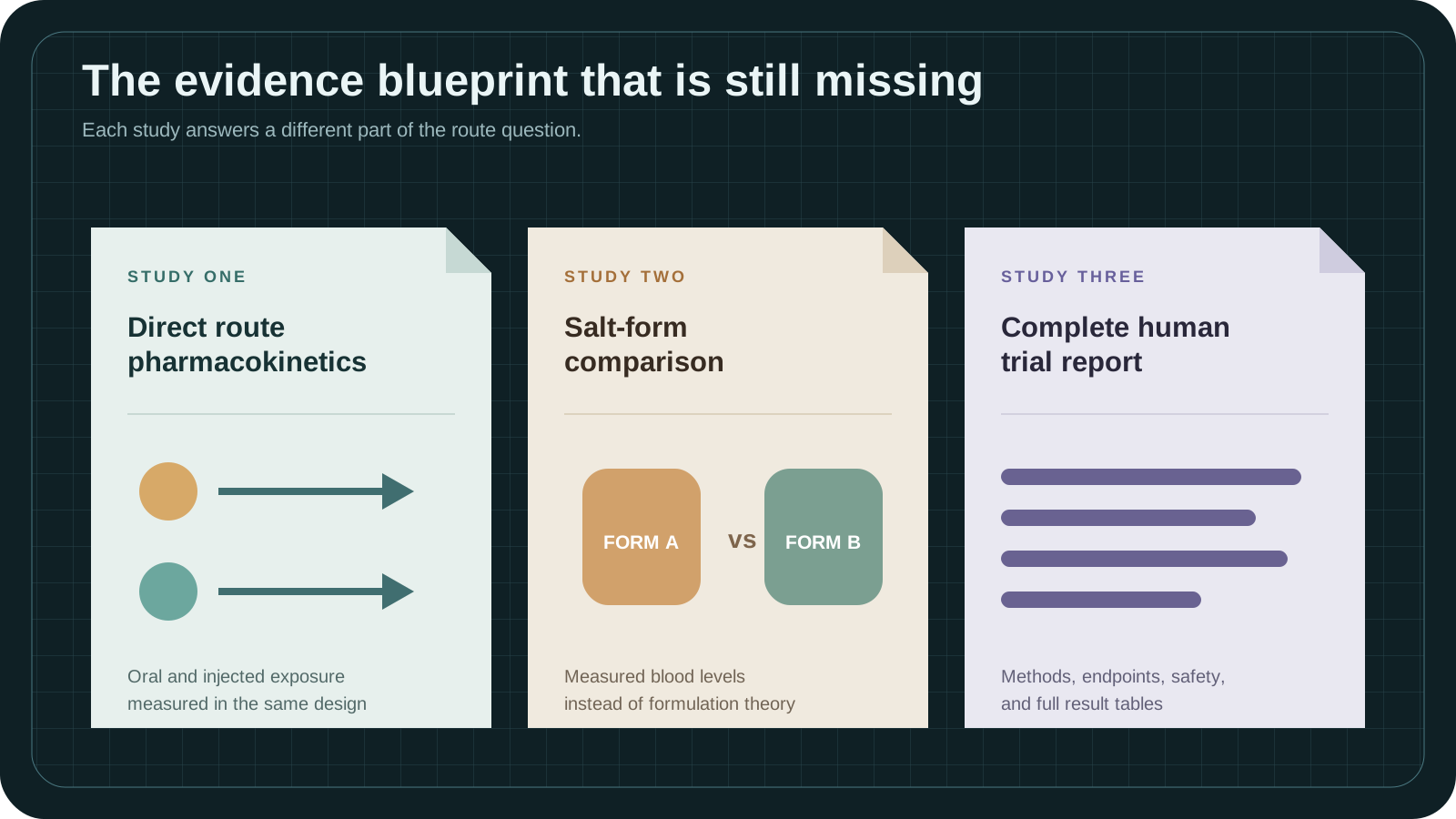
None of that exists yet. So the fair way to frame things is the same way this article started: there is solid preclinical evidence for local gut healing in rats, there is a reasonable explanation for why the peptide can survive stomach acid, but there is no measured proof that any of it reaches the bloodstream after being swallowed, and there is no human randomized trial for any delivery method. Everything past that point is guesswork, marketing language, or personal reports.
A few more oral BPC-157 questions
Does BPC-157 in a capsule reach my bloodstream?
Nobody has published a study measuring plasma BPC-157 after an oral dose, in any species. Any specific bioavailability percentage you see online is a company's estimate, not an actual measurement.
Is sublingual better than swallowing?
There is no study comparing the two directly. At 1419 daltons, BPC-157 is a large molecule for absorbing through the mouth lining, and sublingual claims mostly borrow reasoning from smaller peptides like vasopressin, which is itself only modestly absorbed that way.
Is the oral form safe?
Rats given oral BPC-157 for days to weeks show a clean short-term toxicity profile, but that says nothing about long-term human use, and no real human safety data exists. The 2022 WADA ban is about competitive fairness, not a safety warning.
Summary in one paragraph
The pepsin resistance data is real, and it makes a solid case for local action in gut tissue, matching what the rat drinking-water studies show for ulcers, colitis, and anastomosis healing. That is a genuinely different question from whether an oral capsule can match an injection for systemic exposure, and the current literature does not answer that second question at all. The published pharmacokinetic work covers intramuscular and intravenous dosing only, no oral pharmacokinetic study exists in any species, and no human randomized controlled trial exists for any route, oral or injected. So the oral versus injection debate is a legitimate one worth having, but it sits on top of a bigger gap: no route of BPC-157 has cleared human trial evidence yet, and that ceiling applies no matter which delivery method a person prefers.
Sources
- He L, Feng D, Guo H, et al. "Pharmacokinetics, distribution, metabolism, and excretion of body-protective compound 157, a potential drug for treating various wounds, in rats and dogs." Front Pharmacol. 2022.
- Sikiric P, Seiwerth S, Rucman R, et al. "Stable gastric pentadecapeptide BPC 157: novel therapy in gastrointestinal tract." Curr Pharm Des. 2011.
- Sikiric P, Seiwerth S, Brcic L, et al. "Stable gastric pentadecapeptide BPC 157 in trials for inflammatory bowel disease (PL-10, PLD-116, PL 14736, Pliva, Croatia). Full and distended stomach, and vascular response." Inflammopharmacology. 2006.
- Klicek R, Kolenc D, Suran J, et al. "Stable gastric pentadecapeptide BPC 157 heals cysteamine-colitis and colon-colon-anastomosis and counteracts cuprizone brain injuries and motor disability." J Physiol Pharmacol. 2013.
- Sever M, Klicek R, Radic B, et al. "Gastric pentadecapeptide BPC 157 and short bowel syndrome in rats." Dig Dis Sci. 2009.
- Vuksic T, Zoricic I, Brcic L, et al. "Stable gastric pentadecapeptide BPC 157 in trials for inflammatory bowel disease (PL-10, PLD-116, PL14736, Pliva, Croatia) heals ileoileal anastomosis in the rat." Surg Today. 2007.
- Djakovic Z, Djakovic I, Cesarec V, et al. "Esophagogastric anastomosis in rats: improved healing by BPC 157 and L-arginine, aggravated by L-NAME." World J Gastroenterol. 2016.
- Drmic D, Samara M, Vidovic T, et al. "Counteraction of perforated cecum lesions in rats: effects of pentadecapeptide BPC 157, L-NAME and L-arginine." World J Gastroenterol. 2018.
- Hsieh MJ, Liu HT, Wang CN, et al. "Therapeutic potential of pro-angiogenic BPC157 is associated with VEGFR2 activation and up-regulation." J Mol Med (Berl). 2017. PMID 27847966
- Sikiric P, Hahm KB, Blagaic AB, et al. "Stable Gastric Pentadecapeptide BPC 157, Robert's Stomach Cytoprotection/Adaptive Cytoprotection/Organoprotection, and Selye's Stress Coping Response: Progress, Achievements, and the Future." Gut Liver. 2020. PMID 31158953
- Lee E, Padgett B. "Intra-articular injection of BPC-157 for multiple types of knee pain." Altern Ther Health Med. 2021. PMID 34324435
- Lee E, Walker C, Ayadi B. "Effect of BPC-157 on symptoms in patients with interstitial cystitis: a pilot study." Altern Ther Health Med. 2024. PMID 39325560
- Lee E, Burgess K. "Safety of intravenous infusion of BPC157 in humans: a pilot study." Altern Ther Health Med. 2025. PMID 40131143
- Vasireddi N, Hahamyan H, Salata MJ, et al. "Emerging use of BPC-157 in orthopaedic sports medicine: a systematic review." HSS J. 2025. PMID 40756949 DOI
- Mateescu DM, Gavrilescu DM, Constantinescu FE, et al. "BPC-157 as an investigational peptide therapeutic: biopharmaceutical challenges, formulation strategies, and translational development barriers." Pharmaceutics. 2026. PMID 42198317 DOI
Educational content only. Not medical advice.