Research Updates
SLU-PP-332: What the Mouse Studies Actually Show
What SLU-PP-332 is, what two mouse studies reported, and why the phrase exercise mimetic does not establish human use.
Published by PeptideSchool Editorial Desk

First, this is not a peptide
SLU-PP-332 is a synthetic small molecule. It is often grouped with peptides online, but that label is inaccurate. Peptides are chains of amino acids. SLU-PP-332 was designed to activate a family of nuclear receptors called estrogen-related receptors, or ERRs.
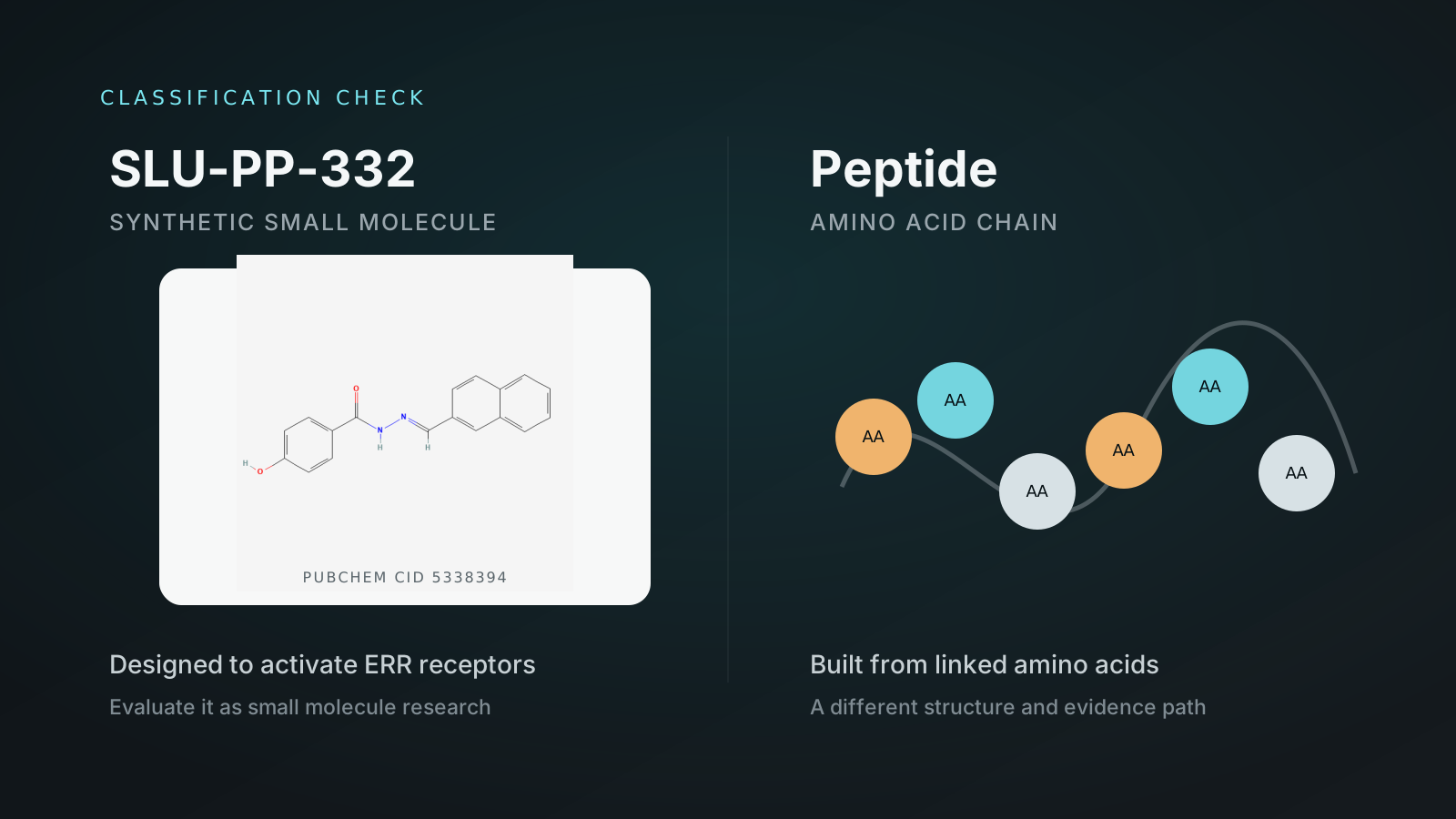
The name can also cause confusion. ERRs are not the same as the conventional estrogen receptors people usually mean when they talk about estrogen signaling. In this research, ERR alpha, beta, and gamma matter because they help regulate programs tied to energy use and oxidative metabolism.
Getting the category right is not a technical detail. It tells you what kind of evidence to look for and prevents a small molecule studied in laboratory models from being discussed as if it were an established peptide protocol.
What the first experiment tested
The first primary paper described SLU-PP-332 as an agonist of ERR alpha, beta, and gamma, with its strongest reported activity at ERR alpha. The researchers first used receptor assays and skeletal muscle cells to study target activity, mitochondrial function, and cellular respiration.
They then used SLU-PP-332 as a research tool in mice. The paper reported changes in oxidative muscle fibers, an ERR alpha dependent gene program associated with an acute aerobic exercise response, and greater exercise endurance in the tested animals.
Those findings answer a narrow preclinical question: can chemical activation of this receptor program reproduce selected molecular and performance signals in mice? They do not tell us how the compound behaves in a person. The paper also disclosed that three authors held stock in a company focused on ERR based therapeutics. That disclosure does not erase the results, but it belongs in a careful reading of the study.
What the obesity models added
A second primary paper tested SLU-PP-332 in several mouse models over short research windows. The program included mice eating a normal diet, mice with diet-induced obesity, and ob/ob mice, which have a genetic disruption that produces a severe obesity model.
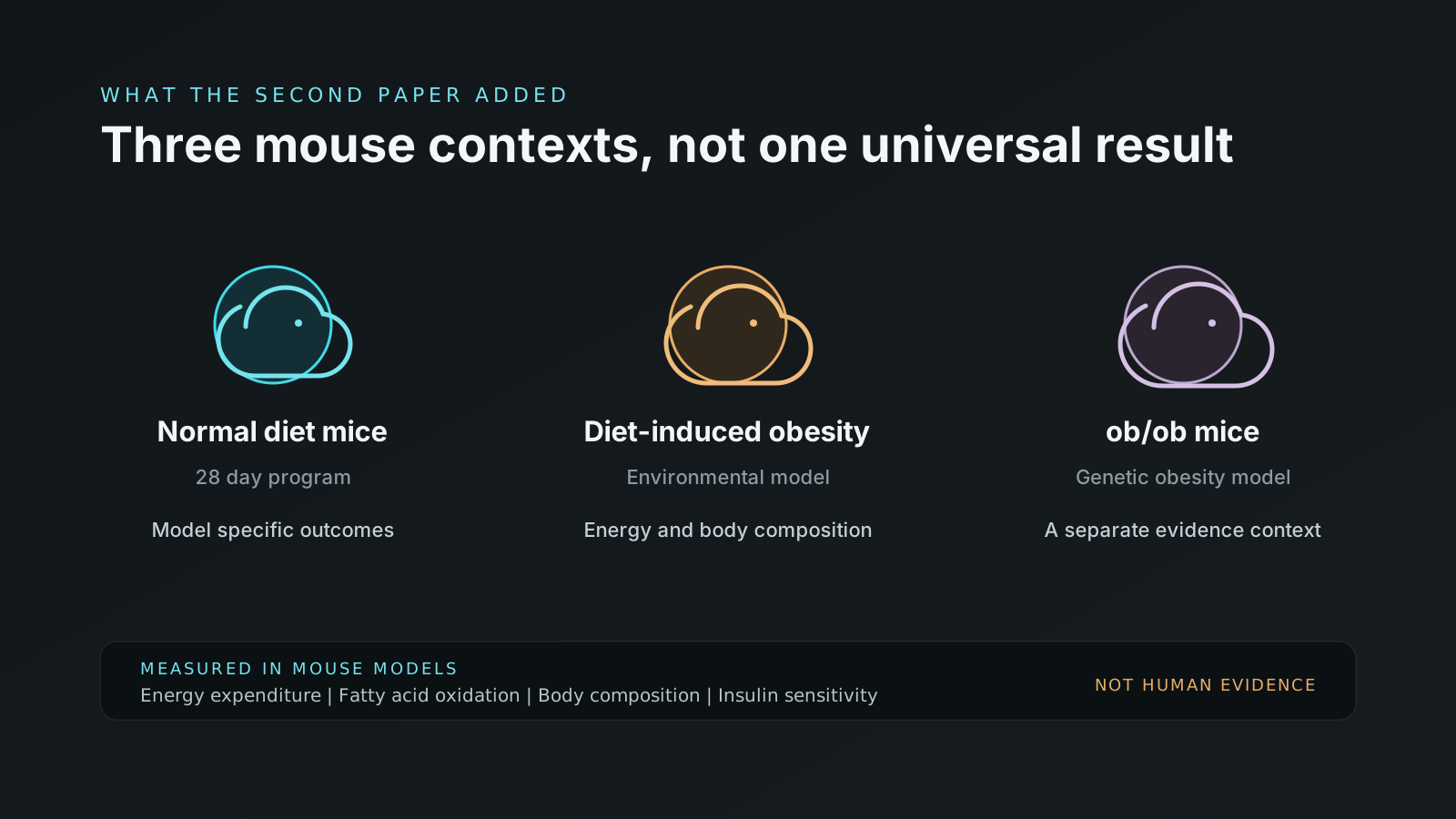
Across those experiments, the researchers measured energy expenditure, fatty acid oxidation, body composition, glucose related outcomes, tissue findings, and other metabolic markers. Some reported effects differed by model. For example, the paper stated that glucose metabolism did not improve in the normal-diet mice, while insulin sensitivity findings were reported in obesity models.
That distinction matters. A result in one mouse model should not be detached from the diet, genetics, duration, sample size, and measurement method that produced it. The paper supports further study of ERR biology. It does not establish a human weight loss result.
Why "exercise mimetic" is a narrow research label
The phrase "exercise mimetic" is memorable, but it is easy to overread. In these papers, it refers to selected molecular programs and experimental outcomes that overlap with parts of an exercise response.
Exercise is much broader. It involves the cardiovascular system, skeletal muscle, bones, balance, coordination, the nervous system, sleep, behavior, and repeated adaptation over time. Activating one receptor family cannot be assumed to reproduce that complete experience.
A more accurate reading is simple: SLU-PP-332 helped researchers test whether ERR activation could reproduce specific signals in cells and mice. It is not evidence that a compound can replace exercise in people.
What is still unknown in people
The two primary papers summarized here did not administer SLU-PP-332 to people. They therefore cannot establish human pharmacokinetics, a safe exposure range, target engagement in human tissue, common or uncommon adverse effects, or a meaningful clinical outcome.
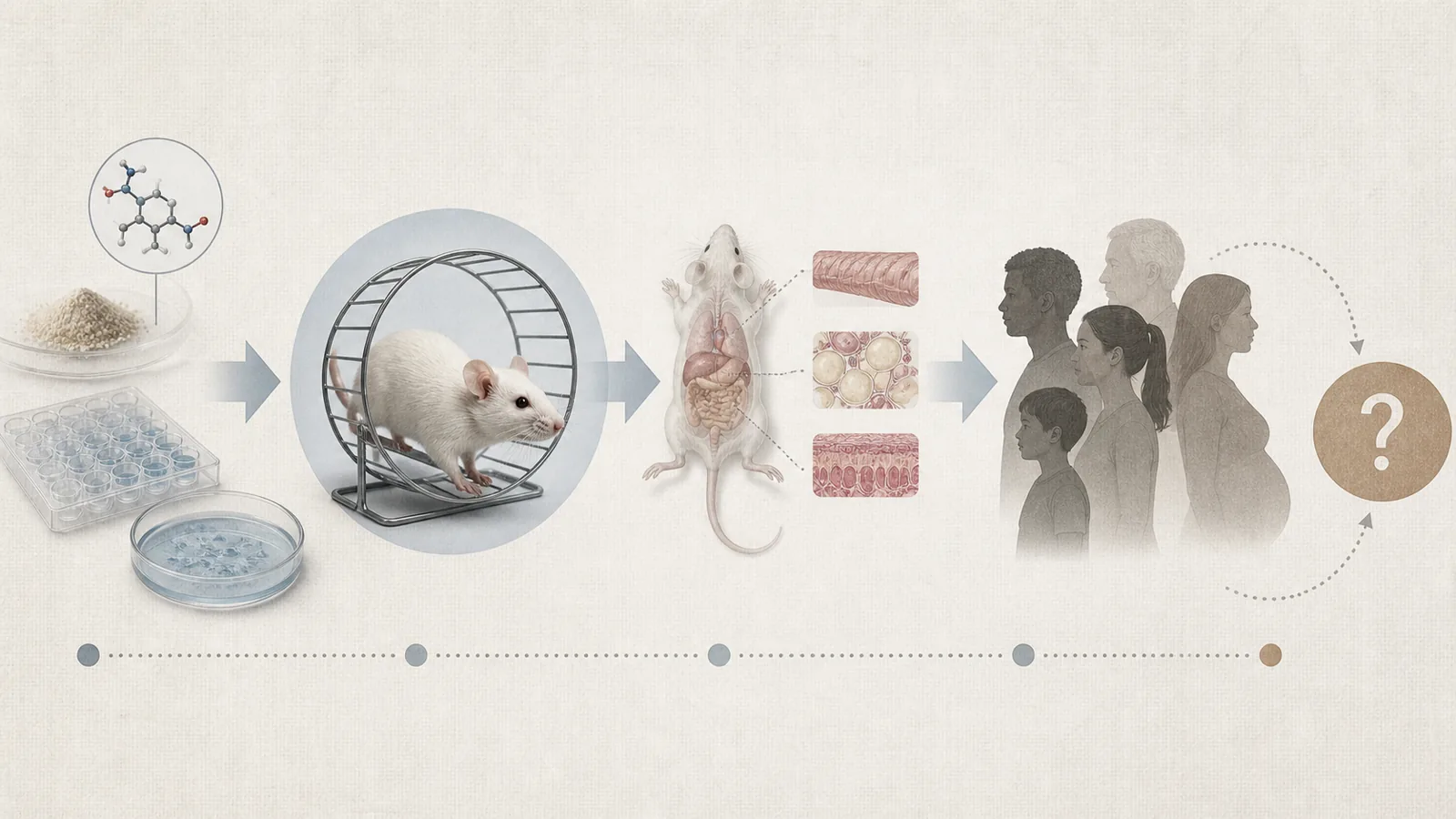
Those questions would require a staged human research program with validated manufacturing, careful exposure measurement, prespecified outcomes, safety monitoring, and independent replication. A promising mouse result is a reason to ask the next question. It is not the answer to the human question.
The PeptideSchool read
SLU-PP-332 is a useful research tool for understanding ERR biology. The strongest current lesson is about evidence boundaries: cell findings, normal-diet mice, obesity models, and human outcomes are four different levels of evidence.
Keep the model attached to every claim. That one habit makes the research easier to understand and much harder to exaggerate.
Sources
Educational content only. Not medical advice.