Research Updates
Ejaculation Research: What Oxytocin and Opioid Experiments Show
Rodent studies map neural control at different sites. They do not establish a peptide substitute for an SSRI in people.
Published by PeptideSchool Editorial Desk
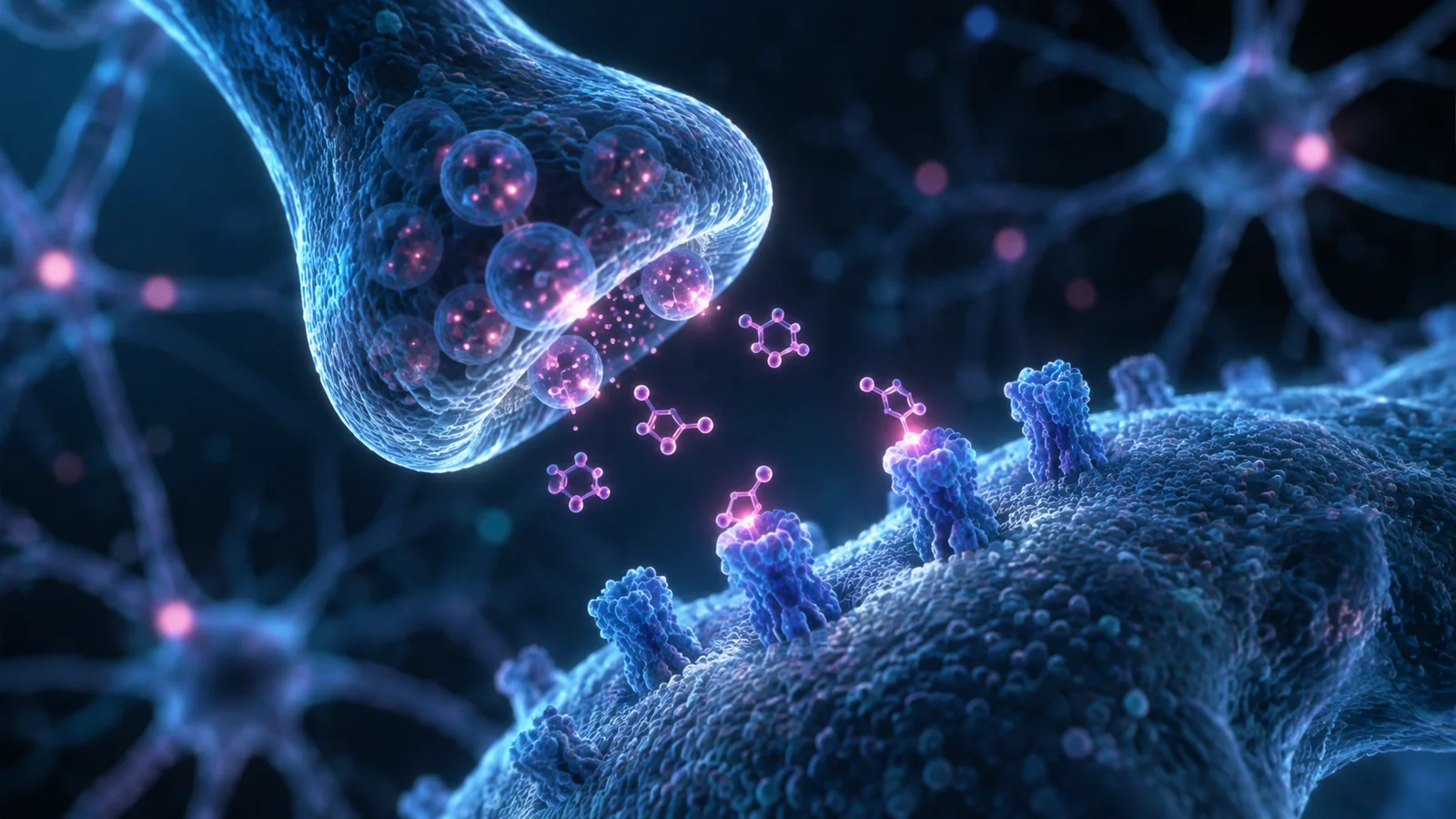
Peptide signaling participates in the neural control of ejaculation, but a receptor experiment in a rat is not a clinical comparison with an SSRI. The strongest lesson from the cited studies is how much the site of action matters.
Oxytocin receptors at different locations
A 2008 study used an oxytocin-receptor antagonist in anesthetized rats with a pharmacologically triggered sexual response. The researchers compared delivery to the brain, spinal cord, and circulation. Effects differed by location, helping identify which neural sites contributed to the observed response. Oxytocin experiment.
A later study investigated GSK557296, a non-peptide oxytocin-receptor antagonist, in a related rat model. Its effects also depended on the route and site. “Acts on a peptide receptor” therefore does not necessarily mean the tested drug is itself a peptide. GSK557296 study.
A separate opioid pathway
In another rat experiment, researchers manipulated mu-opioid receptors in the hypothalamic paraventricular nucleus. Changes in ejaculatory behavior were associated with changes in sympathetic nerve activity. Direct local administration helped investigate the circuit; it did not test a routine human formulation. Mu-opioid receptor study.
What a replacement claim would require
To establish a substitute for an SSRI, an appropriate human trial would need a defined clinical population, meaningful outcomes, adverse-event assessment, and a relevant comparator. It would also need a practical formulation and route of administration. None of the three experiments supplies that comparison.
The measurement itself deserves attention. Changes in an induced response in an anesthetized animal are not the same endpoint as a person's control, distress, or satisfaction. Moving between those endpoints without explanation overstates the research.
These papers provide a map of candidate pathways. They can help a reader understand why oxytocin and opioid signaling appear in sexual-function research. They cannot support replacing prescribed medication or choosing a peptide regimen. The scientifically useful next step is evidence connecting the mapped circuit to outcomes in people.
References
Oxytocin receptor sites in an anesthetized rat model
Sources
Educational content only. Not medical advice.