Research Updates
Retatrutide and Heart Rate: What Human and Rat Studies Can Tell Us
Retatrutide trials recorded a heart-rate signal. A separate tirzepatide rat experiment cannot establish why someone feels stimulated or has trouble sleeping.
Published by PeptideSchool Editorial Desk
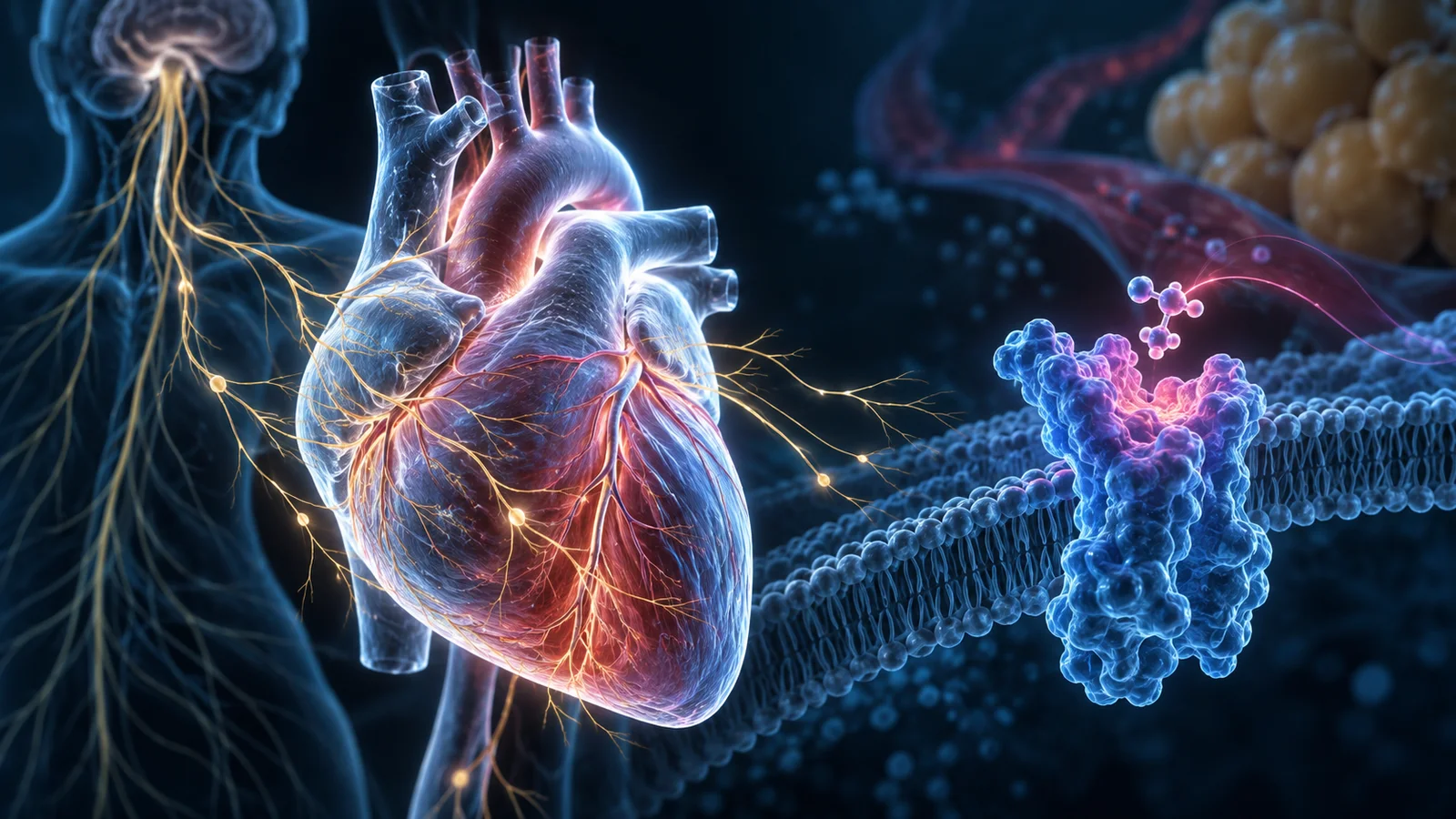
Retatrutide has a human heart-rate finding worth discussing on its own terms. In its 2023 phase 2 obesity trial, increases were dose-dependent, peaked at 24 weeks, and declined afterward. That is a monitored trial result. A subjective “adrenaline feeling” is a different observation. Read the retatrutide trial.
The study does not establish that a particular episode of insomnia, pounding heart, or stimulation reflects a specific sympathetic nervous-system mechanism.
The rat paper studied tirzepatide
A 2026 experiment used stroke-prone spontaneously hypertensive rats. Investigators administered tirzepatide, compared it with vehicle groups, and included a pair-fed control to help account for reduced food intake. They reported higher blood pressure and heart rate alongside markers of sympathetic activation in that model. Read the rat experiment.
This is valuable mechanistic work because the design looks beyond food intake alone. But the compound was tirzepatide, and the animals had a specific hypertensive phenotype. The findings are not a direct study of retatrutide users.
Three different claims need three different tests
A measured change in average heart rate can establish a trial-level safety signal. A mechanistic experiment can investigate how a response arises under controlled conditions. A personal symptom report can describe an experience and its timing.
Those categories can inform one another, but they should not be collapsed. A rat result does not diagnose a human symptom, and an unchanged glucose reading does not by itself prove that a symptom is unrelated to every metabolic or cardiovascular factor.
The useful comparison
When reading claims about this topic, compare the exact molecule, the population, the measurement, and the time window. Retatrutide is not tirzepatide; blood pressure is not heart rate; a biomarker of nervous-system activity is not a report of feeling energized.
The evidence supports keeping heart-rate findings visible in retatrutide research. It does not support explaining every stimulation-like report with one mechanism. For research tracking, the human trial is the direct reference for retatrutide; the rat study is a separate, model-specific clue about cardiovascular physiology.
Sources
Educational content only. Not medical advice.