Research Updates
GLP-1 Drugs and Hair Loss: A Recorded Signal With an Unsettled Mechanism
Hair loss appears in tirzepatide trial labeling and observational research. Those records do not prove a weight-independent mechanism or failed prevention strategy.
Published by PeptideSchool Editorial Desk
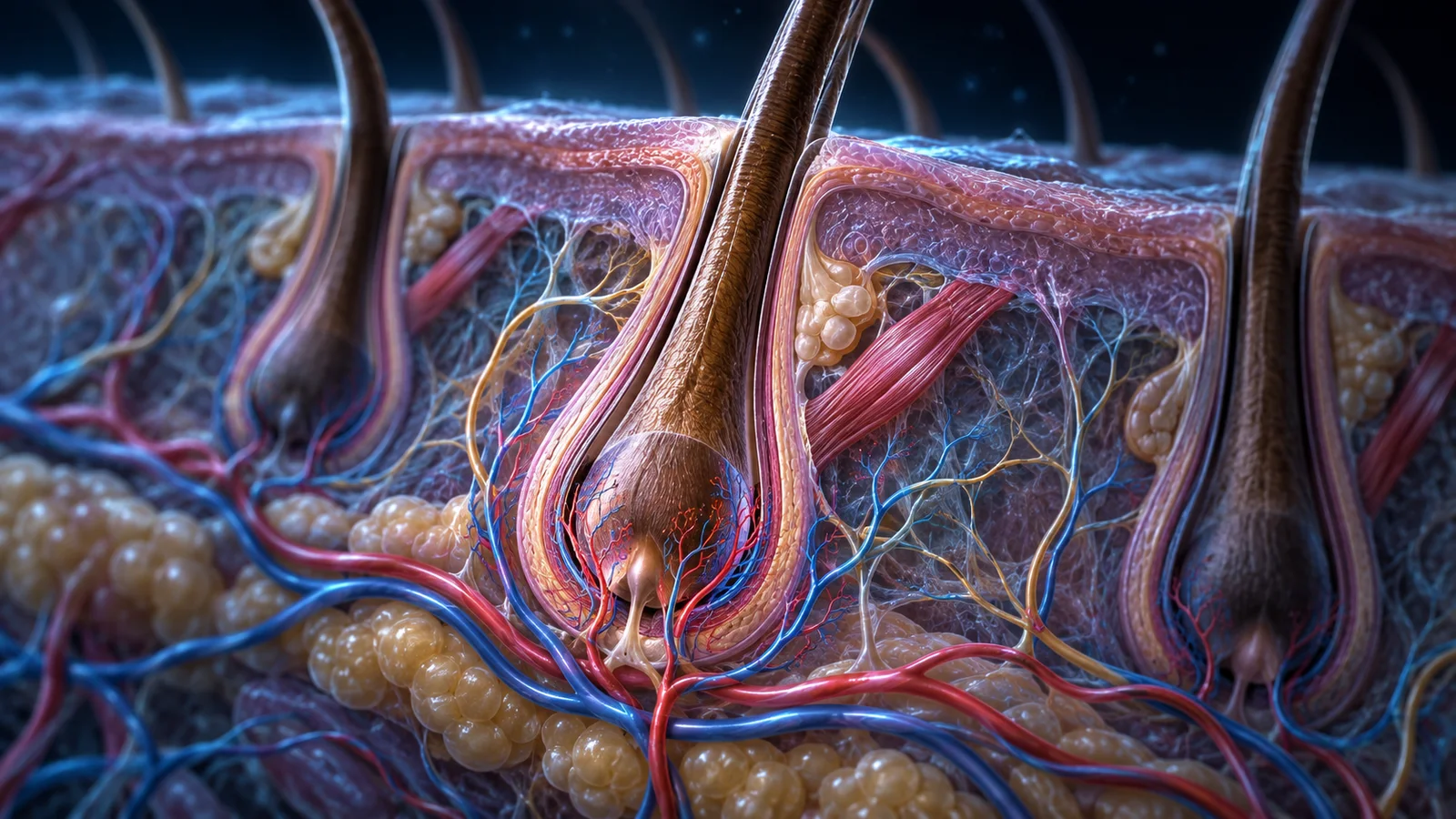
Hair loss during GLP-1-based therapy is a documented research question, not merely an online anecdote. The uncertainty concerns the cause, the type of hair loss, and who is most likely to experience it.
A June 2026 dermatology review brought together trial-label information, pharmacovigilance reports, and retrospective studies. It found a signal worth investigating while emphasizing that causality and mechanisms remained unresolved. Read the review.
What tirzepatide labeling records
The September 2025 Zepbound label describes hair-loss reactions as associated with weight reduction. In pooled studies, hair loss was reported more frequently in women than in men, and more frequently in the tirzepatide groups than in the corresponding placebo groups. No tirzepatide recipient discontinued study treatment because of hair loss in that pooled description. Read the FDA label, section 6.1.
That record establishes that the event was collected and described. It does not prove that weight change is the sole explanation for every case, or that the molecule directly damages hair follicles.
Why different study types give different answers
A pharmacovigilance report helps identify an event that someone suspected was associated with a drug. A retrospective study can compare recorded outcomes between groups. Neither automatically establishes that the drug caused the event in a particular person.
“Hair loss” can also be a broad reporting term rather than a confirmed diagnosis. Telogen effluvium, a shedding pattern involving a shift in the hair cycle, and other forms of alopecia should not be collapsed into one mechanism just because they appear in the same discussion.
The stronger online claim needs separate evidence
A claim that tirzepatide or retatrutide causes persistent shedding independently of weight change, despite preventive supplements, contains several distinct assertions. It would need evidence that measures weight change, establishes the hair-loss diagnosis, records the proposed prevention strategy, and follows the outcome over time.
The sources here do not establish that package of claims, and tirzepatide information cannot be transferred automatically to retatrutide. The useful research direction is to identify the event more precisely and test its causes. Treating all shedding as inevitable, permanent, or easily prevented would each go beyond the evidence reviewed here.
Sources
Educational content only. Not medical advice.