Wellness
Tea and Diuretics: Which Teas Increase Urine Output
A practical guide to how diuretic effects in tea work, covering true teas, caffeinated botanicals, and herbal infusions, what the human research shows for each, and how to match a tea to your goal without confusing mild fluid effects with medical treatment.
Published by PeptideSchool Editorial Desk
What counts as a diuretic
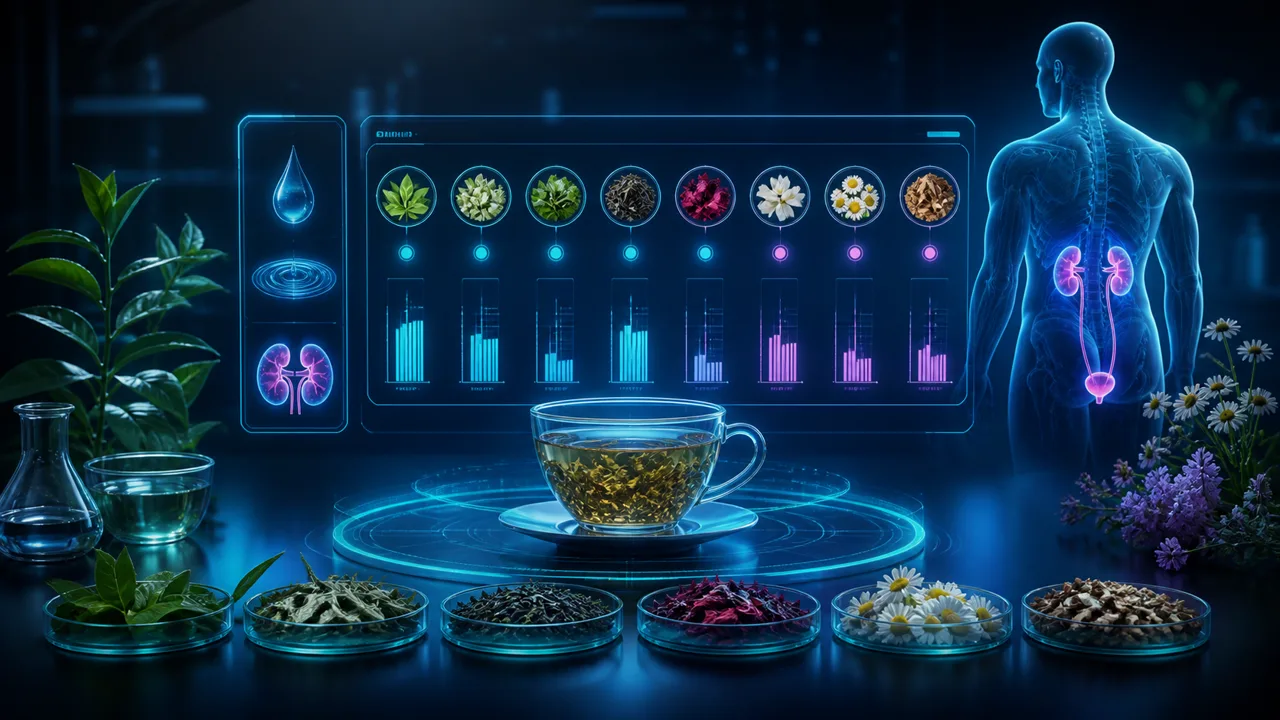
A diuretic is anything that increases how much urine you produce. In a medical setting that usually means a prescription drug used for fluid overload or blood pressure control. In food and drink, the effect is a lot milder and depends heavily on the person drinking it, especially how used to caffeine they already are.
For true teas, most of the diuretic conversation really comes down to caffeine. A bigger dose of caffeine at once tends to push more urine out, and that effect is strongest in people who barely touch caffeine to begin with. But a review of the caffeine and fluid balance research concluded that habitual moderate intake does not create a meaningful fluid deficit. In other words, if you drink tea or coffee regularly, your body adapts, and normal daily intake still counts toward your fluid total rather than draining it.
Controlled studies back this up. In one randomized trial, healthy men drinking four to six cups of black tea a day showed no meaningful difference from drinking the same volume of plain water, whether you looked at blood markers or 24 hour urine collection. A separate crossover study in regular coffee drinkers found the same pattern: no difference in total body water or hydration markers between coffee and water. So the idea that tea automatically dehydrates you does not hold up at normal drinking levels.
How this guide sorts teas by fit, not strength
Instead of handing out one verdict for every tea, this guide sorts options by what you are trying to do: your goal, your caffeine tolerance, when you plan to drink it, your flavor preference, and any safety flags that matter. It spans twenty teas across three families, so you can weigh diuretic intent against hydration and side effect fit instead of guessing.
One thing worth being clear about: a tea that ranks well for evening hydration is not a weaker diuretic than one that ranks well for fluid relief. It is simply a better match for what you said you wanted. And if a kidney, heart, or liver condition is in the picture, ranking stops being useful entirely. That is a conversation for a clinician, not a beverage choice.
The three tea families
Everything here falls into three buckets: true teas from the Camellia sinensis plant, caffeinated botanicals like yerba mate, and herbal infusions that are largely caffeine free.
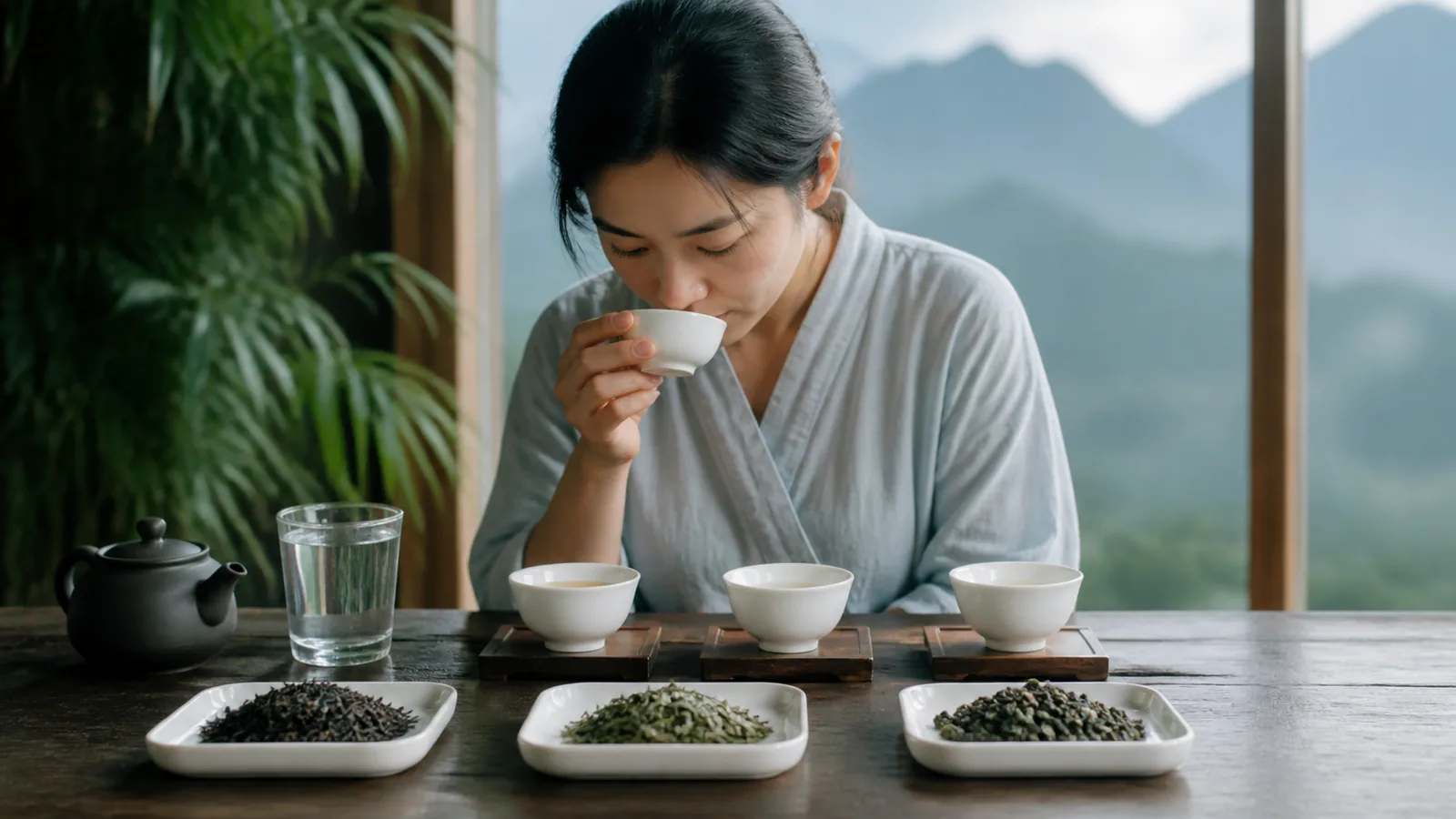
True teas all come from the same plant. What separates black, green, oolong, white, and pu-erh is how the leaf gets processed after picking, and that processing is what shifts the caffeine and polyphenol content between them. This version of the guide also folds in options that get left out of most lists, particularly dandelion and hibiscus, alongside nettle, parsley, horsetail, corn silk, chamomile, peppermint, rooibos, ginger, lemon balm, fennel, and roasted barley tea.
True teas: black, green, oolong, white, matcha, pu-erh.
Caffeinated botanicals: yerba mate.
Herbal infusions, mostly caffeine free: dandelion root, hibiscus, nettle leaf, parsley, horsetail, corn silk, peppermint, chamomile, rooibos, ginger, lemon balm, fennel, and roasted barley tea.
The Complete 20-Tea Map
| Tea or infusion | Caffeine | Diuretic evidence | Best fit | Main caution |
|---|---|---|---|---|
| Black tea | Moderate | Mostly caffeine-linked; hydration trials are reassuring | Daytime focus | Can disrupt sleep |
| Green tea | Low to moderate | Mostly caffeine-linked | Light daytime option | Caffeine sensitivity |
| Oolong | Moderate | Mostly caffeine-linked | Balanced flavor and focus | Late-day stimulation |
| White tea | Low to moderate | Mostly caffeine-linked | Gentler true-tea option | Strength varies by brew |
| Matcha | Moderate to high | Mostly caffeine-linked | Concentrated focus drink | Easy to consume a larger caffeine dose |
| Pu-erh | Moderate | Mostly caffeine-linked | Robust true-tea option | Caffeine and brew strength vary |
| Yerba mate | Moderate to high | Mostly caffeine-linked | Strong stimulation | Palpitations or sleep disruption in sensitive users |
| Dandelion leaf or root | None | Small human pilot for leaf extract | Short daytime fluid-balance test | Avoid stacking with diuretics without professional review |
| Hibiscus | None | Better evidence for blood pressure than for urine output | Tart caffeine-free drink | Medication and pregnancy review may matter |
| Nettle leaf | None | Traditional use; limited direct human diuretic data | Savory herbal option | Allergy and medication review |
| Parsley | None | Mostly traditional and preclinical evidence | Occasional culinary-style infusion | Avoid concentrated use in pregnancy |
| Horsetail | None | Limited clinical evidence | Not a first-line everyday tea | Kidney, electrolyte, and thiamine concerns |
| Corn silk | None | Mostly traditional and preclinical evidence | Mild caffeine-free option | Limited human data |
| Peppermint | None | Not a meaningful diuretic | Digestive comfort | Reflux can worsen in some people |
| Chamomile | None | Not a meaningful diuretic | Evening hydration | Ragweed-family allergy |
| Rooibos | None | Hydrates about as well as water in the cited trial | Evening hydration | Do not expect a fluid-removal effect |
| Ginger | None | Not a meaningful diuretic | Warm digestive drink | Concentrated forms may affect reflux or medications |
| Lemon balm | None | Not a meaningful diuretic | Calming evening option | Can feel sedating |
| Fennel | None | Limited direct diuretic evidence | Post-meal digestive comfort | Allergy and hormone-sensitive context |
| Roasted barley tea | None | Not a meaningful diuretic | Caffeine-free everyday hydration | Contains barley and is not gluten-free |
Only a few entries have direct human diuretic evidence, and even that evidence is modest. The map is intentionally honest about the difference between a caffeinated drink, a traditional diuretic herb, and an infusion that mainly helps you drink more fluid.
Matching a tea to your goal
Different priorities point in different directions, and the strength of the evidence behind each varies quite a bit.
If you want mild diuresis without stimulation, dandelion and similar herbals tend to fit best. The human evidence is thin but it exists. A pilot study of 17 volunteers found a significant jump in how often they urinated, and in the ratio of urine volume to fluid intake, in the hours after taking a dandelion leaf extract. The researchers called it promising, not proven, which is a fair way to think about it.
If blood pressure support plus hydration is the goal, hibiscus usually rises to the top. A comprehensive review of animal and human studies found that hibiscus tea and extracts meaningfully lowered systolic and diastolic blood pressure in adults with pre-hypertension to moderate hypertension. Diuretic activity was noted, but electrolyte levels stayed mostly unaffected.
If focus is what you are after, black tea, matcha, and yerba mate rank higher, simply because that is where the caffeine lives.
If you want evening hydration without a stimulant hit, chamomile, rooibos, lemon balm, and peppermint generally fit best. Rooibos gets marketed heavily as a rehydration drink, but in a crossover trial with wrestlers rehydrating after fluid loss, it performed no better than plain water. That is a useful reality check: for most infusions, matching water is the realistic ceiling, not beating it.
Where tea stops being useful
Tea can help manage symptoms, but it is not a substitute for clinician guided treatment of edema, hypertension, kidney disease, heart failure, or liver related fluid retention. If facial puffiness is your actual complaint, sodium intake, sleep, and alcohol usually explain more of it than any single tea choice ever will.
Persistent swelling, swelling on just one side, shortness of breath, chest pain, rapid weight gain, or swelling during pregnancy are not preference problems. These patterns can signal something that should not wait, and tea has no business being the response to them. This guide is built for everyday fit and preference, not for diagnosing anything.
Why caffeine tolerance changes everything
Caffeine can raise urine output in the short term, but how much depends on your tolerance, how much you drink, and your total fluid intake for the day. Someone who drinks caffeinated tea daily typically notices far less of an effect than someone who almost never touches caffeine. That is exactly why true teas and caffeine free herbals get scored separately here instead of lumped into one ranking.
The real question is not does this tea make me pee more. It is whether the tea fits your goal without creating a worse tradeoff somewhere else. Evening black tea might hurt your focus goal indirectly by wrecking your sleep. A strong dandelion brew could be a bad match if you are already on a diuretic medication. Hibiscus can be genuinely useful for blood pressure goals but still calls for caution if you are pregnant or on certain medications.
Running your own simple self-check
Test one tea at a time over several days. Keep serving size, brew strength, sodium intake, and time of day steady so you are only changing one variable. Track the outcome you care about, whether that is perceived bloating, ankle swelling, sleep quality, urgency, stomach comfort, or blood pressure if you already monitor it.
Stop the experiment if you notice dizziness, cramping, palpitations, unusual weakness, or persistent swelling. Tea feels like food, but that does not mean every extract or strongly brewed infusion is harmless for every person. The stronger the fluid shifting effect you are chasing, the more that safety boundary matters.
Why hydration still matters
A common mistake is drinking a diuretic tea while quietly cutting back on total fluid intake elsewhere. That combination tends to backfire with thirst, headaches, constipation, and even more perceived water retention rather than less. For most people, tea works best as part of a broader hydration pattern, not as a replacement for water or for actual medical treatment.
This is not just a cautious hedge. In a randomized crossover study, mildly dehydrated participants who replaced lost fluids with green tea retained roughly as much fluid over the following two hours as those who drank plain water, with no meaningful difference in urine output or in sodium and potassium excretion between the groups. A caffeinated tea can genuinely function as a rehydration drink rather than working against one.
Tea strength is not fixed, and that changes the answer
A cup of tea is not one consistent dose of anything. Leaf weight, steep time, water temperature, bag size, and whether you are drinking a single mug or a concentrated extract all shift what reaches your system. Processing differences between tea types also shift the starting chemistry before any of that brewing variability even comes into play. That is exactly why sweeping claims about any single tea category fall apart unless someone specifies how it was prepared.
Keep your first test moderate. Use a normal serving, do not stack several fluid shifting herbs at once, and skip pairing the experiment with aggressive sauna sessions, fasting, or sodium restriction. If less puffiness is the goal, the cleanest signal comes from changing one variable at a time and leaving the rest of your day ordinary.
For everyday use, rotating teas by purpose beats chasing whatever sounds strongest on a given day. A focus tea, an evening hydration tea, and an occasional fluid balance tea are three different tools. Matching the tea to the moment usually works better than treating every cup like a diuretic challenge, and keeping simple notes is what makes the difference visible over time.
Sources
- Caffeine ingestion and fluid balance: a review
- Black tea is not significantly different from water in the maintenance of normal hydration in human subjects
- No evidence of dehydration with moderate daily coffee intake
- Effect of fluid replacement with green tea on body fluid balance and renal responses under mild thermal hypohydration
- The diuretic effect in human subjects of an extract of Taraxacum officinale folium over a single day
- Hibiscus sabdariffa L. in the treatment of hypertension and hyperlipidemia: a comprehensive review
- Effects of rooibos tea, bottled water, and a carbohydrate beverage on blood and urinary measures of hydration after acute dehydration
- Processing, chemical signature and food industry applications of Camellia sinensis teas: an overview
Educational content only. Not medical advice.