Wellness
Methylene blue: from 1876 dye to biohack
Methylene blue is an approved treatment for acquired methemoglobinemia and an experimental compound in mitochondrial, cognitive, and skin-aging research. Human performance evidence is sparse, while MAO-A inhibition, serotonergic drug interactions, and G6PD-related hemolysis are established concerns.
Published by PeptideSchool Editorial Desk
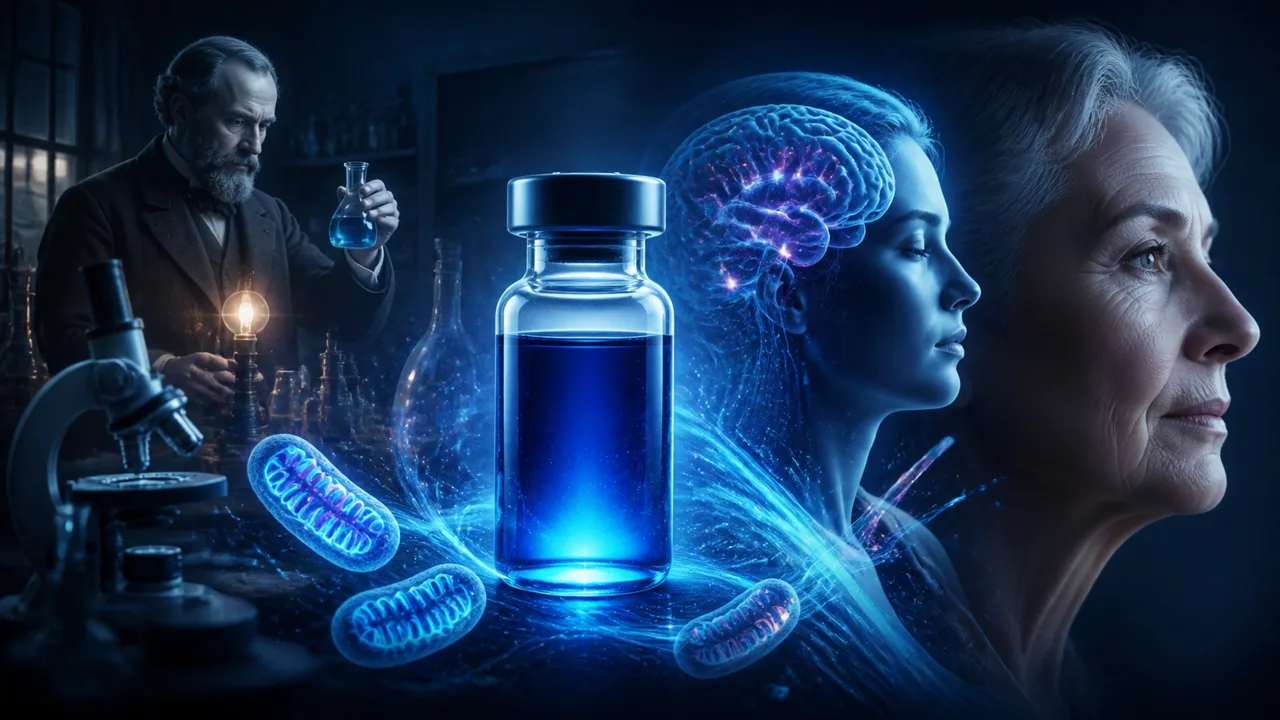
What methylene blue is
Methylene blue, known chemically as methylthioninium chloride, is a synthetic phenothiazine dye first made in 1876. Today its only FDA-approved use is treating methemoglobinemia, a condition in which hemoglobin cannot properly release oxygen to the body's tissues. What makes the compound interesting to researchers is that it crosses the blood-brain barrier, works as an electron carrier inside mitochondria, and inhibits MAO-A. These same properties are why it shows therapeutic promise and why it carries real drug interaction risks.
The compound's origin traces back to a dye factory rather than a lab bench aimed at medicine. German chemist Heinrich Caro, working as head of research at BASF, created the vivid blue substance in 1876 while searching for improved cotton dyes. Physicians soon noticed that the dye stained living nerve cells and malaria parasites under a microscope while leaving nearby tissue clear. Paul Ehrlich, later a Nobel laureate, tried it against malaria in 1891 and cured two patients, making it the first fully synthetic compound ever used as a medicine.
That background gives methylene blue roughly 130 years of clinical history, far more than most compounds circulating in biohacking circles. Its sole approved indication remains methemoglobinemia, sold under the injectable brand name Provayblue. Any use beyond that, including cognition, longevity, or skin health, remains off-label and investigational.
The mitochondrial mechanism: why biohackers care
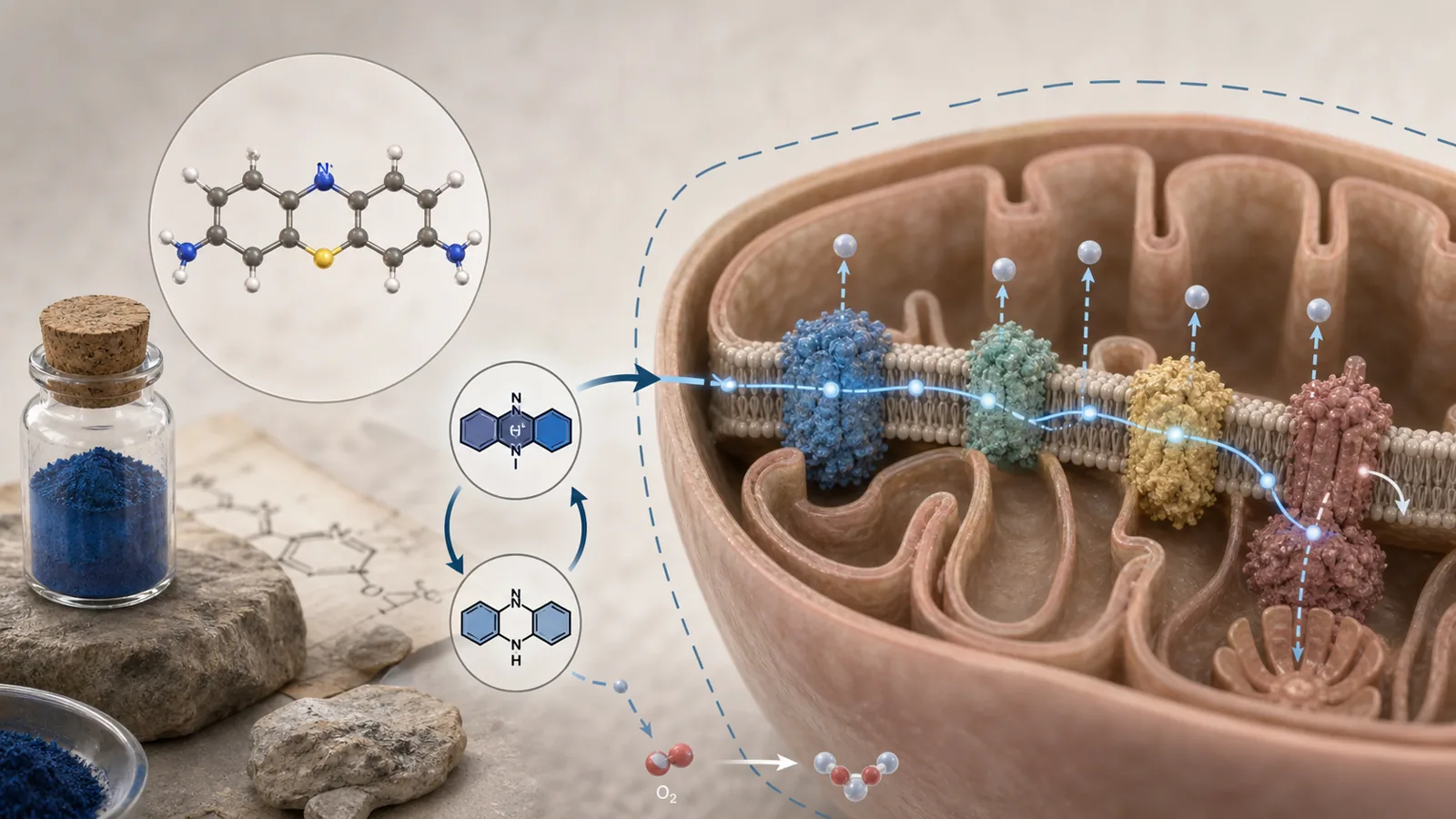
Methylene blue works as an alternative electron carrier inside the mitochondrial electron transport chain, and that single fact explains most of the excitement around it. In its oxidized form it grabs electrons from NADH, and once reduced into leucomethylene blue, it hands those electrons straight to cytochrome c, skipping over complexes I and III entirely. At low doses this rerouting can raise ATP output while cutting down on the reactive oxygen species that normally leak out along the way.
To see why this matters, picture how your cells make energy. Mitochondria run an assembly line called the electron transport chain, where electrons move through four protein complexes, numbered I through IV, and that movement drives the production of ATP, the fuel your cells run on. As people age, complex I and complex III start to malfunction more often, and when they do, electrons leak out and form reactive oxygen species, unstable molecules that go on to damage DNA, proteins, and cell membranes source 2.
Methylene blue stands out because it can act as a stand-in electron shuttle. In its oxidized, blue form it pulls electrons off NADH, and in its reduced leucomethylene blue form it delivers those electrons directly to cytochrome c, bypassing the leaky middle of the chain altogether. Tucker described this in 2017 as rerouting electrons directly from NADH to cytochrome c, which increases the activity of complex IV source 2. In lab studies using cell cultures, this bypass raised oxygen consumption by as much as 70 percent and pushed ATP output up by roughly 30 percent, at doses in the nanomolar to low micromolar range.
What most biohacking write-ups leave out is the dosing curve behind all of this. Methylene blue follows a hormetic dose-response, meaning small amounts help while larger amounts turn harmful. Past roughly 5 mg per kilogram, it stops donating electrons and starts stealing them instead, which raises ROS output and disrupts the same chain it was meant to support. The window between benefit and harm is narrow, and more is not better source 1.
Cognitive enhancement: what the human data shows
A single small human trial, randomized and controlled, with just 26 participants, found that low-dose methylene blue increased functional connectivity in memory-related brain regions on fMRI. Animal research on memory tells a much more consistent story, but three Phase 3 Alzheimer's trials using a methylene blue derivative called LMTM all failed to hit their primary endpoints, and no large trial has yet shown cognitive benefits in healthy people.
The nootropic reputation of methylene blue rests on two very different bodies of evidence: a solid animal literature and a thin human one. In rodents, Rojas 2012 found that low doses, roughly 0.5 to 4 mg/kg, reliably improved spatial memory tasks like the Morris water maze, object recognition, and fear extinction, a learning process tied to PTSD recovery source 3. The proposed mechanism loops back to mitochondria. Neurons burn enormous amounts of energy, and sharper mitochondrial efficiency in the brain can mean better synaptic firing and neurotransmitter release.
Human evidence is thinner. The best piece is a randomized, double-blind, placebo-controlled fMRI study by Rodriguez 2017, where 26 healthy volunteers took a single low oral dose of USP methylene blue or a placebo. The treated group showed increased resting-state connectivity in the insular cortex, tied to awareness and attention, and within the default mode network, active during memory retrieval and self-reflection source 4. It was well designed but small, measured brain activity rather than actual performance, and has never been replicated at scale.
The costliest test came from three Phase 3 Alzheimer's trials of LMTM, developed by TauRx Therapeutics, all of which missed their primary endpoints. A 2018 analysis by Wilcock hinted at a possible signal in a monotherapy subgroup, but the trial wasn't built to test that comparison, and the field has not treated it as real evidence source 5. The Alzheimer's Drug Discovery Foundation rated the overall cognitive evidence as low.
The honest read: animal memory data is real and repeatable, human data is early and small, and the biggest clinical test failed outright.
Skin aging and senescence: promising cells, missing trials
A 2017 cell culture study found that 100 nM methylene blue reduced senescence markers in old human skin fibroblasts and outperformed MitoQ and other mitochondrial antioxidants. A 3D skin model confirmed the compound was non-irritating even at high concentrations. That said, no controlled human trial has tested methylene blue for skin aging outcomes such as wrinkle depth, elasticity, or pigmentation.
One of the most cited papers in this space comes from Xiong and Cao at the University of Maryland, published in Scientific Reports in 2017. They grew human skin fibroblasts, the cells that produce collagen and maintain skin structure, from donors spanning ages 22 to 87, then treated the cells with 100 nM methylene blue for four weeks. Old fibroblast lines showed significant drops in two classic senescence markers: SA-beta-gal activity, a staining test that identifies cells that have stopped dividing, and p16 expression, a protein that builds up when cells become permanently growth-arrested. Methylene blue also raised fibroblast proliferation, lowered ROS levels, and improved mitochondrial membrane potential.
What made the study notable was a head-to-head comparison against other mitochondria-targeted antioxidants. Methylene blue beat out MitoQ, MitoTEMPO, and N-acetyl cysteine on several metrics. A 3D reconstructed human skin model, used as a stand-in for irritation testing, showed no irritation even at concentrations 500 times higher than the effective dose. A follow-up review from the same group in 2021 added more mechanistic support to the anti-aging argument.
Here is the gap no competitor article addresses: despite these promising cell-culture results, no controlled human clinical trial has tested methylene blue for any skin aging endpoint, whether wrinkle depth, elasticity, hydration, or collagen density. The fibroblast data is real, but jumping from a petri dish effect to a measurable cosmetic outcome in living people is a leap nobody has made yet. Calling methylene blue a proven anti-aging compound for skin is premature. Compare this to GHK-Cu, which already has small human trials showing actual collagen improvements.
The serotonin syndrome risk most guides understate
This is the section that can save lives, and it is the one most biohacking content glosses right over. Methylene blue is not just a mitochondrial electron shuttle. It is also a potent reversible inhibitor of monoamine oxidase A, the enzyme responsible for breaking down serotonin in the brain. Ramsay measured its inhibition constant at Ki equals 27 nM back in 2007, which puts it in the same league as prescription MAOI antidepressants like phenelzine.
What this means in practice is that combining methylene blue with anything that raises serotonin levels is dangerous. That includes SSRIs like fluoxetine, sertraline, or escitalopram, SNRIs like venlafaxine or duloxetine, tricyclic antidepressants, tramadol, meperidine, and triptans used for migraine. Serotonin syndrome, the condition caused by dangerously elevated serotonin, does not creep up slowly. It starts with agitation, tremor, and diarrhea, and it can progress within hours to hyperthermia, seizures, and death. This is not a theoretical risk pulled from a package insert. It has killed patients in surgical settings, where IV methylene blue was given for parathyroid identification to people who happened to already be on antidepressants and no one caught the interaction in time.
The FDA has placed a black box warning on methylene blue for exactly this reason, and a black box is the most serious safety label the agency issues. Given that roughly 13 percent of American adults are currently on an antidepressant, this is not a rare edge case. Anyone on a serotonergic medication of any kind should treat methylene blue as an absolute no-go unless a physician who genuinely understands the pharmacology has signed off on it. This is not a supplement interaction to guess your way through.
Who should not take methylene blue
Beyond the serotonin danger, methylene blue is off limits for anyone with G6PD deficiency, a genetic enzyme condition affecting an estimated 400 million people worldwide, most common in populations of African, Mediterranean, Middle Eastern, and Southeast Asian descent. In these individuals, methylene blue does not just fail to help. It actively triggers hemolytic anemia, a rapid breakdown of red blood cells that can turn life-threatening fast.
The mechanism ties back to the same redox chemistry that makes methylene blue work in the first place. Turning methylene blue into its active reduced form, leucomethylene blue, requires NADPH, a molecule the G6PD enzyme is responsible for producing. When G6PD activity is too low, the cell cannot make enough NADPH, leucomethylene blue never forms, and the oxidizing methylene blue overwhelms the red blood cell's antioxidant defenses. What follows is heavy oxidative damage to hemoglobin and the cell membrane itself.
A few other groups should steer clear as well: pregnant or breastfeeding women, since there is no reliable safety data; people with serious kidney impairment, because methylene blue clears through the kidneys; and anyone about to undergo pulse oximetry, since methylene blue absorbs light at the same wavelengths pulse oximeters use, which can produce falsely low oxygen readings and lead to bad clinical calls.
Pharmaceutical grade vs aquarium grade: a non-trivial distinction
Search "methylene blue" online and most of what comes up is aquarium treatment or lab reagent, not anything meant for a human body. The molecule itself, methylthioninium chloride, is identical across grades, but the purity is not, and that gap matters. Industrial and aquarium-grade methylene blue is made for staining slides or treating fish parasites, not for consumption, and it can carry trace contaminants like arsenic, lead, cadmium, aluminum, and mercury that build up with repeated use.
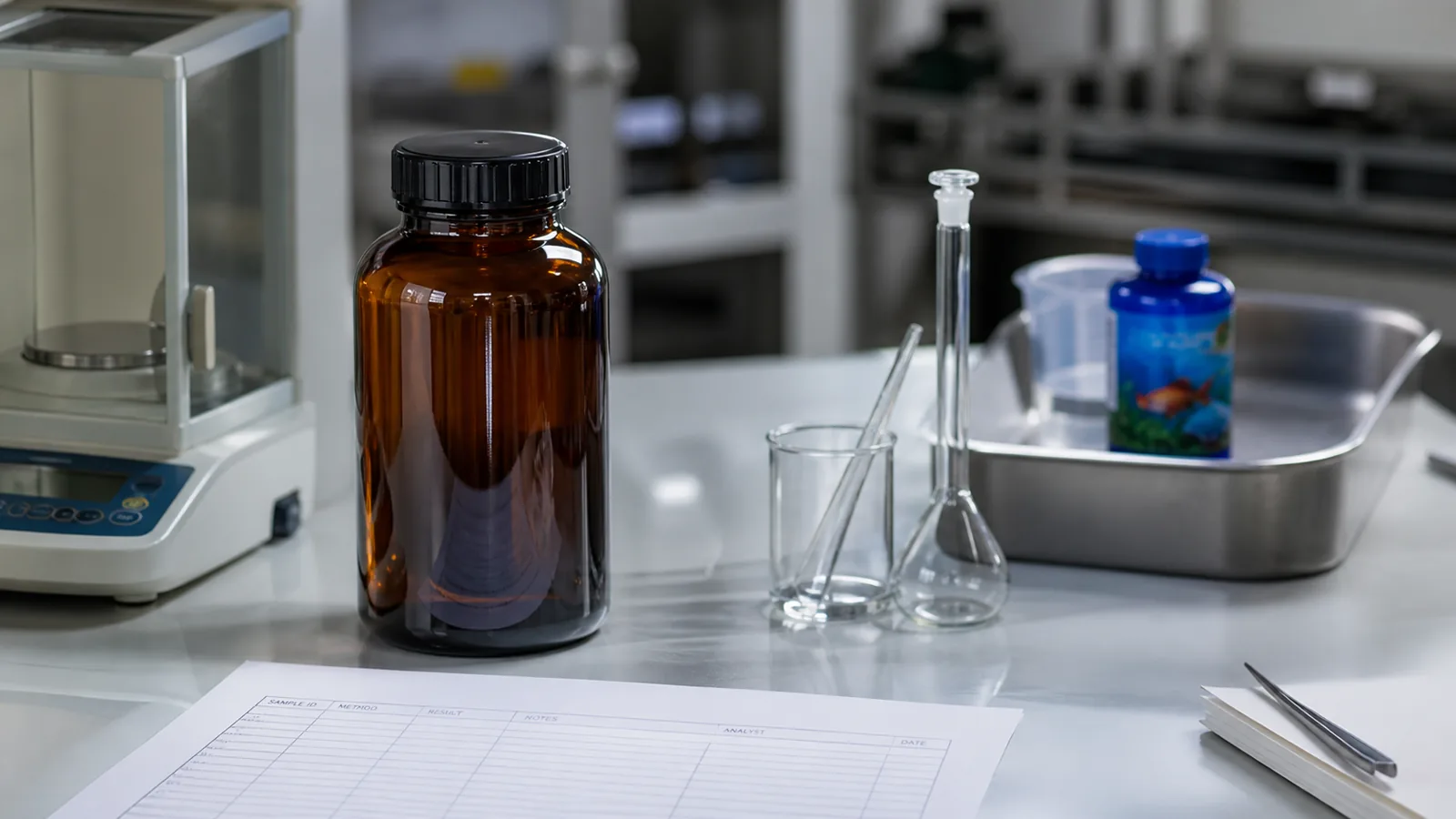
USP pharmaceutical-grade methylene blue meets United States Pharmacopeia standards for identity, strength, and purity. It costs more, is harder to find, and usually comes through compounding pharmacies rather than supplement shops. Anyone thinking about using methylene blue for any reason should confirm they are buying USP-grade product, ideally backed by a third-party certificate of analysis. The price gap between aquarium grade and USP grade is often just a few dollars a bottle, but the safety gap between them is enormous.
How methylene blue connects to the peptide landscape
Methylene blue is not a peptide. It is a small synthetic heterocyclic molecule weighing in at 319.85 daltons, far lighter than even the shortest peptides discussed on this site. Yet it keeps showing up in peptide conversations because its claimed benefits, mitochondrial support, neuroprotection, and anti-aging, overlap heavily with peptides biohackers already reach for.
MOTS-c, the mitochondrial-derived peptide studied in exercise metabolism research, also targets mitochondrial function and AMPK signaling. If mitochondrial optimization is your main goal, the human exercise metabolism evidence behind MOTS-c is stronger than what exists for methylene blue in healthy people. Semax and Selank, the Russian neuropeptides discussed in cognitive peptide research, both carry more human clinical trial data for cognitive and anxiolytic effects than methylene blue, including approved clinical use in Russia. GHK-Cu has small human trials backing skin outcomes where methylene blue offers only cell culture data, and Epithalon competes in the same longevity space through its own telomerase-activation mechanism.
What methylene blue brings that no peptide duplicates is a long safety history for its approved indication, low cost, strong oral bioavailability, and a mode of action, direct electron shuttling in mitochondria, that stands apart from anything peptides do. The tradeoff is its MAO-A inhibition, which turns dangerous when mixed with common medications. Someone off serotonergic drugs and without G6PD deficiency faces a genuinely different risk picture at low doses than someone on an SSRI, where methylene blue becomes an absolute no-go.
Methylene blue also surfaces in sleep quality discussions, tied to its neurological effects, though the evidence there runs thinner than its mitochondrial claims. The sleepmaxxing evidence guide walks through the full field of sleep compounds and shows where methylene blue lands next to better-studied options. Anyone comparing wakefulness tools should also look at the modafinil and peptide wakefulness agents piece, which sets each mechanism side by side. And if methylene blue is being weighed as part of a larger stack, the peptide craze explainer lays out the current regulatory and evidence gap clearly.
Sources
- Ostrovsky A, Afzal M. "Methylene Blue." StatPearls. 2026.
- Tucker D, Lu Y, Zhang Q. "From Mitochondrial Function to Neuroprotection-an Emerging Role for Methylene Blue." Mol Neurobiol. 2018.
- Rojas JC, Bruchey AK, Gonzalez-Lima F. "Neurometabolic mechanisms for memory enhancement and neuroprotection of methylene blue." Prog Neurobiol. 2012.
- Rodriguez P, Singh AP, Malloy KE, et al. "Methylene blue modulates functional connectivity in the human brain." Brain Imaging Behav. 2017.
- Wilcock GK, Gauthier S, Frisoni GB, et al. "Potential of Low Dose Leuco-Methylthioninium Bis(Hydromethanesulphonate) (LMTM) Monotherapy for Treatment of Mild Alzheimer's Disease: Cohort Analysis as Modified Primary Outcome in a Phase III Clinical Trial." J Alzheimers Dis. 2018.
- Xiong ZM, O'Donovan M, Sun L, et al. "Anti-Aging Potentials of Methylene Blue for Human Skin Longevity." Sci Rep. 2017.
- Xue H, Thaivalappil A, Cao K. "The Potentials of Methylene Blue as an Anti-Aging Drug." Cells. 2021.
- Ramsay RR, Dunford C, Gillman PK. "Methylene blue and serotonin toxicity: inhibition of monoamine oxidase A (MAO A) confirms a theoretical prediction." Br J Pharmacol. 2007.
- Methylene Blue Injection prescribing information
Educational content only. Not medical advice.