Wellness
Glycation and Aging: How AGEs Damage Skin and What Slows Them Down
Glycation is the slow chemical reaction between sugar and proteins like collagen. Left unchecked it forms advanced glycation end products that cross-link skin fibers, trigger inflammation, and accelerate visible aging. This guide breaks down the mechanism, the timeline, what speeds it up, and which diet changes and peptides have research behind them.
Published by PeptideSchool Editorial Desk
What glycation is
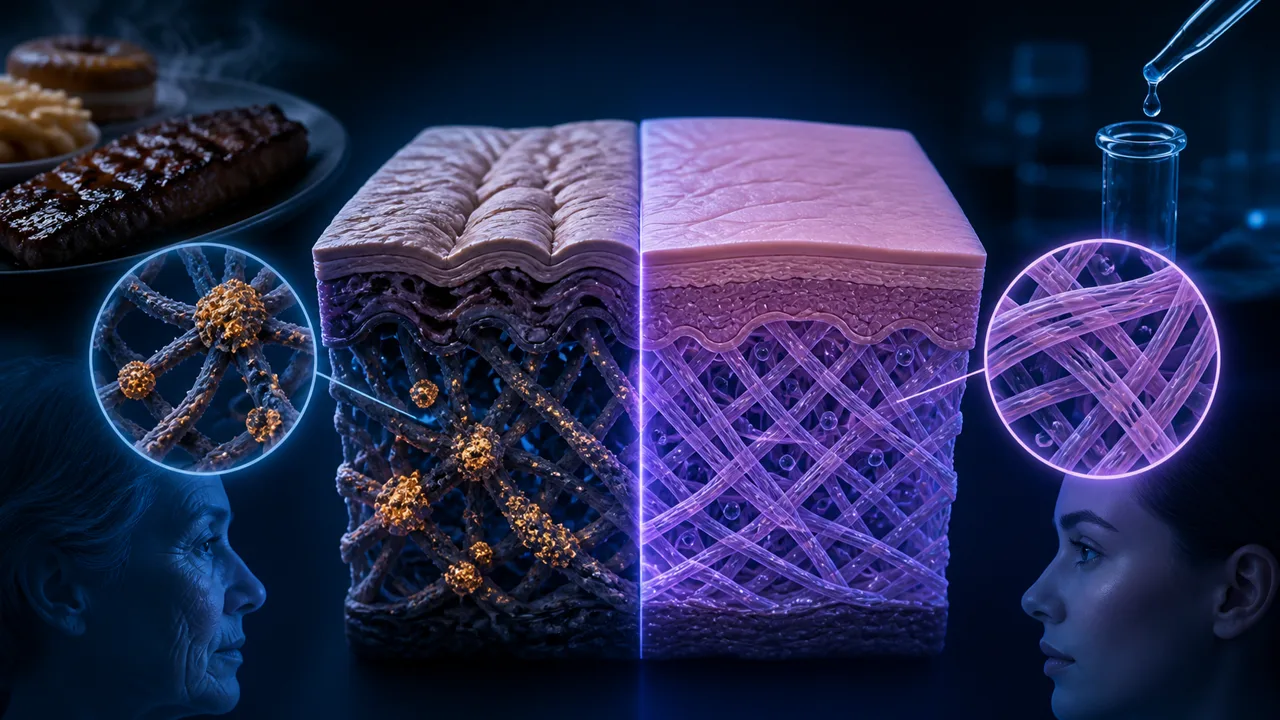
Glycation is a non-enzymatic reaction where a sugar molecule attaches itself to a protein, lipid, or nucleic acid. You have already seen a version of this chemistry in your own kitchen. Browning meat in a pan or toasting bread triggers the Maillard reaction, where sugars and amino acids combine under heat to create new colors and flavors.
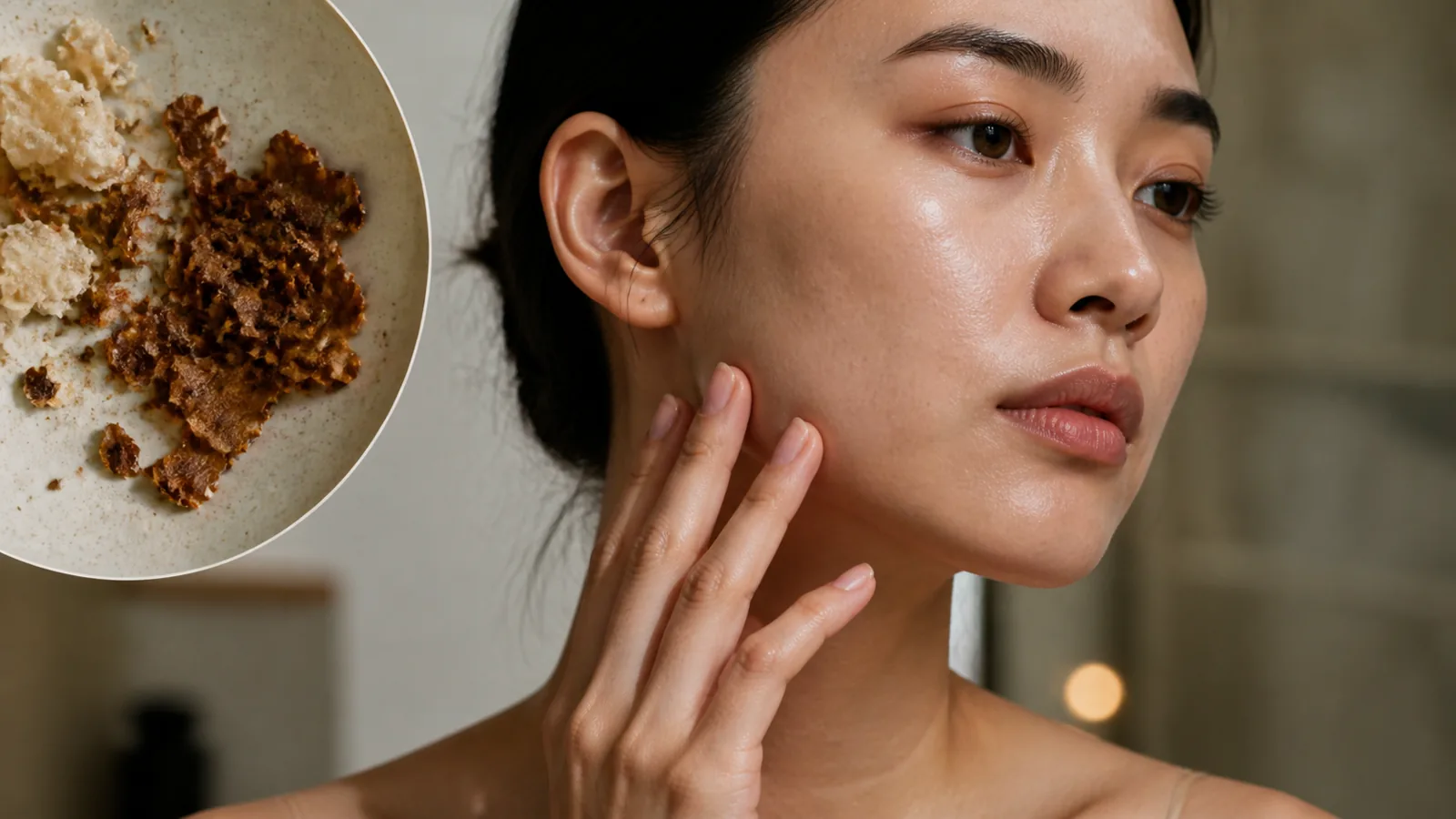
The same reaction happens inside your body, just far slower and at body temperature instead of a stovetop. Circulating glucose binds to the amino groups on long-lived proteins like collagen, elastin, and fibronectin. The first attachments are reversible, but given a few weeks those early products rearrange into permanent structures called advanced glycation end products, or AGEs.
Once an AGE cross-link locks two collagen fibers together, both fibers lose their ability to flex, slide past each other, and repair the way healthy collagen normally does. That damage does not undo itself. It sticks around until the collagen is naturally replaced, and in the dermis that replacement cycle takes roughly ten years.
How AGEs damage collagen and elastin
Skin damage from AGEs comes at you from two directions at once. First, AGEs form covalent cross-links between collagen and elastin fibers, turning a mesh that should stretch and bounce into something stiffer and less responsive. Second, AGEs bind to a cell surface receptor called RAGE, and that binding sets off inflammatory signaling, drives up oxidative stress, and switches on enzymes called matrix metalloproteinases, or MMPs, that go on to break down whatever collagen is still healthy.
That second mechanism is what makes glycation especially damaging: it locks existing collagen into a stiffened state while simultaneously speeding up the destruction of the collagen that has not been touched yet. A few specific processes drive this. Cross-linking makes fibers rigid and resistant to normal stretch and recovery. AGE-RAGE binding activates a signaling pathway called NF-kB, which fuels chronic low-grade inflammation from the inside. MMP activity thins the dermis over time by degrading both collagen and elastin. And AGEs generate reactive oxygen species, which in turn accelerate more glycation, so the whole thing feeds itself in a loop.
The collagen timeline: why prevention beats reversal
Glycated collagen starts showing up around age 20 and builds at roughly 3.7 percent per year. By age 80, glycated collagen levels run 30 to 50 percent higher than they were at 20. This is not a sudden shift. It is a slow, steady accumulation that compounds year after year.

Because dermal collagen turns over so slowly, roughly a ten year half-life for the major collagen types, the cross-links that form today do not get flushed out by a good week of eating clean or a weekend cleanse. There is no shortcut around the biology here. What this means practically is that reducing future AGE exposure matters far more than trying to reverse damage that has already set in. Every year you keep exposure lower is a year of damage that never gets locked into the structural scaffold of your skin.
What accelerates glycation
Glycation happens to everyone at some baseline rate, but five factors reliably push it faster. Chronic high blood sugar is the strongest driver by far, and the clearest human evidence connecting sugar to skin aging comes from diabetes research rather than from healthy people eating dessert now and then. A 2024 mouse study found that a high-sugar diet raised skin AGE levels, thinned the epidermis, and disrupted the extracellular matrix that supports collagen, a mechanism that lines up with what shows up in diabetic human skin, though that particular finding comes from animals rather than people.
High-heat dry cooking is next. Grilling, frying, and roasting generate dietary AGEs at rates far above steaming or boiling, and high-temperature-cooked animal protein is the single biggest dietary source of AGEs. UV radiation adds another layer by generating reactive oxygen species that promote AGE formation independent of blood sugar entirely, which is why photoaged skin measures higher in AGEs than sun-protected skin of the same age. Smoking contributes reactive glycation precursors directly from cigarette smoke plus additional oxidative stress, and smokers consistently show higher skin AGE levels. Finally, low intake of antioxidants like polyphenols, vitamin C, and vitamin E leaves the oxidation-glycation feedback loop with less resistance.
What glycation looks like on skin
Glycation-driven aging produces a specific set of visible changes, and while they often overlap with sun damage, they are not identical to it. AGEs themselves are fluorescent, brownish-yellow compounds, so as they build up in the dermis, skin can take on a dull, yellowish cast. A 2024 mouse-model study of high-sugar diets found this same pattern in skin tissue, a shift toward red, yellow, and darker coloring alongside a thinned, disorganized dermis.
Cross-linked collagen cannot flex and bounce back the way it used to, so wrinkles deepen. Glycated elastin fibers lose their snap, meaning skin that once bounced back quickly starts returning slower, and eventually not at all. MMP-driven collagen breakdown thins the dermal layer, which can make skin look more fragile and translucent. And the combined effect of structural damage plus reduced hydration capacity leaves the skin surface rougher to the touch.
Dietary strategies that reduce AGE exposure
You cannot eliminate glycation, but research points to several concrete moves that slow how fast AGEs form and build up. Cutting refined sugar and processed carbs is the highest-yield starting point, and sugar-sweetened beverages specifically deserve first attention since liquid sugar spikes blood glucose faster than solid food. Whole fruit is different because its fiber slows glucose absorption.

Cooking method matters more than most people expect. Steaming, boiling, stewing, and poaching produce far fewer dietary AGEs than grilling or deep-frying. If you are cooking with high heat anyway, marinating proteins in lemon juice or vinegar for an hour beforehand cuts AGE formation during cooking by more than half compared with unmarinated protein. Eating more antioxidant-rich foods such as berries, leafy greens, green tea, turmeric, and colorful vegetables supplies the polyphenols and vitamins that counter oxidative stress. And for anyone who is prediabetic or diabetic, working with a clinician on glycemic control does more for AGE reduction than any dietary tweak or supplement could on its own.
Peptides that intersect with the glycation pathway
Three compounds appear in glycation-adjacent research, but none should be read as a proven way to reverse AGE cross-links in human skin. GHK-Cu has been studied for collagen, elastin, tissue remodeling, and inflammatory signaling. Reviews also describe small cosmetic studies, but much of that literature comes from groups closely associated with the peptide's development and does not directly test glycation reversal.
Carnosine, the dipeptide beta-alanyl-L-histidine, works differently: it directly blocks sugar molecules from binding to collagen in the first place. In a study using human skin explants, topically applied carnosine blocked most of the induced rise in AGE markers after glycation was triggered experimentally, cutting carboxymethyl-lysine by 64 percent and pentosidine by 48 percent in the epidermis, with a facial-cream formulation outperforming a plain carnosine solution. A broader systematic review covering 36 qualifying studies on carnosine and AGEs, mostly in vitro and animal work with only two human studies, found that all but two supported carnosine's ability to prevent AGE formation. Carnosine also functions as an antioxidant, which helps interrupt the oxidation-glycation feedback loop. It is an over-the-counter supplement rather than a research peptide.
MOTS-c affects glucose metabolism through AMPK-related pathways in preclinical research. That makes it mechanistically relevant to glycation, but human evidence is limited and it is not FDA approved. A metabolic mechanism does not establish a visible anti-glycation result in skin.
What does not work, and the realistic bottom line
A few popular claims do not survive contact with the biology. You cannot flush out AGE cross-links with a sugar detox. They are covalently bonded to collagen and stay put until the collagen is naturally replaced years later. Topical sugar scrubs only remove dead surface cells and have no effect on the AGEs cross-linked deep in the dermis. Anyone promising visible reversal in days is overstating what decades of accumulated chemistry allows, and no single supplement, serum, or food eliminates glycation on its own.
The strongest drivers are sustained high blood sugar, UV exposure, and smoking, not an occasional dessert. The practical response is also the least dramatic: manage persistent glucose elevation with appropriate care, use sunscreen, avoid smoking, and favor dietary patterns that do not keep glucose chronically high. GHK-Cu, carnosine, and MOTS-c belong in separate evidence buckets; none has established reversal of long-standing human skin glycation.
Sources
- Advanced glycation end products: Key players in skin aging?
- Advanced Glycation End Products in the Skin: Molecular Mechanisms, Methods of Measurement, and Inhibitory Pathways
- Nutrition and aging skin: sugar and glycation
- Advanced glycation end products in foods and a practical guide to their reduction in the diet
- Novel Facial Cream Containing Carnosine Inhibits Formation of Advanced Glycation End-Products in Human Skin
- GHK Peptide as a Natural Modulator of Multiple Cellular Pathways in Skin Regeneration
- Regenerative and Protective Actions of the GHK-Cu Peptide in the Light of the New Gene Data
- Carnosine and advanced glycation end products: a systematic review
Educational content only. Not medical advice.