Wellness
Debloat Decision Guide: Match the Plan to the Pattern
“Bloat” can mean abdominal gas or distention, transient fluid retention, or morning facial puffiness. This guide helps separate those patterns and choose a low-friction first step. The dandelion evidence comes from one small leaf-extract pilot study, not from a proven root-based treatment.
Published by PeptideSchool Editorial Desk

Why You Bloat (and Why One Fix Doesn't Work)
Somewhere between 16 and 31 percent of people deal with bloating regularly, which makes it one of the most common complaints doctors and self-experimenters alike hear about. The problem is that most advice treats bloating as a single condition. It isn't. Water retention, abdominal gas, and facial puffiness come from three separate physiological systems, and the fix for one can do almost nothing for another.
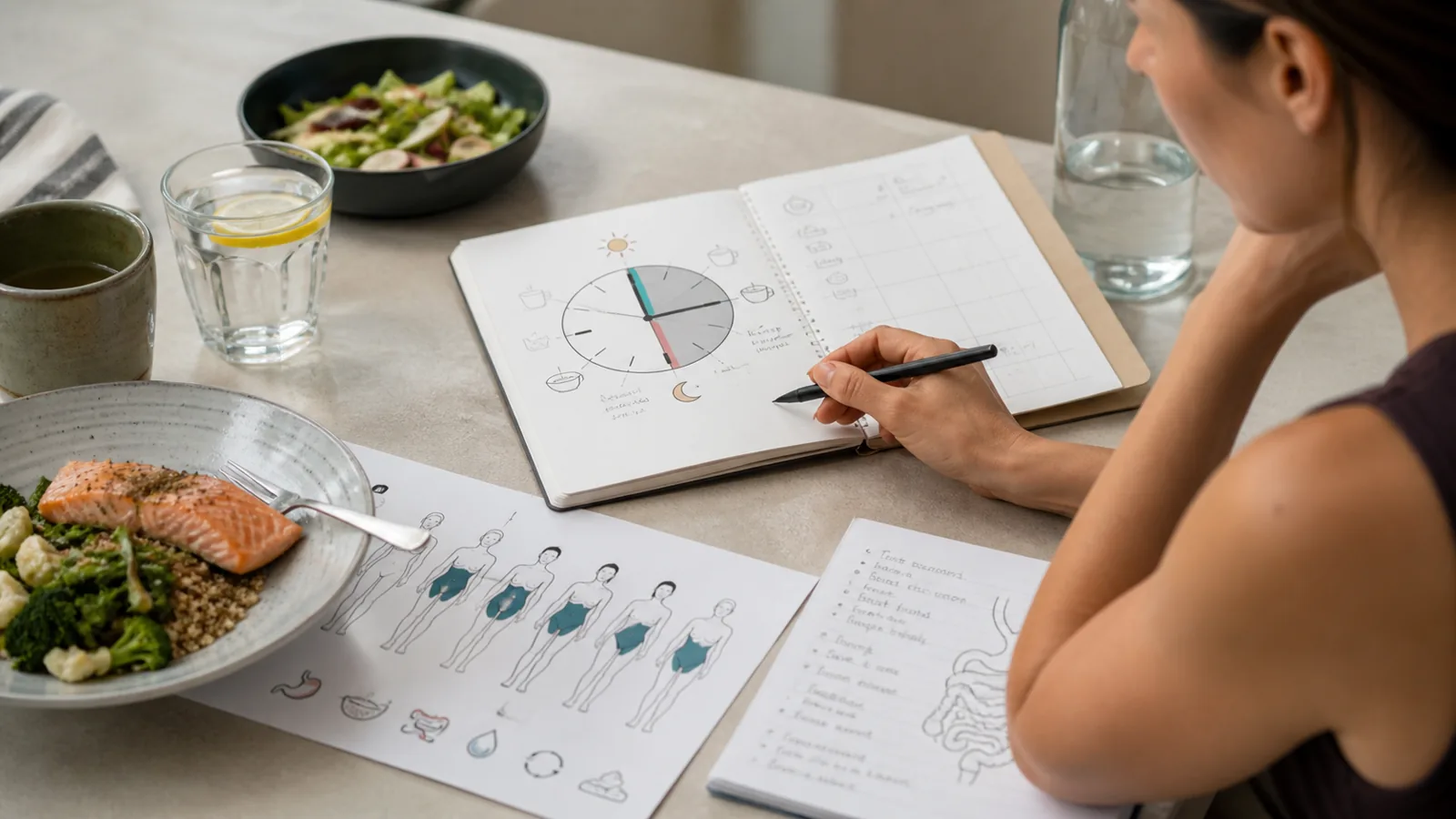
Transient fluid retention involves kidney, vascular, hormonal, medication, and movement factors. Abdominal bloating is often related to gas, motility, constipation, diet, or visceral sensitivity. Morning facial puffiness can reflect fluid redistribution, sleep position, sodium, alcohol, allergies, or other causes. These patterns can overlap, so the goal is to identify the best fit rather than assign one mechanism from appearance alone.
A useful first plan is smaller than most online protocols: choose the pattern, identify the likely trigger, run one low-risk action for three days, and track one signal. Dry brushing, rebounding, restrictive diets, and multiple diuretic herbs do not need to be bundled into the starting plan.
Hydration and sodium: avoid the rebound extremes
Correcting dehydration can reduce the hormonal drive to conserve water, but drinking extra water does not automatically remove edema. Normal, steady hydration is the useful target. Persistent swelling can have causes that water intake alone will not fix.
Potassium and sodium both affect fluid balance, but pushing potassium intake is not a universal debloat strategy. Food-based intake may fit many people, while kidney disease and some medications change what is safe. Return an unusually salty day to the person’s ordinary pattern instead of pairing aggressive sodium restriction with potassium supplements.
Sodium's relationship with water retention is more nuanced than 'more salt equals more bloat.' A physiology review on sodium and water intake found that in a steady state, urine volume barely shifts across a wide range of sodium intakes. What does happen is that a sudden jump in sodium intake drives extra fluid intake and a short-term rise in body weight, which is the transient puffiness most people notice the morning after a salty meal (PMID 28614828).
The Lymphatic System: Your Body's Drainage Network
Your lymphatic system moves about 3 liters of fluid every day, filtering out waste, pathogens, and extra interstitial fluid before returning it to your bloodstream. Unlike your circulatory system, it has no central pump. Lymph travels through one-way valved vessels that depend on skeletal muscle contraction, changes in breathing pressure, and the pulse of nearby arteries to keep moving.
Walking and normal movement support circulation and lymph flow. A temporary change after facial massage or gua sha does not prove that a person had “lymph stagnation,” and cosmetic contouring claims should not be treated as permanent tissue change.
Water Retention (Edema): What's Happening
Water retention is excess fluid building up in the spaces between your cells, and it's regulated by the renin-angiotensin-aldosterone system. When sodium levels rise, aldosterone tells your kidneys to hold onto sodium, and water follows it osmotically. ADH, released from the pituitary gland, adds another layer of control by governing how much water gets reabsorbed in the kidney's collecting ducts.
Common short-term triggers include an unusually high-sodium meal, alcohol, menstrual-cycle changes, medication effects, heat, and long periods of sitting or standing. The amount of scale change varies, and sudden or persistent edema deserves a different response from ordinary next-morning puffiness.
Abdominal Bloating: The Gas and Gut-Brain Connection
Abdominal bloating can reflect gas production, slowed transit, constipation, visceral hypersensitivity, or a combination of them. The amount of intestinal gas varies widely, and symptoms do not map cleanly to one measured volume.

The gut-brain axis is central here. Stress raises cortisol, and cortisol alters gut motility, loosens the tight junctions between intestinal cells (increasing permeability), and shifts your microbiome toward more gas-producing bacteria, a connection a 2023 review of the microbiota-gut-brain axis covers in detail (PMID 37756251). That's why stress management belongs in any real abdominal debloat plan, and it's also why a short walk after eating is one of the few habits here backed by an actual randomized trial. In a four-week trial involving adults with functional abdominal bloating, a 10 to 15 minute walk after each meal eased symptoms about as well as a standard prokinetic medication overall, and it outperformed the medication specifically for postprandial fullness and bloating (PMID 33868611).
Facial Puffiness: Why Mornings Are Worse
Morning facial puffiness often changes with sleep position, sodium, alcohol, allergies, crying, and sleep quality. Fluid redistribution overnight is one plausible contributor, but appearance alone cannot identify a lymphatic disorder or cortisol problem.
Gentle facial massage may temporarily move superficial fluid, but the result is usually short-lived and the clinical evidence for routine gua sha as a debloating treatment is limited. Start with the trigger review in the decision table before adding a tool.
What the natural-diuretic evidence shows
The evidence varies by plant, preparation, and outcome. A change in urine frequency is not the same as treating edema, and a blood-pressure result is not automatically evidence of a meaningful diuretic effect.
A small one-day pilot study in 17 volunteers tested dandelion leaf extract, not dandelion root, and reported changes in urination frequency and an output-to-intake ratio (PMID 19678785). It did not establish a treatment for chronic fluid retention or prove that potassium in the plant prevents electrolyte problems. A hibiscus trial reported lower blood pressure over six weeks in adults with prehypertension or mild hypertension (PMID 20018807), while the caffeine literature suggests modest doses do not create a meaningful fluid deficit in habituated users (PMID 19774754).
The honest takeaway is that natural diuretics are considerably milder than pharmaceutical options. They work best folded into a full protocol that also addresses diet and lifestyle, not used on their own as a quick fix.
Build Your Debloat Plan
Step 1: choose the pattern that best matches the problem. Water retention feels diffuse, often follows a salty meal, alcohol, hormonal shifts, or long sitting, and may affect rings, ankles, or morning weight. Abdominal bloating feels like pressure, gas, fullness, or visible distention around meals. Facial puffiness is usually strongest on waking and changes quickly with sleep, sodium, alcohol, allergies, and head position.
Step 2: choose the likely trigger. For a sudden high-sodium day, start with normal hydration, ordinary potassium-rich foods, and walking. For meal-linked abdominal gas, start with a 10 to 15 minute post-meal walk, a simple food-and-symptom log, and one dietary change at a time. For morning facial puffiness, start with sleep consistency, alcohol and sodium review, and gentle movement. Do not begin with a diuretic simply because the word bloat appears.
Step 3: pick the effort level. The minimum plan is one anchor action repeated for three days. The standard plan adds one tracking measure and one supporting action. The full plan adds a seven-day review, but never stacks several teas, supplements, dietary restrictions, and drainage techniques on day one.
| Pattern | Three-day anchor | Supporting action | Track | Reorder or stop when |
|---|---|---|---|---|
| Water retention after a salty or disrupted day | Normal hydration plus a 10-minute walk | Return sodium intake to its usual pattern | Morning weight, rings, or ankle tightness | Swelling is one-sided, persistent, painful, or paired with shortness of breath |
| Meal-linked abdominal bloating | Walk 10 to 15 minutes after the problem meal | Log meal, timing, and symptoms | Fullness and distention from 0 to 10 | Pain, vomiting, blood, weight loss, or symptoms keep progressing |
| Morning facial puffiness | Consistent sleep window and ordinary hydration | Review alcohol, sodium, and allergy exposure | Same-lighting morning photo | Puffiness persists all day, is one-sided, or comes with other symptoms |
The order matters. Start with the lowest-friction action that matches the pattern. Add a second action only after three consistent days, so you can tell whether the first one helped. If a plan fails, recheck the pattern before escalating the intensity. A water-retention plan will not solve fermentation or constipation, and a gut plan will not fix allergy-related facial swelling.
A simple weekly schedule is enough: days 1 to 3 run the anchor only, day 4 review the signal, days 4 to 6 add one supporting action if needed, and day 7 decide whether to keep, change, or stop. That is the complete builder. It produces a plan you can interpret rather than a long list of remedies.
Sources
- Relationship between Sodium Intake and Water Intake: The False and the True
- The impact of acute and chronic stress on gastrointestinal physiology and function: a microbiota-gut-brain axis perspective
- The effect of a short-term physical activity after meals on gastrointestinal symptoms in individuals with functional abdominal bloating
- The diuretic effect in human subjects of an extract of Taraxacum officinale folium over a single day
- Hibiscus sabdariffa L. tea (tisane) lowers blood pressure in prehypertensive and mildly hypertensive adults
- Caffeine ingestion and fluid balance: a review
Educational content only. Not medical advice.