Peptide Guides
Peptides for women: a hormone-aware guide
Women are often underrepresented in early peptide research, and pregnancy, contraception, menopause, bone health, and autoimmune disease can change how evidence applies. This guide separates approved uses from extrapolation and flags where female-specific data are still missing.
Published by PeptideSchool Editorial Desk

Why a women-specific read is overdue
Search around for peptide information and you will find a lot written from male trial data and aimed at building muscle, healing faster, or losing fat. When women ask how this applies to them, the answer is usually "same protocol, just use less." That is the same shortcut that gave us decades of drug labels built on male-only research. It skips over the things that matter for a woman deciding whether to try a peptide: how her cycle works, what happens hormonally during perimenopause, whether she is pregnant or breastfeeding, whether she has an autoimmune condition (which shows up far more often in women), or whether she has a history of a hormone-sensitive cancer. Those details change whether a peptide is well studied, reasonably safe, or flatly off the table, and they almost never appear next to the peptide claims themselves.

This article is meant to be the resource we wish existed already. It will not hand you a protocol. Instead, it gives you a way to evaluate any peptide claim by asking the right questions first: was this tested in women, does where I am in my cycle or in menopause change what I should expect, is there a reason this is contraindicated for me, and is what I am reading honest harm-reduction information or just marketing dressed up as science.
Physiology that changes the decision
Estrogen and progesterone influence inflammation, collagen turnover, fluid retention, sleep quality, and how pain feels, and those hormones shift throughout the month before declining through perimenopause and menopause. There is not strong evidence that where you are in your cycle changes how a peptide is absorbed or processed, but it absolutely changes the symptoms you are watching, which means outcomes should be tracked against cycle day before crediting or blaming a peptide. Bone density, pregnancy, and autoimmune status are each separate concerns that need their own attention.
The menstrual cycle is a low-grade biological variable
Estradiol climbs toward ovulation and rises again mid-luteally, while progesterone peaks in the second half of the cycle. These are not just reproductive signals. Estrogen calms inflammatory activity and supports collagen, while progesterone raises body temperature, can disrupt sleep, and shifts how the body holds fluid. That means joint comfort, sleep, recovery, and skin appearance can all change across the month even at an identical peptide dose. Since there is little evidence that cycle phase changes how these compounds behave in the body, but plenty of evidence that symptoms themselves fluctuate, track results by cycle day for at least a full cycle before concluding anything worked.
Perimenopause and postmenopause shift the baseline
Perimenopause, generally spanning the late thirties into the mid fifties, brings irregular periods, disrupted sleep, hot flashes, mood swings, joint pain, and faster bone loss around the time periods stop. Skin also thins and dries as estrogen drops. Hormone replacement therapy remains the best-supported treatment for many of these symptoms and should be managed by a clinician. Peptide marketing frequently ignores HRT altogether, which is worth noticing, since peptides are not a replacement for a proper menopause evaluation. Anyone already on HRT should treat any peptide as one more variable inside a system their clinician is monitoring. A topical like GHK-Cu for skin is a low-stakes addition, but anything touching metabolism, libido, or immune function deserves a direct conversation with the prescriber managing that hormone therapy.
Bone density deserves its own conversation
Bone loss speeds up around menopause, and women make up the majority of osteoporosis cases. That is a medical track of its own, built around DEXA scans, vitamin D and calcium status, resistance training, and sometimes prescription bone-building drugs like bisphosphonates or anabolic agents. A recovery peptide does not replace any of that. Growth-hormone secretagogues occasionally get pitched as bone support, but there is little outcomes data behind that claim in postmenopausal women, and raising IGF-1 in this group has not been shown to be a clear benefit. If you have a personal or family history of fracture from osteoporosis, that conversation belongs with a clinician, not with a peptide stack.
Pregnancy and breastfeeding change everything
The simple rule: if you are pregnant, trying to conceive, or breastfeeding, the default for every peptide discussed here is do not start. Several, including semaglutide, tirzepatide, melanotan analogs, PT-141, and retatrutide, carry explicit warnings against use during pregnancy. Research peptides like BPC-157, MOTS-c, KPV, LL-37, and the thymosins simply have no human pregnancy data at all, which is a reason for caution, not a reason to assume they are fine. If you find out you are pregnant while using any of these, do not stop cold and start searching online. Call your obstetric provider that same day and ask how to safely wean or pause.
Autoimmune disease tips the risk calculus
Women carry roughly three quarters of the world's autoimmune disease burden, including most cases of Hashimoto's, lupus, rheumatoid arthritis, MS, and Sjögren's syndrome. A number of the peptides floating around wellness circles are directly immune-active: LL-37, KPV, and the thymosin family. Even peptides not sold as immune agents, like BPC-157 and GHK-Cu, touch inflammatory and healing pathways. The honest truth is that immune modulation can cut both ways. Something that calms inflammation in one person might unsettle immune balance in someone already managing an active autoimmune condition. If you have an autoimmune diagnosis, these peptides are not a starting point on your own. They belong in a conversation with the rheumatologist, endocrinologist, or neurologist already treating you.
What women ask about most
The names that come up most are BPC-157 for joints and gut, GHK-Cu for skin and hair, MOTS-c for metabolic support, the GLP-1 drugs semaglutide and tirzepatide for weight, PT-141 for libido, oxytocin used off-label, and the immune-active trio of LL-37, KPV, and thymosins. The evidence behind these ranges from large trials that included women to research that has barely left the lab bench. What follows is a reading guide to each, not a recommendation to use any of them.
BPC-157, GHK-Cu, MOTS-c, and GLP-1 Agonists: Where the Evidence Stands
BPC-157 is a lab-made pentadecapeptide built from a fragment of a gastric protein, and it has become a favorite in online circles for joint pain, gut complaints like IBS or reflux, and bouncing back after surgery or injury. Animal studies do show it helping wounds and tendons heal source 5, but there is almost nothing in the way of controlled human trials, and female-specific data is essentially nonexistent. This is a research compound, full stop, not something approved for use in people. For women specifically, a few things stand out: BPC-157 promotes new blood vessel growth in healing models, the same property that makes oncologists wary of growth-driving peptides in anyone with a hormone-sensitive cancer history. Nothing is known about its effects during pregnancy or breastfeeding, and its impact on women with endometriosis, IBS, or autoimmune gut conditions hasn't been studied. The honest way to describe it is low expected toxicity in short-term healthy use based on animal work, not a proven, safe treatment for women.
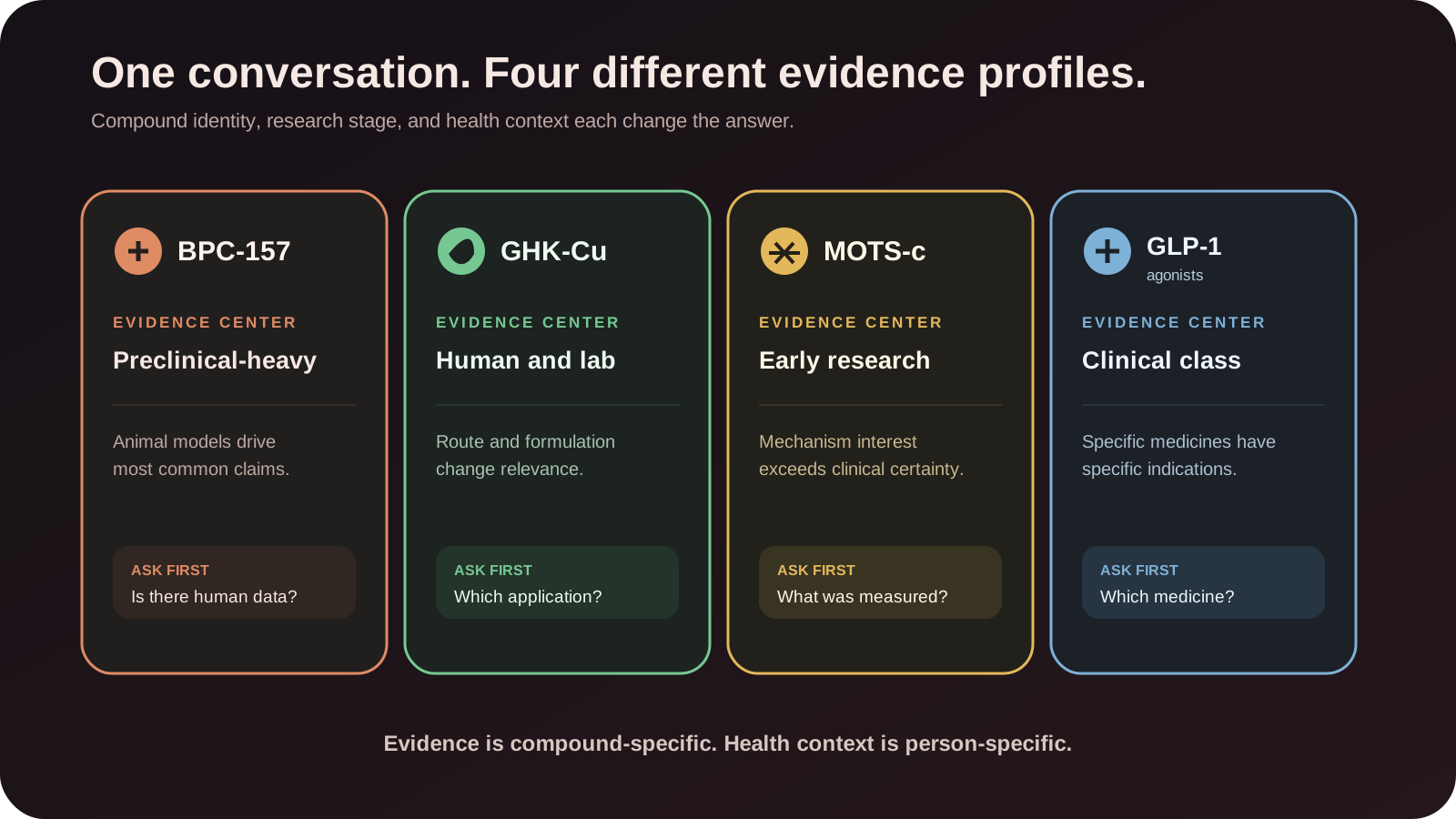
GHK-Cu, a copper complex built around a small three-amino-acid chain, is the most well-established peptide in cosmetic use, backed by decades of formulation experience and a reasonable body of human research on aging skin, wound repair, and scalp health source 6. Because cosmetic studies skew heavily female, this is one of the rare peptides with decent women-specific topical data. The hair evidence is suggestive but not conclusive, and the strongest hair-loss trials in women still revolve around minoxidil, finasteride, or spironolactone. For postmenopausal skin, GHK-Cu pairs well with sunscreen, retinoids, and topical estrogen when prescribed, and its dermal application keeps systemic exposure low, making it one of the gentler options here. Our copper peptide skincare routine builder covers how to layer it with vitamin C, retinoids, and acids.
MOTS-c, a peptide coded within mitochondrial DNA, has drawn interest for its links to insulin sensitivity and metabolic flexibility source 7, which has made it popular among women dealing with perimenopausal weight gain tied to falling estrogen. Human data remains thin and mostly observational, and any injectable version sold online is unregulated research material. For metabolic changes during perimenopause, resistance training, sleep, adequate protein, and medically supervised GLP-1 agonists have far stronger backing.
GLP-1 receptor agonists such as semaglutide, liraglutide, and tirzepatide carry the strongest evidence base of anything on this list, with large trials that include sex-stratified results source 8 source 9. Weight-loss results are similar between men and women, though titration and tolerance can vary. Still, the cautions matter: these drugs are contraindicated in pregnancy, should be stopped before trying to conceive, and tirzepatide can reduce the effectiveness of oral hormonal contraceptives during treatment initiation and dose escalation source 10. The same FDA prescribing information also covers pancreatitis, gallbladder disease, and the contraindication for people with a personal or family history of medullary thyroid carcinoma or MEN 2. Our GLP-1 comparison guide breaks down how these agents differ from one another.
PT-141 (bremelanotide) for libido
PT-141, sold under the brand name Vyleesi, carries FDA approval for hypoactive sexual desire disorder in premenopausal women source 11. Unlike many peptides on this list, it works through melanocortin receptors in the brain rather than through blood flow, and it's one of the rare cases where the pivotal trial data was built specifically around women's health. The effects tend to be modest rather than dramatic, and side effects show up often enough to matter: nausea, flushing, headache, and temporary darkening of the skin source 13. It isn't approved for postmenopausal women, and the FDA label lists uncontrolled hypertension and known cardiovascular disease as contraindications source 12.
Calling this a "libido vitamin" or "the female Viagra," as some online communities do, sells short what it's like to take. It's a real drug with a real side effect profile, and before turning to a melanocortin agonist, it's worth ruling out relationship stress, poor sleep, antidepressant side effects, vaginal symptoms tied to menopause (which often respond well to local estrogen), and thyroid problems.
Oxytocin (intranasal, off-label)
Injectable oxytocin has approved uses in labor and postpartum hemorrhage. The intranasal version is a popular research tool for studying social bonding and anxiety, but using a compounded nasal spray off-label for libido, attachment, or mood sits on shaky evidence source 15. Women's health context matters a great deal here, since postpartum recovery, perinatal mood disorders, and past trauma can all interact with oxytocin's effects on social cognition in ways researchers still don't fully understand source 14. "Harmless love hormone" is another label that oversimplifies a genuinely complicated picture.
Immune-modulating peptides (LL-37, KPV, thymosins)
LL-37 is a naturally occurring human peptide with antimicrobial and immune-regulating activity source 16. KPV, a small fragment of alpha-MSH, gets discussed for calming gut and skin inflammation source 17. Thymosin alpha-1 and thymosin beta-4 show up in research on viral illness, immune recovery, and tissue repair.
This is where the autoimmune warning matters most. Anyone with lupus, rheumatoid arthritis, MS, type 1 diabetes, Hashimoto's, or another autoimmune diagnosis should treat an immune-modulating peptide as a medical decision, not a wellness experiment, and should loop in the specialist managing that condition. Data on outcomes for women specifically is thin, and most of what gets shared as a wellness use case is extrapolated from other settings.
Contraindications matrix
Pregnancy, active conception attempts, and breastfeeding should be treated as a hard stop across every peptide covered here. A history of hormone-dependent cancer, active autoimmune disease, cardiovascular or clotting events, medullary thyroid cancer or MEN-2, gallbladder or pancreatitis history, and perinatal mood disorders are all situations where a specific peptide calls for a conversation with a clinician first, not a protocol pulled from social media.
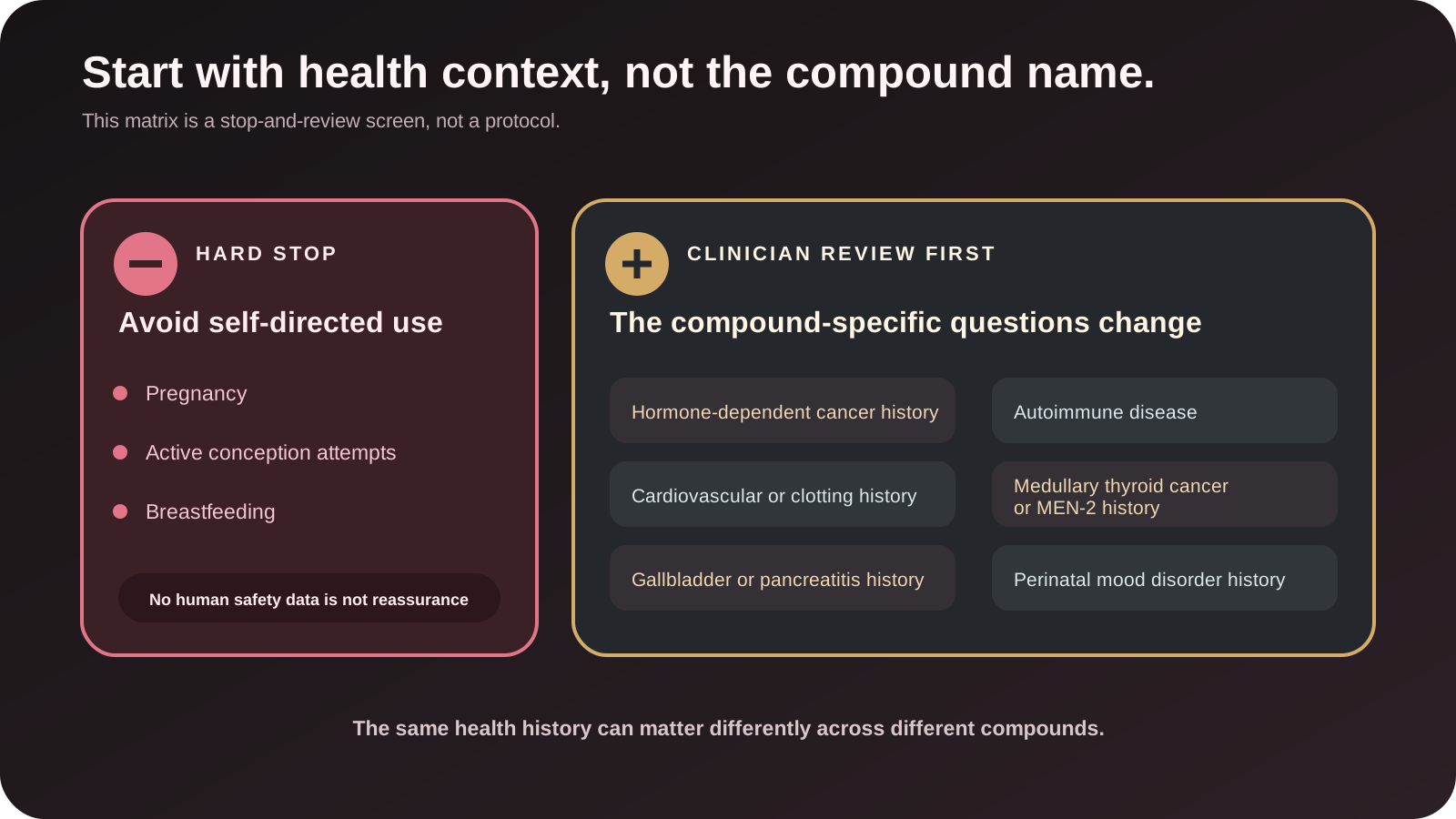
What follows is a non-exhaustive guide to which peptides deserve that conversation at minimum. Anything marked "avoid" should be treated as a firm stop in that situation unless a prescriber says otherwise.
Pregnancy and conception
Avoid every peptide covered on this page. GLP-1 agonists, PT-141, melanotan compounds, and growth-hormone secretagogues are explicitly contraindicated or discouraged. Research peptides like BPC-157, MOTS-c, KPV, LL-37, and the thymosins simply have no human pregnancy data to lean on.
Breastfeeding
Avoid by default here too. Lactation data doesn't exist for most of the peptides discussed in wellness circles, and both semaglutide and tirzepatide labels specifically advise against use while breastfeeding.
Hormone-dependent cancer history
Anyone with a history of ER+ breast cancer, HER2 disease, BRCA1/2 status under surveillance, or certain ovarian or endometrial cancers should review options with oncology before starting BPC-157, GHK-Cu (particularly the injectable form), growth-hormone secretagogues, or anything that raises IGF-1 levels.
When Certain Health Conditions Change the Calculus
If you have active autoimmune disease, talk to the specialist managing your care before starting LL-37, KPV, thymosins, or anything marketed as immune-modulating. Flares behave unpredictably, and there just is not much data on these peptides in people with active disease.
A history of heart trouble or clotting issues matters too. PT-141 carries a warning against use with uncontrolled high blood pressure. If you are on GLP-1 medication, loop in whoever manages your cardiovascular prescriptions, since these drugs interact with that whole picture. Melanotan analogs are known to raise blood pressure in some users, which makes them a poor fit for anyone already managing that risk.
Thyroid history deserves its own mention. A personal or family history of medullary thyroid carcinoma or multiple endocrine neoplasia type 2 rules out GLP-1 agonists as a class. This comes straight from rodent studies and is written into the label, not a gray area.
Gallbladder and pancreas history also matter. Prior pancreatitis or symptomatic gallbladder disease is a real flag for GLP-1 use, and rapid weight loss on its own raises gallstone risk in women. This is not a class of drug to start casually if either of those is in your history.
Finally, perinatal mood disorders need careful handling. Off-label intranasal oxytocin has shown up in research as both calming and anxiety-provoking depending on the group studied. If you are dealing with active perinatal depression or PTSD, this is a decision for your clinician, not something to try on your own.
Matching Peptides to Common Goals
For skin, recovery, weight, libido, and metabolic goals, the moves with the biggest payoff are usually not peptides at all. Sunscreen does more for skin than almost anything else. Rehab loading and enough protein drive recovery. Training and sleep move the needle on metabolism far more than any injection. And libido concerns deserve a full workup before anything else. Where a peptide genuinely fits, it tends to be topical GHK-Cu for skin, a prescribed GLP-1 for weight, or PT-141 for approved premenopausal use, and each of these still needs a contraindication check first. These notes are meant to frame the conversations women commonly bring up, not to serve as a protocol, and they do not stand in for a clinician's judgment.
Metabolic, Mitochondrial, and "Longevity" Peptides
MOTS-c and other mitochondrial-coded peptides make for fascinating biology, but they are nowhere near a settled women's-health tool. If you are worried about metabolic risk heading into or through menopause, the interventions with the strongest track record are still the boring ones: resistance training, real sleep, body composition work, and a clinician checking your insulin resistance and lipid panel. Peptides in this category are exploration under informed consent, not some longevity shortcut you can build a routine around.
Libido and Appearance Goals From Outside Communities
If peptide advice is drifting in from looksmaxxing-style forums, apply the same hormone-aware skepticism. Our breakdown at the looksmaxxing science checker separates what's genuinely studied (sunscreen, sleep, body composition, tretinoin) from what's still speculative. A lot of what circulates in those spaces is built on male data, with zero adjustment for pregnancy planning, breast health, or autoimmune history, which matters a great deal if you're a woman reading it.
Evidence Tiers, Plainly Stated
Sort every peptide claim into a tier before you act on it. Tier 1 is well studied in women: GLP-1 agonists like semaglutide and tirzepatide for weight, PT-141 for premenopausal HSDD, and topical GHK-Cu for skin, all with reasonably known dosing and risks. Tier 2 comes from mixed-sex trials with female subgroups, such as approved oxytocin use in obstetrics or long-running GHK-Cu wound research, where the female data generalizes fairly well but isn't perfect. Tier 3 is mostly preclinical or male-dominant, including BPC-157, MOTS-c, KPV, LL-37, and the thymosins, where pregnancy and autoimmune data are basically missing. Tier 4 is fully exploratory: compounded intranasal oxytocin, melanotan analogs, and novel research peptides bought online, with real quality risks attached. The bolder the marketing claim, the more worth asking which tier it belongs in. Tiers 1 and 2 belong in a clinical conversation. Tiers 3 and 4 belong in an informed-consent conversation, not a social feed.
How to read a women's peptide protocol critically
A protocol written with women in mind treats pregnancy, conception, and breastfeeding as three separate states, each with its own rules, rather than folding them into a single footnote. It also draws a real line between premenopausal, perimenopausal, and postmenopausal women instead of talking about "women" as though hormone status never changes. Good protocols cite female-cohort evidence, or at minimum admit when a recommendation is borrowed from male trial data. They address how a peptide might interact with HRT, oral contraceptives, antidepressants, and thyroid medication, since all four are prescribed more often in women than men. And they flag autoimmune disease, hormone-dependent cancer history, and bone health as reasons to slow down and talk to a clinician first.
A short checklist helps when sizing up any women-targeted peptide source. Does it separate pregnancy, conception, and breastfeeding, or blur them together? Does it acknowledge different life stages, or treat every woman as one category? Does it point to female-specific data, or quietly lean on male studies? Does it mention HRT, contraceptives, antidepressants, or thyroid drugs at all? Does it raise autoimmune, cancer, and bone concerns, or leave them out entirely? And does the source lean on before-and-after photos rather than clinician oversight and verified sourcing? A protocol that fails most of these questions was not built with women's physiology in mind, even if nothing in it is outright false.
Bottom line
For most women, the biggest gains still come from outside the peptide world: sleep, strength training, adequate protein, sunscreen, clinician-managed HRT during menopause, and proper treatment of anxiety, depression, thyroid disorders, or anemia. Peptides carry a legitimate role in specific cases, PT-141 for approved use, GLP-1 agonists for weight with proper screening, topical GHK-Cu for skin, but they belong in the same category as medications, not supplements. If pregnancy, conception, breastfeeding, cancer survivorship, or active autoimmune disease is part of the picture, peptides need to be part of that clinical conversation, not a workaround for it.
Sources
- Soldin OP, Mattison DR. "Sex differences in pharmacokinetics and pharmacodynamics." Clin Pharmacokinet. 2009.
- The North American Menopause Society. "The 2022 hormone therapy position statement of The North American Menopause Society." Menopause. 2022.
- Fairweather D, Frisancho-Kiss S, Rose NR. "Sex differences in autoimmune disease from a pathological perspective." Am J Pathol. 2008.
- Seiwerth S, Milavic M, Vukojevic J, et al. "Stable Gastric Pentadecapeptide BPC 157 and Wound Healing." Front Pharmacol. 2021.
- Pickart L, Margolina A. "Regenerative and Protective Actions of the GHK-Cu Peptide in the Light of the New Gene Data." Int J Mol Sci. 2018.
- Lee C, Zeng J, Drew BG, et al. "The mitochondrial-derived peptide MOTS-c promotes metabolic homeostasis and reduces obesity and insulin resistance." Cell Metab. 2015.
- Wilding JPH, Batterham RL, Calanna S, et al. "Once-Weekly Semaglutide in Adults with Overweight or Obesity." N Engl J Med. 2021.
- Jastreboff AM, Aronne LJ, Ahmad NN, et al. "Tirzepatide Once Weekly for the Treatment of Obesity." N Engl J Med. 2022.
- FDA. Mounjaro (tirzepatide) prescribing information.
- FDA. Vyleesi (bremelanotide) prescribing information.
- Kingsberg SA, Clayton AH, Portman D, Williams LA. "Bremelanotide for the Treatment of Hypoactive Sexual Desire Disorder: Two Randomized Phase 3 Trials." Obstet Gynecol. 2019. PMID 31599840 DOI
- Clayton AH, Kingsberg SA, Portman D, Sadiq A. "Safety Profile of Bremelanotide Across the Clinical Development Program." J Womens Health (Larchmt). 2022. PMID 35147466 DOI
- Zhu J, Jin J, Tang J. "Oxytocin and Women Postpartum Depression: A Systematic Review of Randomized Controlled Trials." Neuropsychiatr Dis Treat. 2023. PMID 37096027 DOI
- Evans SL, Dal Monte O, Noble P, Averbeck BB. "Intranasal oxytocin effects on social cognition: a critique." Brain Res. 2014. PMID 24239931
- Dürr UH, Sudheendra US, Ramamoorthy A. "LL-37, the only human member of the cathelicidin family of antimicrobial peptides." Biochim Biophys Acta. 2006. PMID 16716248 DOI
- Dalmasso G, Charrier-Hisamuddin L, Nguyen HT, Yan Y, Sitaraman S, Merlin D. "PepT1-mediated tripeptide KPV uptake reduces intestinal inflammation." Gastroenterology. 2008. PMID 18061177 DOI
Educational content only. Not medical advice.