Comparisons
Natural vs Synthetic Peptides: The Real Difference and Why It Matters
Peptides are better understood by origin and engineering than by a simple natural-versus-synthetic label. Some are made by the body, some are fragments, some are modified analogs, and others are designed in the lab. Origin alone doesn't predict safety. Evidence, manufacturing quality, and oversight matter more.
Published by PeptideSchool Editorial Desk
What makes a peptide natural
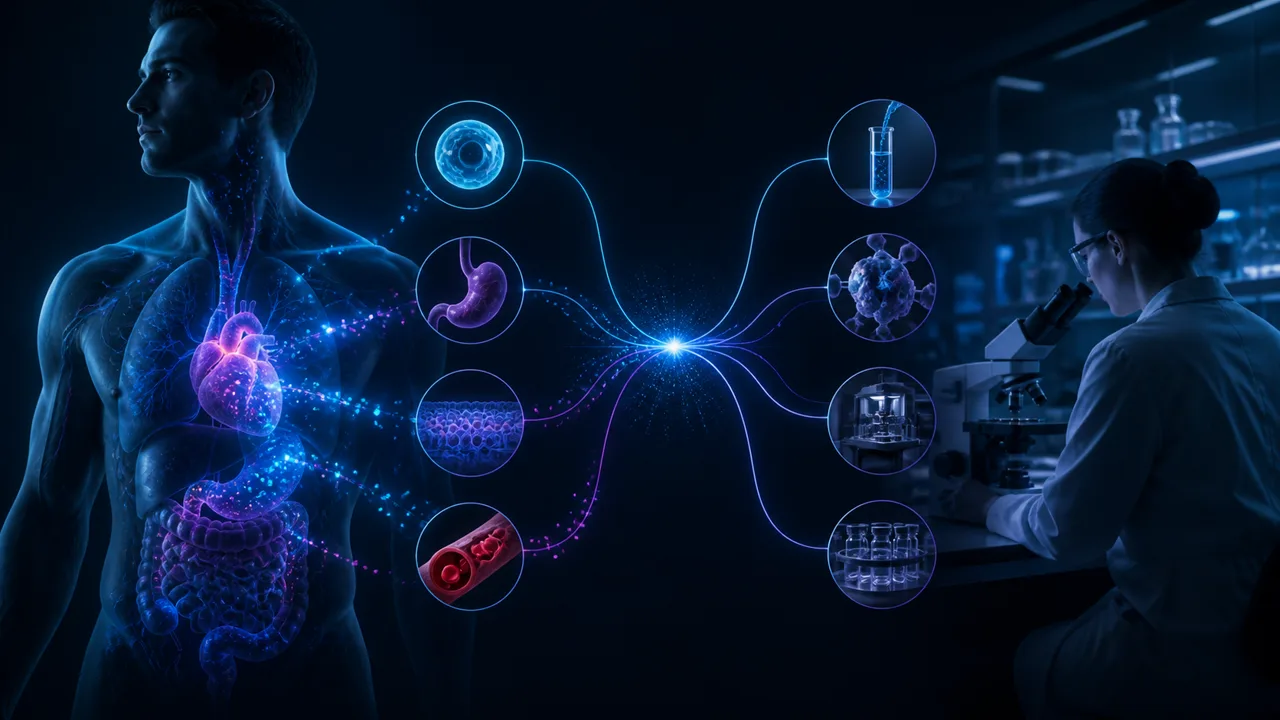
A natural, or endogenous, peptide is something your own cells build from your own DNA. Insulin, oxytocin, and LL-37 all fall into this bucket. Your pancreas puts out insulin, a 51-amino-acid chain, to manage blood sugar. Your hypothalamus releases oxytocin, just 9 amino acids, during bonding and childbirth. Your immune cells produce LL-37, 37 amino acids long, to kill bacteria on contact.
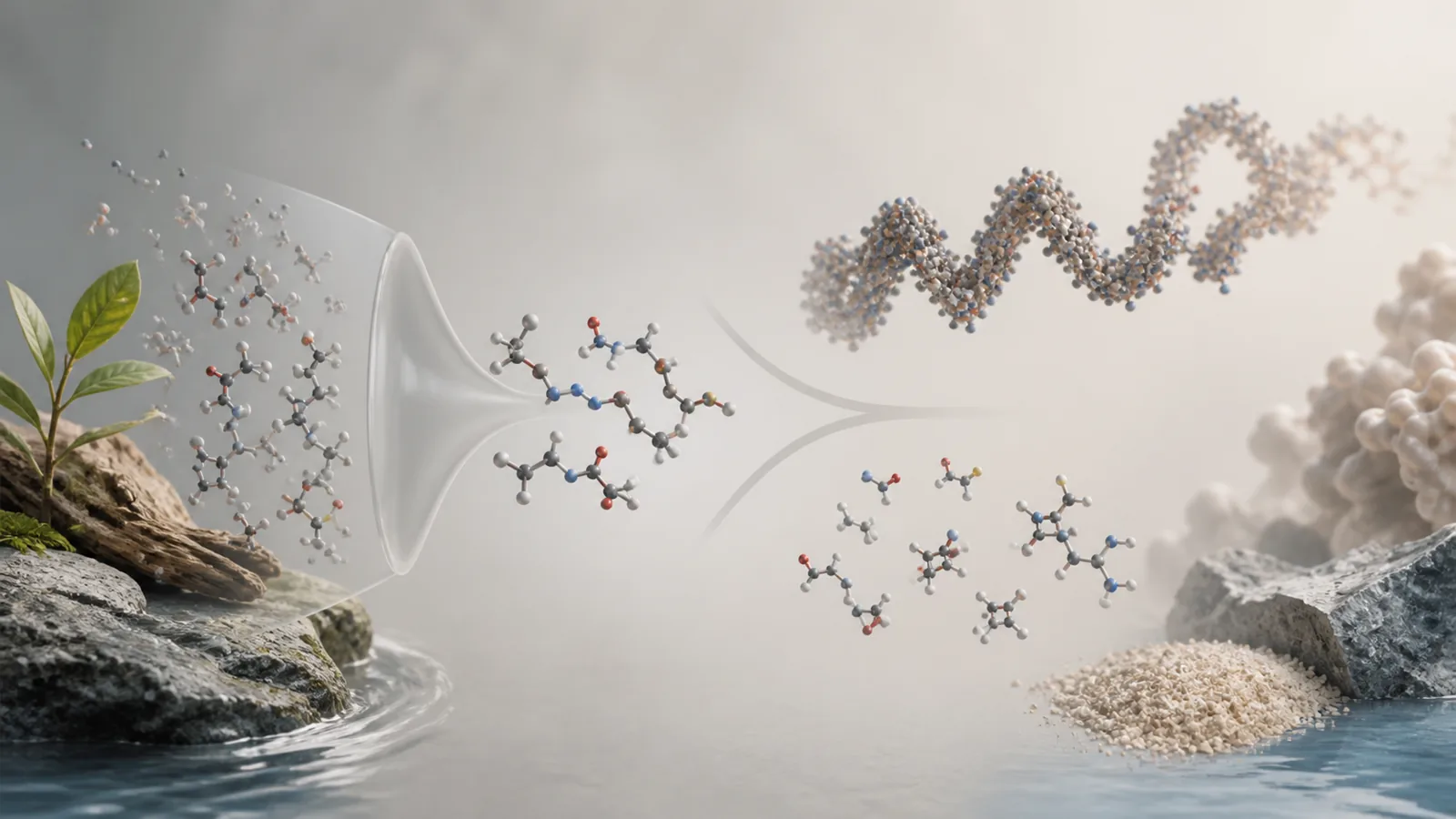
These molecules are made through ordinary ribosomal translation, the same broad process used to build proteins. Their clearance varies widely. Some signaling peptides disappear within minutes, while others persist longer because of binding partners, tissue storage, or their sequence. Native GLP-1 is a useful fast-clearance example: DPP-4 breaks it down quickly, leaving an active half-life measured in minutes.
Fast clearance can be useful because it gives the body tight control over a signal. For drug development, however, a very short half-life can mean frequent dosing or too little exposure at the target. That is why many successful peptide medicines are modified, formulated, or delivered in ways that extend their useful lifetime.
Why many native peptides are difficult drugs
The same enzymes and organs that clear a natural peptide from your system in minutes are exactly what gets in the way of treating patients with it. Insulin is the clearest example in medical history. It became the first commercially available peptide drug back in 1923, extracted in bulk from pig and cow pancreases. That process was slow, resource-heavy, and produced constant batch-to-batch variation. Some patients even developed immune reactions to the animal-derived material.
Recombinant DNA technology fixed the supply problem in the 1980s by producing human-identical insulin, but it did not fix the half-life problem. Natural insulin still clears in about 5 minutes, which is why patients need frequent injections timed tightly around meals, with real danger if the schedule slips.
Many native peptides face one or more of the same barriers: enzymatic breakdown, poor oral absorption, kidney clearance, or formulation instability. Those problems aren't universal, and they don't make the molecule useless. They explain why developers often redesign the sequence, add a carrier, change the delivery system, or use a protective formulation.
How chemists redesign a fragile peptide into a durable drug
Modern peptide drug design is basically an engineering problem: keep the segment that binds the target receptor, and change everything else that makes the molecule fall apart quickly. The toolkit chemists use is fairly systematic, built from decades of structure-activity relationship research.
D-amino acid substitution swaps in the mirror-image form of an amino acid at a vulnerable spot in the chain. Natural proteins only use L-amino acids, so a D-form insertion makes that section invisible to most proteases. Melanotan II and afamelanotide both use this trick.
Fatty acid conjugation attaches a fatty acid chain, usually C-16 to C-20 carbons long, that lets the peptide hitch a ride on serum albumin, the most abundant protein in blood. Albumin circulates for about 3 weeks, so anything bound to it lasts much longer too. This single modification is how semaglutide goes from a 2-minute half-life to roughly 7 days.
Non-natural amino acids, most commonly aminoisobutyric acid or Aib, get placed at known cleavage sites, often position 2 or 8 in GLP-1 analogs, to physically block the DPP-4 enzyme from cutting the chain. Cyclization connects the two ends of a peptide into a ring, using disulfide bonds, lactam bridges, or head-to-tail linkage. This locks the 3D shape in place and shields the backbone from exopeptidase attack. Melanotan II again is a good example, built around a lactam bridge. None of these fixes are random guesses. Each targets a specific, well-documented weak point, and the goal is always the same: keep hitting the same receptor as the natural peptide, but survive long enough in the body to work as medicine.
The four origin categories, with real examples
Peptides don't sort cleanly into "natural" or "synthetic." It's closer to a spectrum with four practical categories.
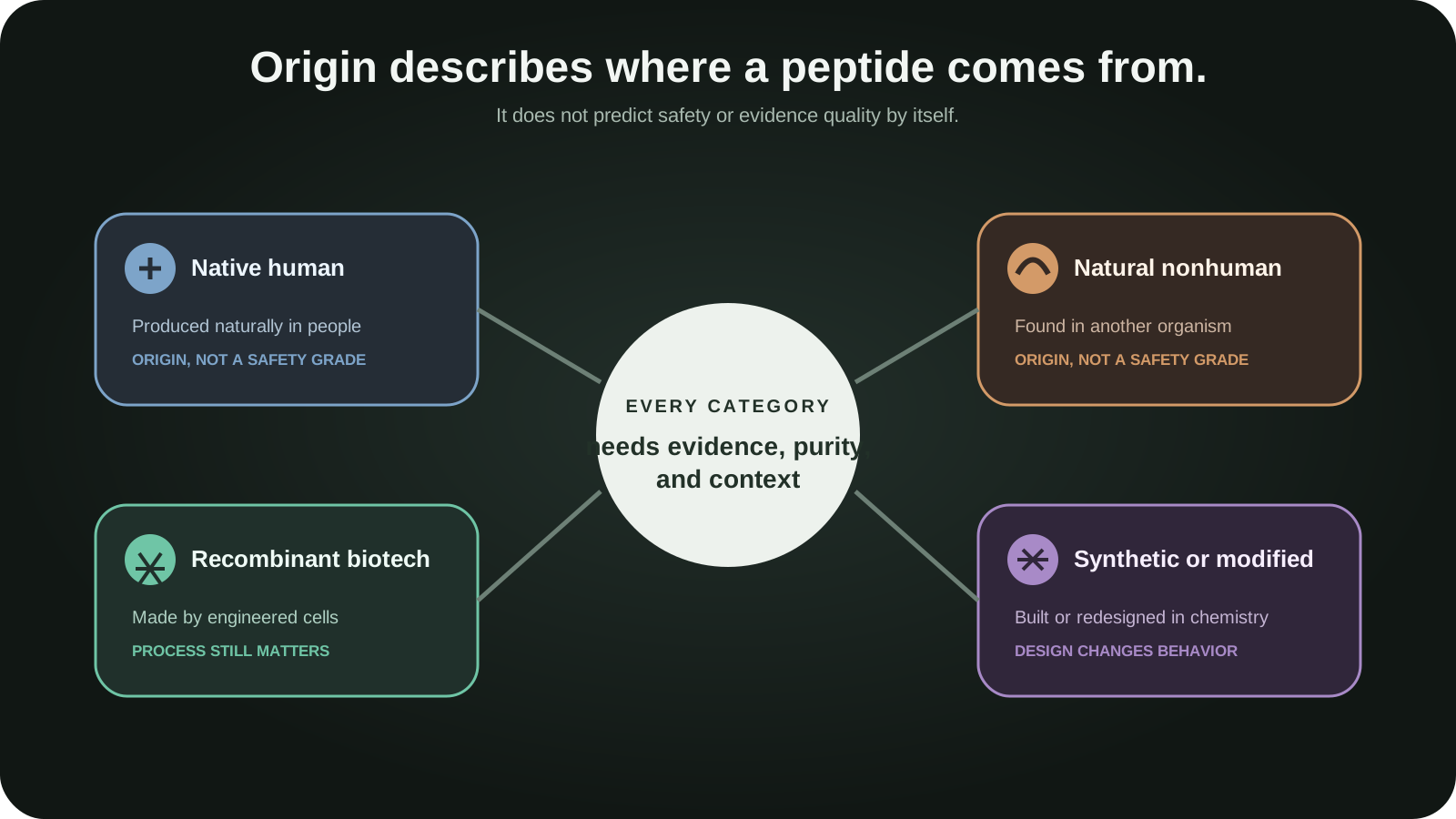
Endogenous peptides come straight from your own biology, unmodified. GHK-Cu is a copper tripeptide found naturally in human plasma, running around 200 ng/mL at age 20 and dropping to roughly 80 ng/mL by age 60. Synthetic versions sold in skincare are chemically identical to what your body already produces. LL-37 and DSIP (delta sleep-inducing peptide) also belong here.
Modified analogs start with a natural hormone and add engineering on top. Semaglutide is GLP-1 with two deliberate changes. Afamelanotide is alpha-MSH with Nle4 and D-Phe7 substitutions. Selank is tuftsin extended with a Pro-Gly-Pro tail. The natural molecule supplies the blueprint, and chemistry supplies the durability.
Natural fragments are lab-synthesized pieces of a larger natural protein that was never meant to circulate on its own. BPC-157 is a 15-amino-acid fragment of Body Protection Compound, found in human gastric juice. TB-500 is a synthetic version tied to thymosin beta-4. Semax is the 4-10 fragment of ACTH, extended with Pro-Gly-Pro. The sequence itself exists in nature, but as a standalone circulating molecule, it does not.
Fully synthetic peptides are designed from scratch with no natural template at all. Ipamorelin is a pentapeptide built to activate the ghrelin receptor without copying ghrelin's structure. Dihexa took inspiration from angiotensin IV research but shares no structural resemblance to it. Epithalon is a synthetic tetrapeptide claimed to mimic effects associated with a crude pineal gland extract.
Case study: how the GLP-1 family shows the whole spectrum in one lineage
Nothing demonstrates the natural-to-synthetic progression better than watching one drug family evolve. The parent molecule, GLP-1, is released by gut L-cells after eating. It signals fullness to the brain, tells the pancreas to release insulin, and slows gastric emptying. Excellent design, except it vanishes from the bloodstream in about 2 minutes.
Liraglutide (Victoza, Saxenda, approved 2010) was the first successful fix. Adding a C-16 palmitic acid chain at Lys-26, plus an Arg34Lys substitution, stretched the half-life to about 13 hours, workable for daily injection but not ideal for long-term adherence.
Semaglutide (Ozempic, Wegovy, 2017) swapped that C-16 chain for a longer C-18 fatty diacid and added Aib at position 8. The result is a roughly 7-day half-life, meaning one injection per week, a change that helped build one of the best-selling drug franchises in pharmaceutical history.
Tirzepatide (Mounjaro, Zepbound, 2022) pushed further by building on a GIP backbone that also activates the GLP-1 receptor, giving it dual agonism that no single natural peptide provides on its own. Retatrutide goes a step beyond that, adding glucagon receptor activity for triple agonism. Each generation kept the core biological insight from the original hormone and simply stacked more engineering on top of it.
A quick framework for classifying any peptide you come across
When you run into a peptide, whether in a clinic, a skincare label, or a forum thread, four questions sort it into a category. Does it exist unmodified in the human body? If yes, it's endogenous, like GHK-Cu, LL-37, or DSIP. Is it a piece of a larger natural protein? If yes, it's a natural fragment, like BPC-157, TB-500, semax, or sermorelin. Is it based on a natural peptide but chemically modified? If yes, it's a modified analog, like semaglutide, afamelanotide, selank, or CJC-1295. Was it designed from scratch with no natural template? If yes, it's fully synthetic, like ipamorelin, dihexa, or epithalon.
This classification tells you nothing about whether a peptide is safe or effective. What it does tell you is how much existing biology is backing the design. An endogenous peptide carries millions of years of evolutionary testing. A fully synthetic one only has whatever preclinical and clinical data researchers have generated so far.
Why origin does not predict safety
Treating "natural" as automatically safer is the naturalistic fallacy, and it trips up a lot of people evaluating peptides. Look at the evidence gap directly. Semaglutide, a modified analog, has been through phase 3 trials involving thousands of participants with years of follow-up data. DSIP, a fully endogenous peptide, still has contradictory research and an unclear mechanism after decades of study. Origin alone tells you nothing about which one is better understood or safer to use.
The real variable that determines risk is manufacturing quality and regulatory oversight, not whether the sequence came from nature or a lab. An FDA-approved synthetic analog made under GMP standards comes with verified purity, potency, and sterility. A "natural" peptide sold as research-use-only from an unregulated source comes with none of those guarantees, regardless of how biologically familiar its sequence is.
This is not hypothetical. Investigators examining illegal peptide products identified Bacillus cereus contamination in seized material. The origin of the amino acid sequence matters far less than the origin of the vial. Manufacturing controls, identity testing, purity, sterility, and regulatory oversight are the questions that predict product risk.
Quick answers
Common questions
What is the difference between a natural and a synthetic peptide?
Natural peptides are produced by living systems. Synthetic peptides are made in a laboratory, but a lab-made sequence can still be identical to one found in the body or can be deliberately modified.
Does natural automatically mean safer?
No. Origin does not establish safety. Evidence quality, manufacturing controls, formulation, oversight, and the specific molecule matter more than a natural or synthetic label.
Why are natural peptide sequences sometimes modified?
Native peptides can break down quickly or be difficult to deliver. Researchers may change a sequence or attach another chemical group to improve stability, duration, or delivery.
Sources
- Therapeutic peptides: historical perspectives, current development trends, and future directions
- Trends in peptide drug discovery
- Peptide therapeutics: current status and future directions
- Therapeutic peptides: current applications and future directions
- The discovery and development of liraglutide and semaglutide
- GHK peptide as a natural modulator of multiple cellular pathways in skin regeneration
- The current state of peptide drug discovery: back to the future?
- Are injectable illegal polypeptide drugs safe? Case report demonstrating the presence of haemolytic Bacillus cereus in 2 illegal peptide drugs
Educational content only. Not medical advice.