Wellness
How to Speed Up Heart Rate Recovery After Intense Cardio
Heart rate recovery is the drop in heart rate after exercise, but the result depends on the test and whether recovery is active or passive. This guide shows how to measure it consistently, what aerobic training can change, and why cold water, breathing, supplements, and peptides are not equivalent evidence.
Published by PeptideSchool Editorial Desk
What heart rate recovery measures
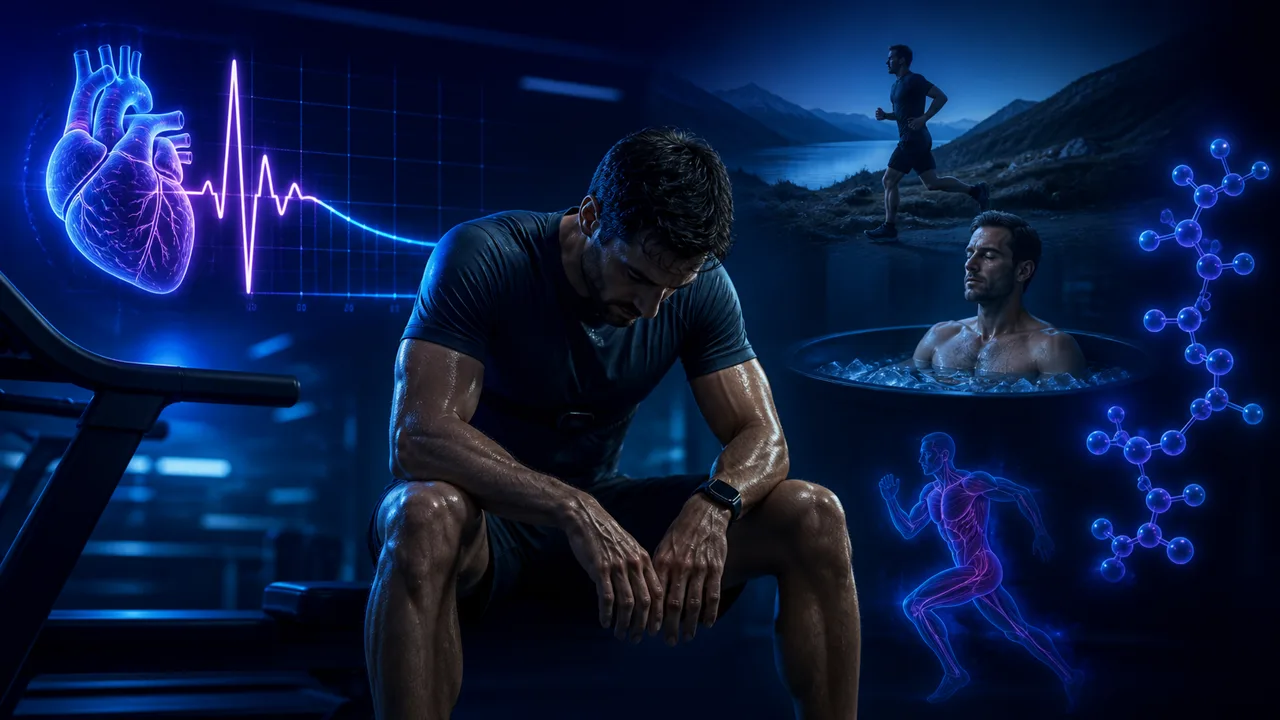
Heart rate recovery, or HRR, is the drop from peak exercise heart rate after a fixed recovery interval, often one minute. It reflects parasympathetic reactivation, withdrawal of sympathetic drive, fitness, medications, heat, hydration, and the way the test was performed.
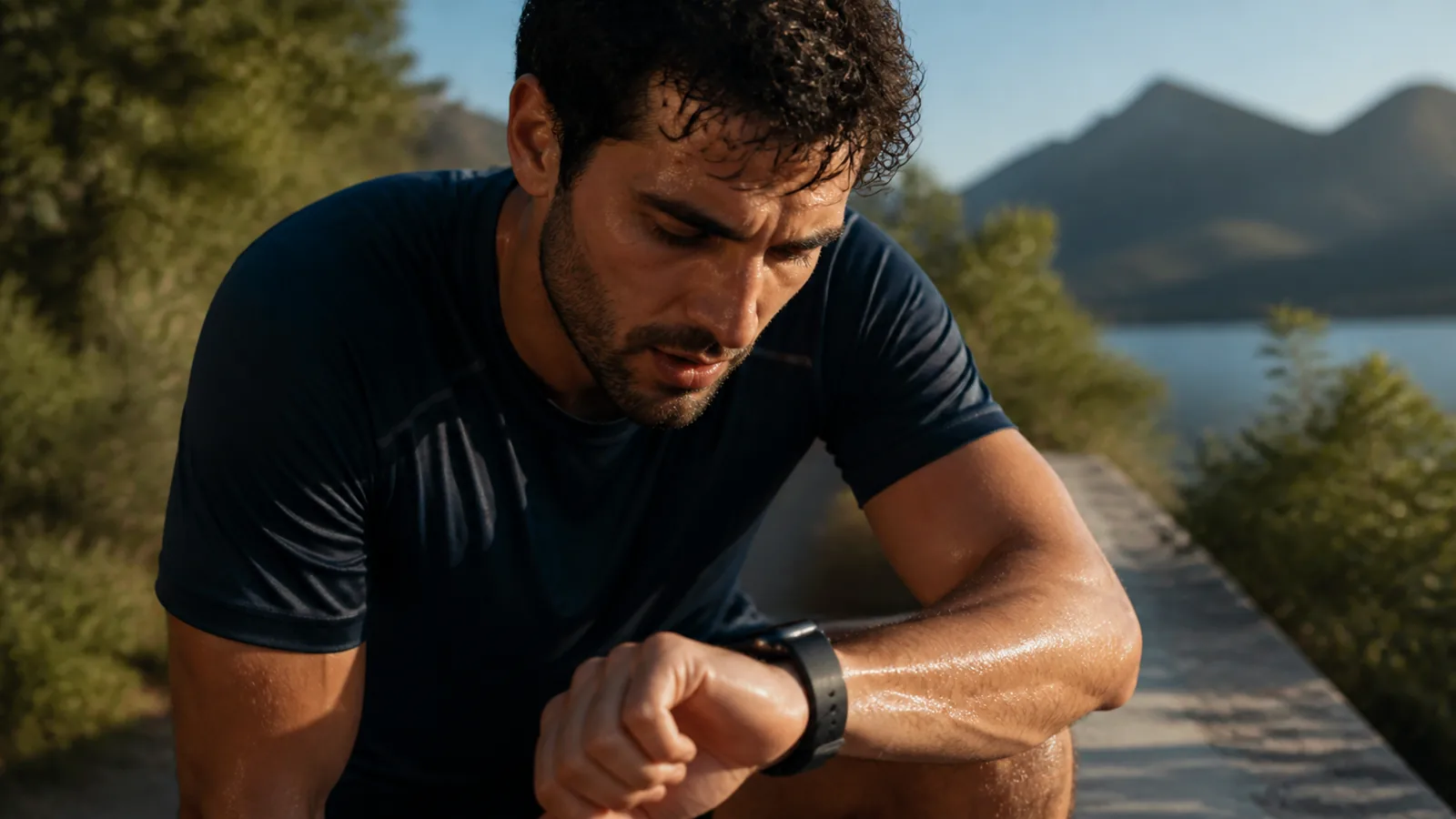
There isn't one universal normal number. Clinical studies have used different cutoffs depending on whether a person kept walking, stopped, sat, or lay down. A result after an active treadmill cooldown can't be compared directly with a watch reading taken while standing still after a run.
The useful role of HRR is consistency. Repeat the same exercise, recovery posture, timing, and device, then watch the trend. A persistently low value, a sudden drop from your pattern, or symptoms such as chest pain, fainting, or unusual shortness of breath belongs in a clinical evaluation rather than a self-scored fitness test.
How to measure your HRR right now
Choose a repeatable session that raises your heart rate substantially without requiring an all-out effort. Record the highest reliable heart rate, recover in the same way each time, and record the value exactly 60 seconds later. Peak minus the one-minute value is your HRR.
A simple log makes the number easier to interpret. Suppose a reliable chest-strap reading peaks at 168 beats per minute and shows 142 after one minute in the same standing recovery. The recorded HRR is 26 beats per minute. Next time, repeat the route or machine, effort range, sensor, and recovery posture before comparing the result. Write down sleep, temperature, recent illness, caffeine, and any medication change beside the number. One reading can move for many reasons, but a series collected under the same conditions can show whether recovery is stable, improving, or drifting. If the device loses contact near the peak, mark the entry as unreliable instead of building a conclusion around a number the sensor may have missed.
Keep the conditions similar: exercise type, room temperature, caffeine, time of day, recovery posture, and whether you keep walking. Wrist sensors can lag during intervals, so a chest strap or clinical ECG is more reliable when precision matters.
Use the number as a personal trend, not a diagnosis. For a clinical interpretation, bring the protocol and readings to a clinician so the result can be matched with the correct reference and your medication and health history.
Aerobic conditioning is the long-term lever
Regular aerobic training has the strongest practical case for improving recovery over time. The mix can include easier steady work, moderate sessions, and carefully dosed intervals. Calling one narrow heart-rate zone the only fix goes beyond the evidence.
Cardiac rehabilitation studies show that repeated aerobic training can improve HRR alongside resting heart rate and exercise capacity. Those studies often involve clinical populations and supervised programs, so the size and speed of change should not be copied directly onto a healthy athlete.
Track HRR under the same test every few weeks rather than chasing a better number after every workout. Day-to-day shifts can reflect fatigue, heat, illness, hydration, or measurement noise.
Cold water can change short-term autonomic markers
Cold water immersion changes circulation and can accelerate the return of some heart-rate-variability measures after hard exercise. HRV and one-minute HRR are related to autonomic activity, but they are not the same endpoint.
In trained cyclists, cold immersion after hard efforts restored vagal-related HRV more than a warm comparison condition. A later systematic review also found short-term HRV changes across controlled studies. That supports an acute autonomic effect, not a claim that cold water permanently improves HRR or cardiovascular fitness.
Cold exposure has its own risks and isn't necessary for progress. For a better long-term recovery trend, aerobic conditioning, sleep, and appropriate training load remain more important than a post-workout plunge.
Resonance frequency breathing during cooldown
Most people spend their cooldown pacing around or scrolling their phone, breathing however feels natural. That leaves a free, immediate tool sitting on the table: resonance frequency breathing, which engages the same baroreflex system that cold water immersion targets, just through your lungs instead of your skin.
At a normal resting breathing rate of 12 to 20 breaths per minute, your breathing cycle and your heart rate cycle are mostly out of sync. Slow that down to roughly 5 to 6 breaths per minute, meaning a 5-second inhale and a 5-second exhale, and the two rhythms synchronize into a pattern called respiratory sinus arrhythmia, the natural variation in heart rate tied to breathing. This synchronization is called resonance because the vagal brake's oscillation strength peaks at this exact frequency. You are essentially tuning the vagus nerve like an instrument.
Pagaduan and colleagues tested this pattern at rest and found that 10 minutes of it measurably lowered sympathetic nerve activity and improved baroreflex efficiency compared to normal breathing. Their study did not test the post-exercise window specifically, but the same technique, in for 5 seconds and out for 5 seconds for about 10 minutes, is a reasonable and low-risk addition to a cooldown. This is not a relaxation exercise in the meditation sense. It is a targeted activation technique, and the breathing rate itself is the active ingredient.
Sleep and omega-3 are the overlooked substrate
Two background factors matter more than most athletes realize, and both get ignored constantly. Sleep debt directly blunts next-day parasympathetic reactivation, and omega-3 fatty acids mildly but measurably lower resting heart rate, which lowers the starting point your body has to travel back to during recovery.
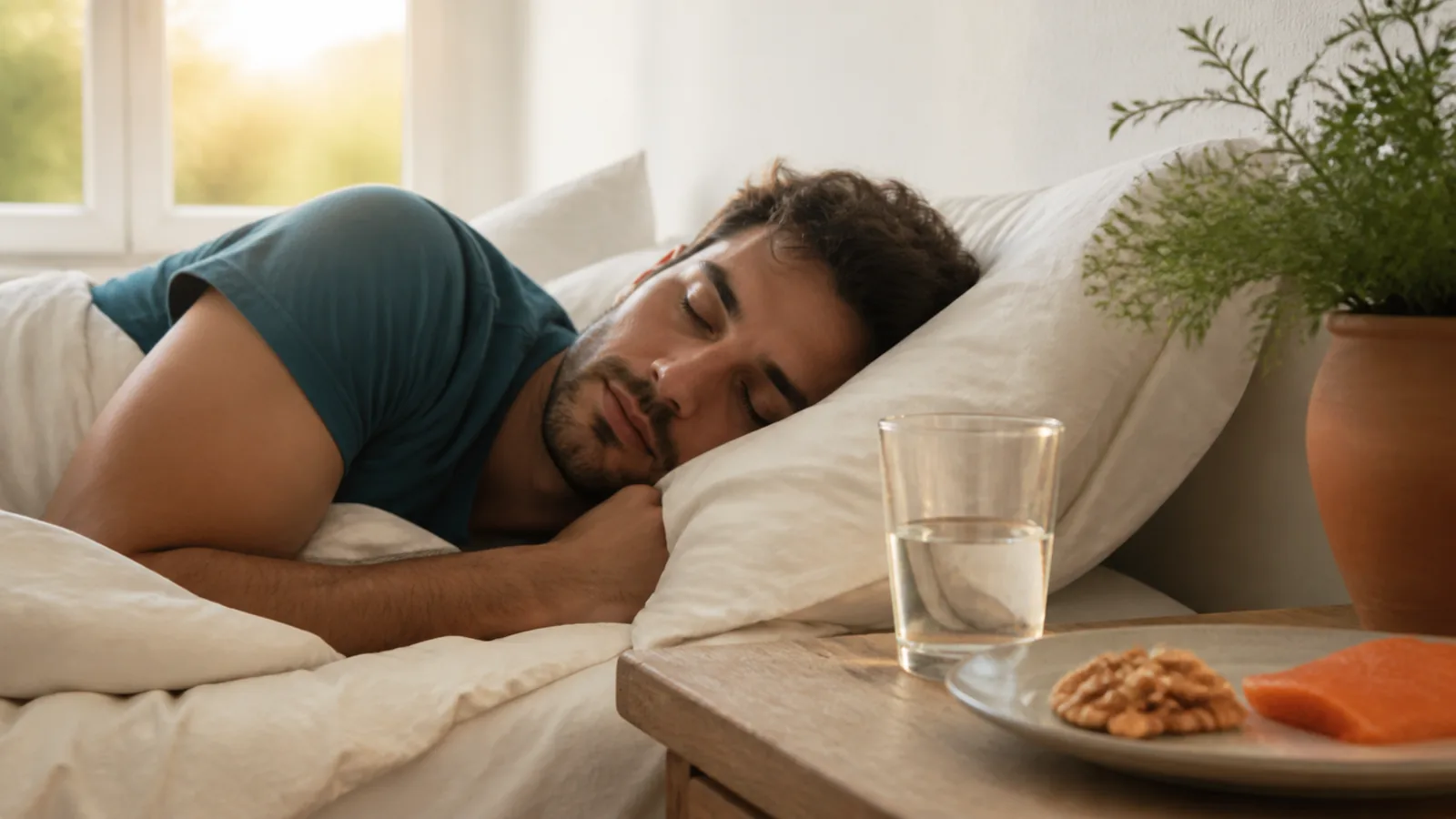
Think of your autonomic nervous system as starting each day with a charge level set by how well you slept. Sleep is the main window in which the vagus nerve rebuilds its capacity to suppress heart rate quickly after physical stress. Even a single night under six hours measurably shifts the resting sympathetic-to-parasympathetic ratio the next day, meaning you start your workout already leaning toward the accelerator instead of the brake.
A meta-analysis of randomized trials found that omega-3 supplementation produced a small average reduction in resting heart rate, with DHA appearing important. That finding does not prove a faster one-minute HRR, and the studies used different populations and doses. Treat omega-3 as a separate nutrition question, not a direct HRR protocol.
The peptide angle: BPC-157, MOTS-c, and TB-500
No peptide has been directly tested for HRR improvement in human trials. This section is about emerging research territory, not established practice, so treat everything here as plausible mechanism rather than proven outcome.
BPC-157 is a synthetic 15-amino-acid peptide derived from a protein found in gastric juice. Sikiric and colleagues reviewed its cardiovascular effects in animal models and found it reduced the duration of arrhythmias during hypoxia, lowered pulmonary hypertension, and modulated the nitric oxide system, the signaling pathway that controls how blood vessels dilate and contract. That nitric oxide connection is relevant to HRR because post-exercise vasodilation is part of the same parasympathetic cascade that slows the heart. Whether any of this translates into faster HRR in exercising humans is unknown, but BPC-157 is one of the few peptides with any cardiac autonomic data at all, even if it is animal data.
MOTS-c is a mitochondrial peptide, meaning it is a small protein produced inside mitochondria, and it has mostly been studied as an exercise mimetic, something that activates exercise-like metabolic pathways even without exercise. In rodent models it improved endurance markers and metabolic flexibility in ways that overlap with the aerobic adaptations known to chronically improve HRR. Human data so far are limited to safety and pharmacokinetic studies.
TB-500, also known as thymosin beta-4, is being studied in cardiac contexts for tissue repair after ischemic injury, meaning damage from restricted blood flow. Its relevance to HRR is indirect at best, since healthier cardiac tissue generally supports better autonomic responsiveness, but there is no HRR-specific data for it.
All three remain research compounds, not approved medications. WADA has prohibited BPC-157 in competitive sport since 2022. They are worth knowing about because they represent where HRR-adjacent research is heading, not because there is a human protocol to recommend today.
Putting it together: a practical priority order
Start with a repeatable measurement and regular aerobic conditioning. Then look at sleep, illness, heat, hydration, medication changes, and total training load. Breathing or cold water may change short-term autonomic markers, but neither replaces training adaptation.
Peptides sit in a separate evidence category. BPC-157, MOTS-c, and thymosin-related compounds have not been tested for improving HRR in controlled human trials. Mechanistic or animal findings should not be inserted into the same recommendation list as established exercise training.
If your trend worsens unexpectedly or comes with symptoms, stop optimizing the metric and get it interpreted in context. The goal isn't the fastest possible one-minute drop on a watch. It is a stable cardiovascular response measured under a protocol you can explain.
Sources
- Cardiac Vagus and Exercise
- Cold Water Immersion, Heart Rate Variability and Post-Exercise Recovery: A Systematic Review
- Effect of cold water immersion on postexercise parasympathetic reactivation
- Effect of omega-3 long-chain polyunsaturated fatty acid supplementation on heart rate: a meta-analysis
- Effect of exercise training on heart rate recovery in patients post anterior myocardial infarction
- Acute effects of resonance frequency breathing on cardiovascular regulation
- Stable Gastric Pentadecapeptide BPC 157 as Useful Cytoprotective Peptide Therapy in the Heart Disturbances
Educational content only. Not medical advice.