Wellness
Cortisol Face: What Stress Does to Your Skin, Hair, and Puffiness
Cortisol face is a social media label, not a diagnosis. This guide separates what ordinary stress can plausibly do to acne, hair shedding, and tiredness from what points to medical hypercortisolism like Cushing syndrome, and gives a practical way to test which explanation fits your own case.
Published by PeptideSchool Editorial Desk
Why the idea feels so believable
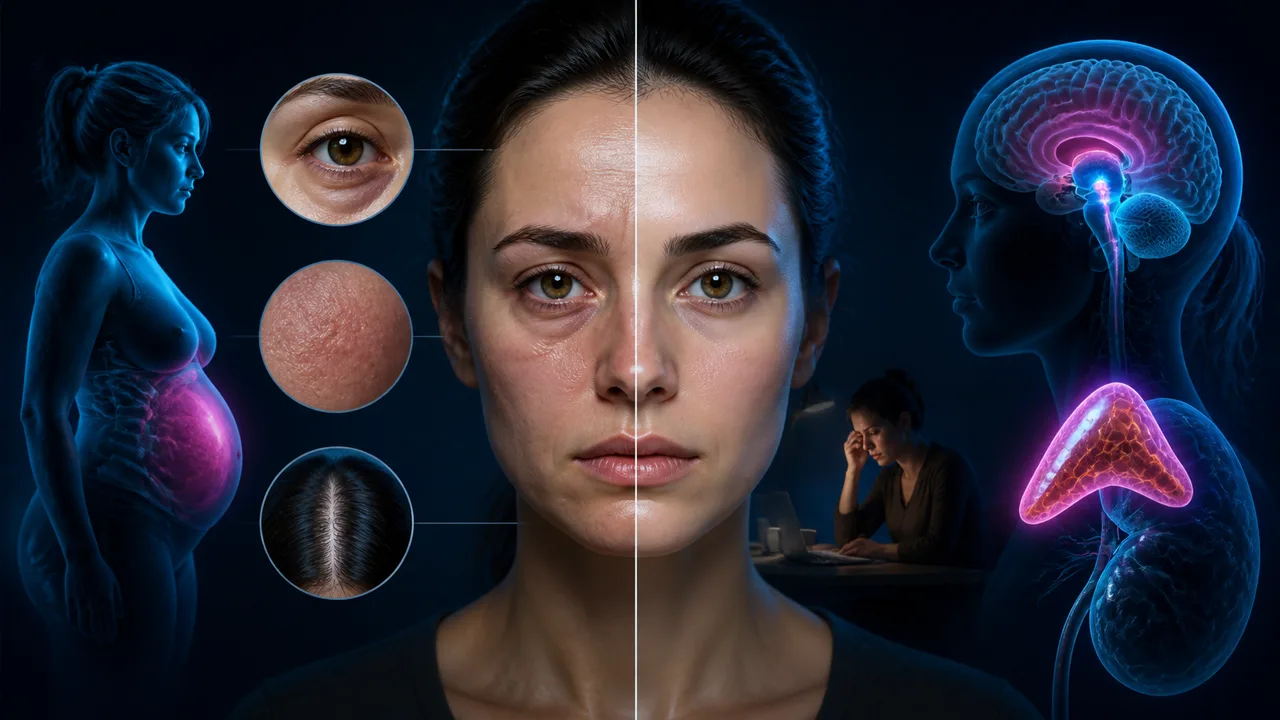
Cortisol face catches on for a simple reason. It takes a genuinely tangled mix of stress, poor sleep, sodium, alcohol, fluid retention, inflammation, and ordinary skin behavior and folds all of it into one tidy hormone explanation. That explanation feels clean and fixable, which is exactly why it spreads.
The pattern usually starts the same way. A rough week of bad sleep leaves your face looking puffy, a breakout shows up out of nowhere, and the next video in your feed tells you it is all cortisol. It is a satisfying story. It is just not the most accurate one.
What stress can plausibly change first
Ordinary stress can make acne worse, delay hair shedding through a pattern called telogen effluvium, and make a face look tired simply from lost sleep. Those are real and defensible effects. But the dramatic, face-reshaping kind of cortisol change belongs to a different category entirely: Cushing syndrome or long-term steroid use, not a hard week at work.
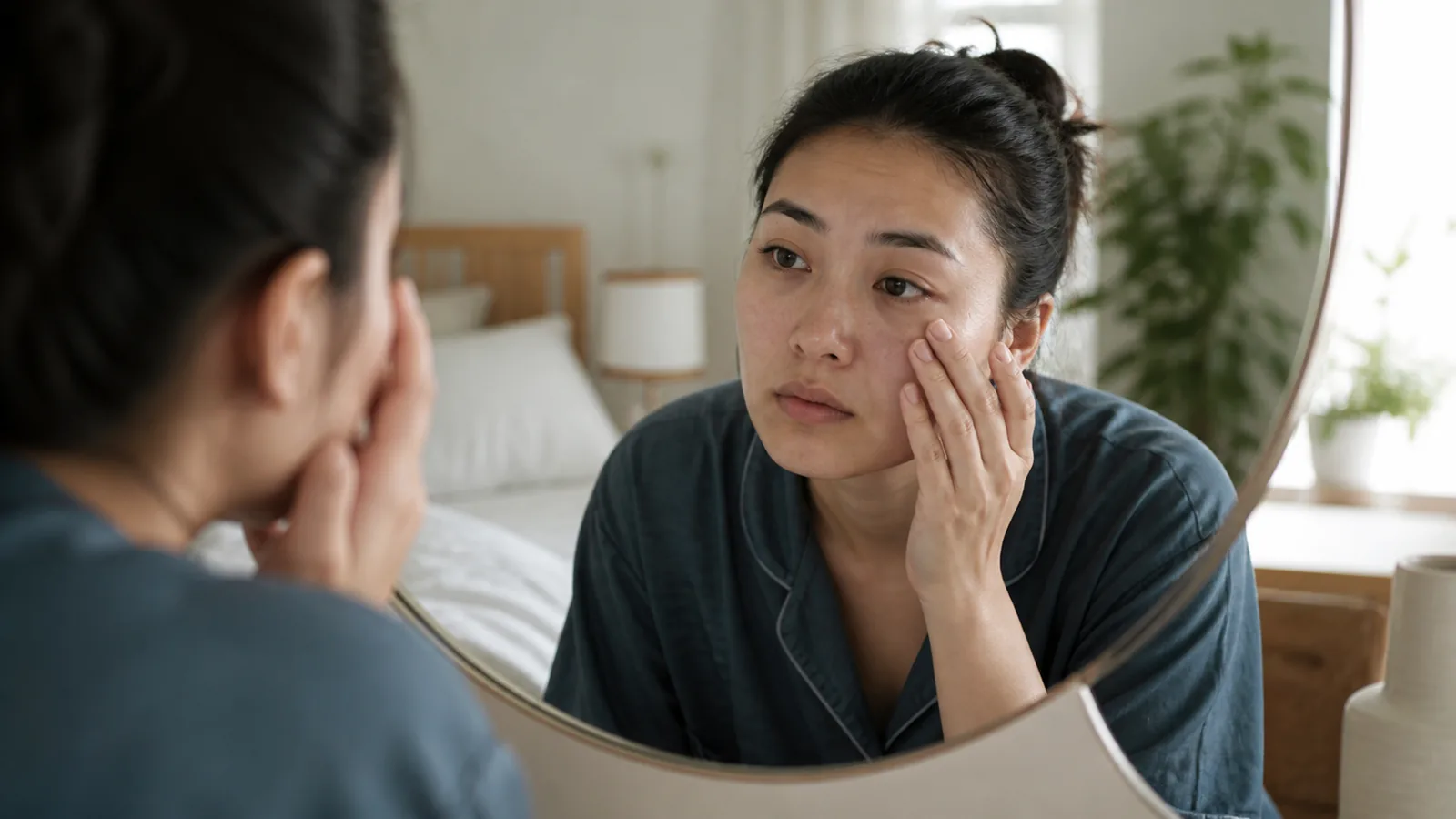
Breakouts. Stress can worsen acne in people who are already prone to it. The evidence backs flare-ups better than it backs the idea that cortisol creates acne on its own, out of nowhere (PMID 28871928).
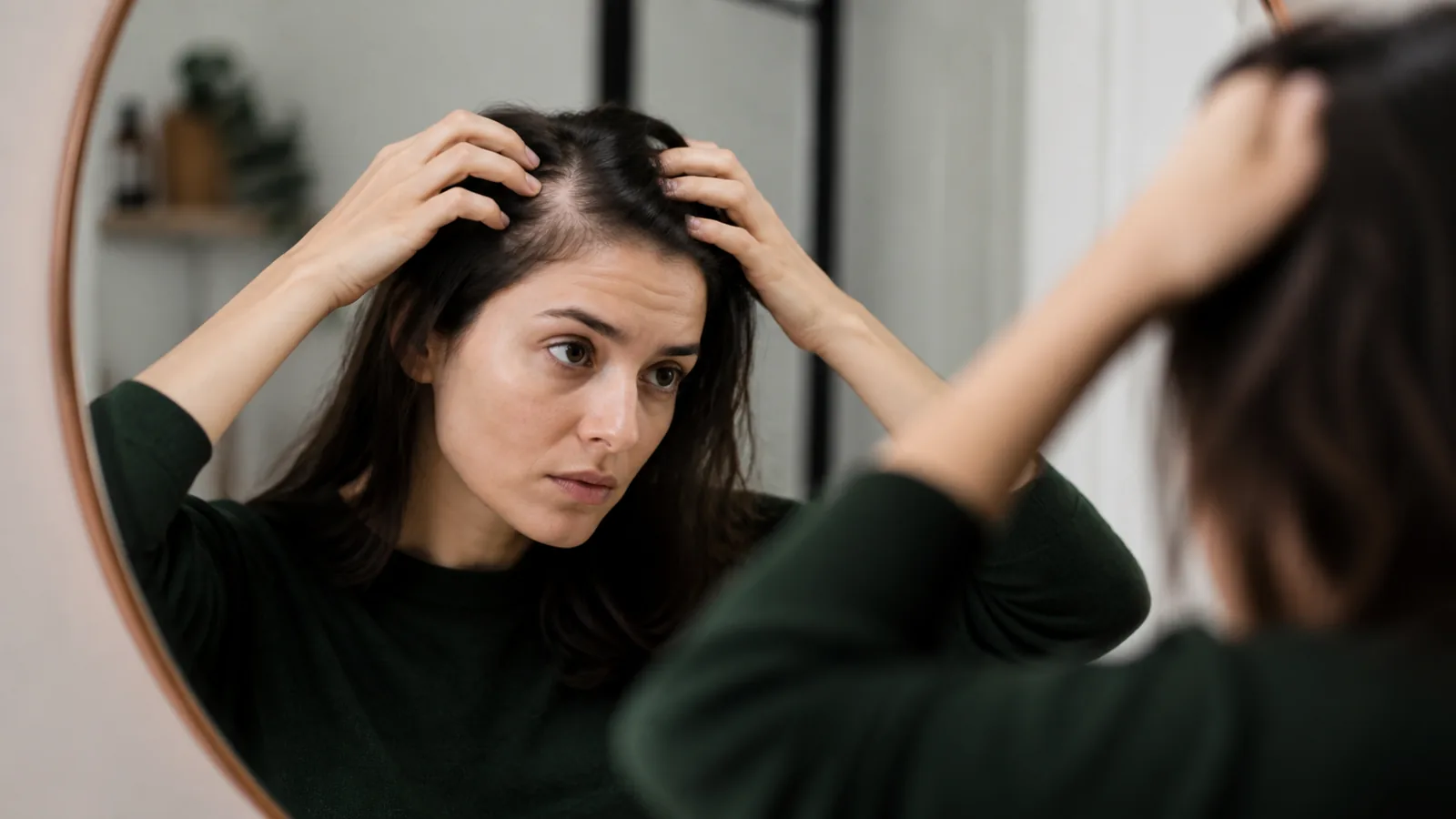
Hair shedding. Major stress can push more hairs into a resting phase, and that shedding tends to show up later rather than right away. That delay is a big reason people miss the connection between the stressful event and the hair loss that follows (PMID 32607303).
Tired-looking face. Poor sleep can quickly produce darker under-eyes, puffier eyelids, and paler skin. That is a documented effect, but it is a sleep effect, not proof of elevated cortisol specifically (PMID 23997369).
Medical hypercortisolism. The clearest and most dramatic cortisol-driven changes in appearance happen with Cushing syndrome or extended steroid use, not with everyday stress (PMID 26004339). That distinction is the one most short-form content skips entirely, and it is the whole point of this guide: there is a real difference between stress affecting how you look for a while and pathologic cortisol excess reshaping your body over time.
Acne is plausible, but it is not a diagnosis
Dermatology review literature does support the idea that stress can aggravate acne through neurogenic and inflammatory pathways in the skin (PMID 28871928, PMID 24853682). That is a legitimate, evidence-backed mechanism. It is a very different claim from saying that any single breakout means your cortisol levels are abnormal. One is supported science. The other is a leap.
Hair loss is usually a delayed story, not an instant one
Stress-related shedding typically looks like telogen effluvium, where a larger share of hairs shift into a resting phase and then fall out weeks to months later (PMID 32607303). If someone notices shedding after an illness, a breakup, exam season, surgery, or a brutal stretch at work, that delayed timeline fits the real pattern far better than the instant, same-week cortisol hair loss story that circulates online.
Your face often reflects sleep and routine before it reflects hormones
People who blame a puffy or dull face on cortisol are frequently seeing the faster, more mundane effects of sleep debt, irregular eating, extra sodium, more alcohol, inconsistent skincare, and less recovery time. A controlled study photographed the same people after a normal night of sleep and again after a night limited to five hours, and observers rated the sleep-deprived photos as more swollen around the eyes, with darker circles and paler skin (PMID 23997369). Those changes are entirely real. Calling all of them cortisol face is usually just too neat a label for what is happening.
Where social media takes it too far
Cortisol face is not a recognized medical diagnosis. Real moon face does exist, but it is tied far more strongly to Cushing syndrome and long-term steroid exposure than to a normal stressful month (PMID 26004339).
This matters because the label pushes people toward self-diagnosis, random supplements, or one-off saliva cortisol tests instead of asking a more useful question: is this stress, or is it sleep, fluid retention, weight change, medication, allergies, or a skin condition? Puffiness can come from poor sleep, high sodium intake, alcohol, allergies, or short-term fluid retention. Breakouts often reflect ordinary acne biology, irritation, or too many products, with stress acting as an amplifier at most. Hair shedding can be triggered by illness, crash dieting, iron deficiency, thyroid issues, or postpartum changes, not just stress. Weight changes track with appetite, sleep, movement, and daily routine far more than any single cortisol number. And facial rounding only becomes genuinely concerning when it shows up alongside other Cushing-type signs, not when it appears alone after one bad week.
When appearance changes may point to something more serious
A newly rounder or fuller face is worth real medical evaluation when it comes paired with easy bruising, wide purple stretch marks, slow wound healing, muscle weakness, high blood pressure, high blood sugar, fat gain across the upper back, or long-term corticosteroid use (PMID 26004339). That combination of signs is what separates a routine bad stretch from something that needs a workup.
No one should stop a prescribed steroid on their own to test this theory. That decision belongs to the clinician managing the prescription. In this setting, the right question is not how to lower cortisol naturally. It is whether there is true hypercortisolism, medication exposure, or another endocrine issue that needs proper testing through bloodwork and imaging, not a decision made from a selfie (PMID 26004339).
The Fast Way to Sort the Possibilities
Start with the pattern, not the trend label. Puffiness that changes from morning to evening usually points first to sleep, sodium, alcohol, allergies, or ordinary fluid shifts. A breakout during a stressful period may be stress-amplified acne. Shedding that begins weeks or months after illness or major stress fits telogen effluvium better than an instant cortisol effect.
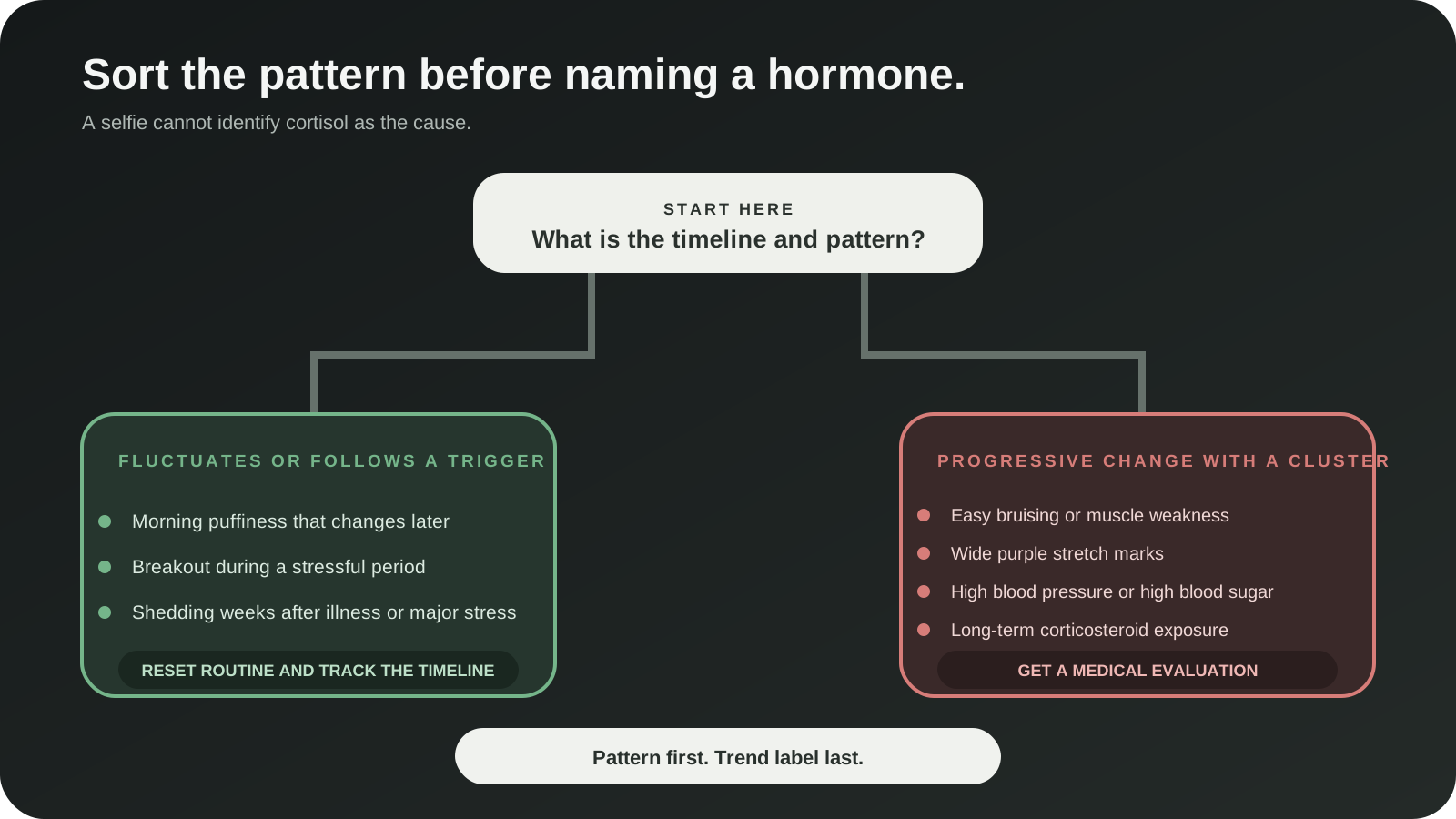
A progressively rounder face paired with easy bruising, muscle weakness, wide purple stretch marks, high blood pressure, high blood sugar, or long-term corticosteroid exposure belongs in a medical evaluation. That cluster is different from looking tired after a difficult month.
The bottom line is simple: ordinary stress can change how your face looks, but a selfie cannot identify cortisol as the cause. Use the timeline and accompanying signs to decide whether to reset the routine or get evaluated.
How to test the ordinary-stress explanation yourself
Run a two-week baseline check only when the changes are mild and no red flags are present. Keep sodium, alcohol, skincare, and training roughly stable. Set a consistent sleep window, maintain normal hydration, and take photos at the same time, distance, lighting, and camera setting on days 1, 7, and 14.
Track only four things: morning puffiness, new breakouts, total sleep time, and any medication or allergy change. If the face changes quickly with sleep and routine, that supports a fluid-balance or recovery explanation. If facial rounding keeps progressing, or the red-flag cluster appears, stop testing trends and arrange a clinical evaluation.
Quick answers
Common questions
Is cortisol face a medical diagnosis?
No. Cortisol face is an internet label. Facial puffiness or rounding can have many explanations and does not establish abnormal cortisol on its own.
Can stress contribute to facial puffiness?
Stress can contribute indirectly through sleep disruption, inflammation, fluid retention, alcohol, sodium intake, and changes in routine. That is different from diagnosing a cortisol disorder from appearance.
How is moon face different from cortisol face?
Moon face is a clinical description associated with conditions such as Cushing syndrome and with some forms of steroid exposure. Cortisol face is a broader social media phrase that often mixes those findings with ordinary temporary puffiness.
Sources
Educational content only. Not medical advice.