Wellness
Looksmaxxing Explained: 18 Methods Rated by Actual Evidence
Looksmaxxing content online blends FDA-approved dermatology with unproven trends and outright self-harm, often delivered with the same confidence. This piece sorts 18 popular methods into an evidence-based tier system, walks through why body composition, sun protection, and tretinoin outrank trendier tactics, explains where peptides like GHK-Cu and BPC-157 realistically fit, and lays out a risk-triage approach for anyone experimenting with their appearance.
Published by PeptideSchool Editorial Desk
Why appearance advice online needs a filter
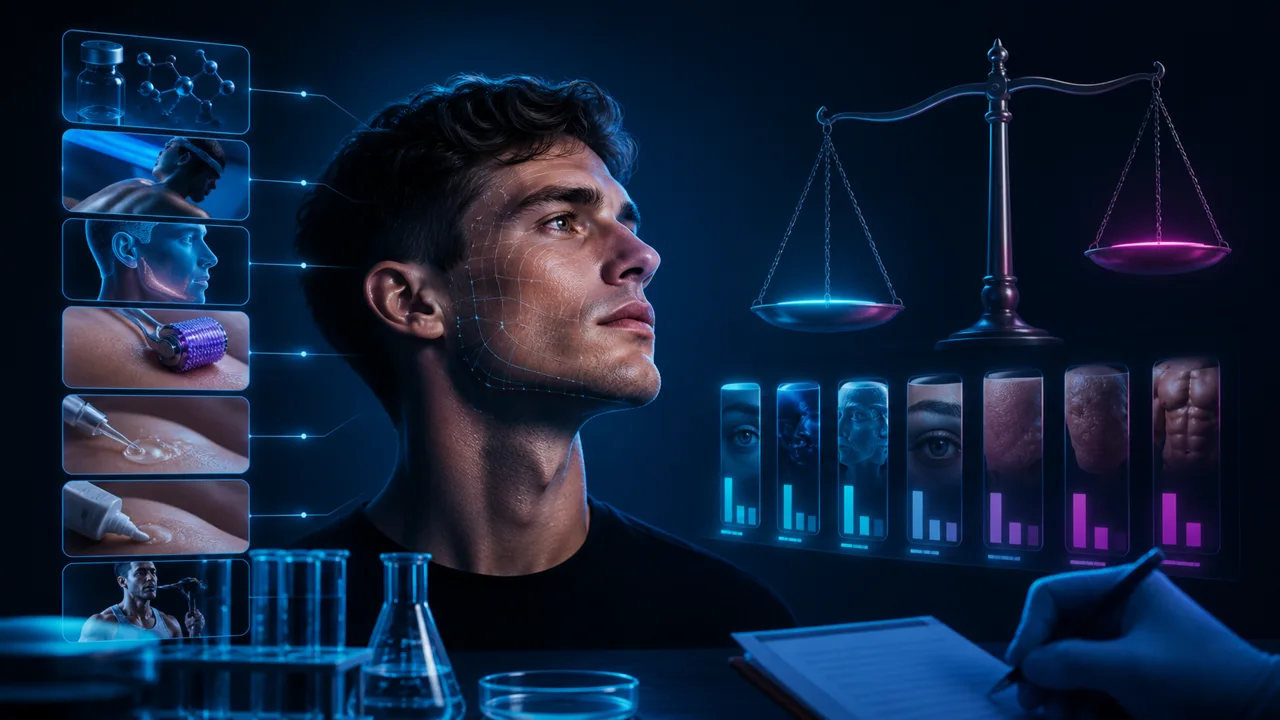
Scroll through TikTok, Reddit, or any dedicated forum and you will find FDA-approved medicine sitting right next to literal self-harm, both delivered with the exact same confidence. That is the core problem with looksmaxxing content. The word itself just means systematically trying to optimize how you look, and the practice has exploded online. Some of what gets recommended is genuinely backed by research. A lot of it is not. And a small slice of it is outright dangerous.

The trouble is that a teenager scrolling through this content has no easy way to tell the difference between, say, tretinoin, which has decades of clinical trial data behind it, and mewing, which has zero controlled trials showing that tongue posture reshapes adult facial bone. Both get pitched with equal certainty. Clinicians have started to notice. A 2025 review in Facial Plastic Surgery and Aesthetic Medicine describes looksmaxxing as straddling the line between self-enhancement and self-harm, which is a fairly blunt way of saying the community has a real problem separating the two. Separately, the oral and maxillofacial surgery literature has called mewing social media's alternative to orthognathic surgery, a comparison that only sounds reasonable if you do not know what orthognathic surgery involves.
This article rates the popular methods against published clinical evidence rather than forum consensus, influencer testimonials, or before-and-after photos shot in flattering light.
How the evidence tiers work
Every method here gets sorted into one of six tiers based on the quality and quantity of published research behind it, not on how well it happens to work for any one person.
S, gold standard: FDA-approved, or backed by overwhelming randomized controlled trial evidence and systematic reviews. A, strong evidence: multiple clinical trials plus peer-reviewed systematic reviews. B, promising: some clinical data and small trials, with a growing body of evidence. C, emerging: mostly animal or in-vitro studies, with very limited human data. D, anecdotal only: no clinical evidence, just community claims. F, debunked or dangerous: contradicted by evidence, or carrying a real risk of harm.
It is worth sitting with the difference between a method landing in a low tier because it was tested and failed, versus landing there because nobody has bothered to test it properly yet. Those are two very different situations even though they end up in the same bucket. Alongside the tier, each method also carries a risk rating, a claims-versus-science breakdown, key studies, an expected timeline, and typical costs, so you can see at a glance whether you are dealing with something proven or something merely plausible.
All 18 Methods, Rated
| Method | Evidence tier | Risk | Plain-English verdict |
|---|---|---|---|
| Resistance training plus body-composition work | S | Low to moderate | Highest overall return when the plan is sustainable |
| Daily broad-spectrum sunscreen | S | Low | Best-supported prevention step for visible photoaging |
| Prescription tretinoin | S | Moderate | Strong anti-aging evidence, with irritation management required |
| Minoxidil for pattern hair loss | S | Moderate | Established option when the diagnosis fits |
| Finasteride for androgenetic hair loss | S | Moderate to high | Effective for appropriate patients, with meaningful contraindication and side-effect review |
| Microneedling | A | Moderate | Useful for selected skin and hair goals when technique is controlled |
| Superficial chemical peels | A | Moderate | Evidence-backed for selected texture and pigment concerns |
| Red and near-infrared light | B | Low | Promising, but device dose and quality vary |
| Topical vitamin C | B | Low | Reasonable support when the formula is stable and used consistently |
| Oral hydrolyzed collagen | B | Low | Modest skin hydration and elasticity signal, not structural transformation |
| GHK-Cu skincare | C | Low to moderate | Promising skin biology, but controlled human outcome evidence is limited |
| Structured facial exercise | C | Low to moderate | Small changes reported after months, not bone remodeling |
| Gua sha or facial rolling | C | Low | May temporarily shift fluid or massage tissue, but does not permanently sculpt bone |
| BPC-157 for appearance or recovery | C | High | Mostly preclinical evidence and no established aesthetic indication |
| Mewing in adults | D | Moderate | Healthy tongue posture is not evidence of adult jawbone remodeling |
| Jaw exerciser devices | D | Moderate to high | Little clinical support and a real chance of aggravating the jaw joint |
| Aggressive filler or procedure chasing | D | High | Outcome depends on a qualified clinician and restraint, not escalation |
| Bonesmashing | F | Severe | Blunt trauma is injury, not controlled facial remodeling |
The tier describes evidence for the popular claim, not a guarantee that the method fits every person. Prescription treatments and procedures still depend on diagnosis, contraindications, and competent delivery. The table is most useful as a sorting tool: build from the top, question the middle, and reject the bottom.
The priority order that works
If you only take one thing from this, take the order. Body composition first. Then daily sun protection. Then tretinoin. Then targeted treatments like microneedling and red light therapy. Then supplements. Everything below that either lacks real clinical evidence or carries genuine risk of injury.
For many people, resistance training and a sustainable body-composition plan can change overall appearance more than a device or supplement. The effect depends on the starting point and goal, so it belongs near the foundation rather than being treated as a universal first prescription.
Sun protection comes next, and it is the cheapest effective anti-aging intervention that exists. A 4.5-year randomized trial run in Australia found that adults who used daily SPF 30 or higher showed no detectable increase in skin aging over the study period, while the group using sunscreen only when they felt like it did show visible aging. Daily use, not occasional use, is what produced the result.
Tretinoin, a prescription retinoid, is the gold standard topical anti-aging treatment and has decades of clinical trial data supporting it.
After that come targeted treatments: microneedling, chemical peels, red light therapy, and minoxidil or finasteride for hair loss. A randomized evaluator-blinded pilot trial found that microneedling added to minoxidil outperformed minoxidil alone for androgenetic alopecia. A separate controlled trial of red and near-infrared light reported improved skin roughness and increased intradermal collagen density compared with untreated controls.
Supplements sit at the bottom of the useful tier, meaning oral collagen and topical vitamin C. A systematic review and meta-analysis found that hydrolyzed collagen supplementation improved skin hydration and elasticity, though the authors were upfront that there was real heterogeneity across the trials they pooled. Useful, but nowhere near as impactful as what sits above it.
Everything below this tier, including mewing, jaw exercisers, bonesmashing, and gua sha marketed as facial sculpting, either has no clinical evidence behind it or is actively dangerous. Your time and money go further on the proven tiers.
Where peptides fit
Peptides sit in the middle of this comparison. GHK-Cu has a substantial mechanistic literature on collagen, wound repair, and skin biology, but controlled human cosmetic outcomes remain limited. BPC-157 is discussed for tissue repair and training recovery, yet its evidence is dominated by preclinical models and it has no established aesthetic indication.
Both are best treated as potential additions to a foundation that already includes the proven basics, not as replacements for that foundation. Start with what is proven, then explore what is promising once the basics are locked in. If you want to see how GHK-Cu fits into an actual skincare routine, a dedicated skincare routine builder walks through the ingredient interactions step by step. And if you are trying to figure out whether a particular skin peptide is natural, modified, or fully synthetic, a natural versus synthetic peptides guide covers the four origin categories in plain language.
Risk triage: what deserves a higher bar of proof
A good appearance protocol is boring at the foundation and selective at the edges. Start with things that improve your health at the same time you improve your appearance: resistance training, adequate protein, sleep, dental care, sunscreen, and evidence-based skin treatment. Treat everything else as an experiment with a clear stop rule attached to it.
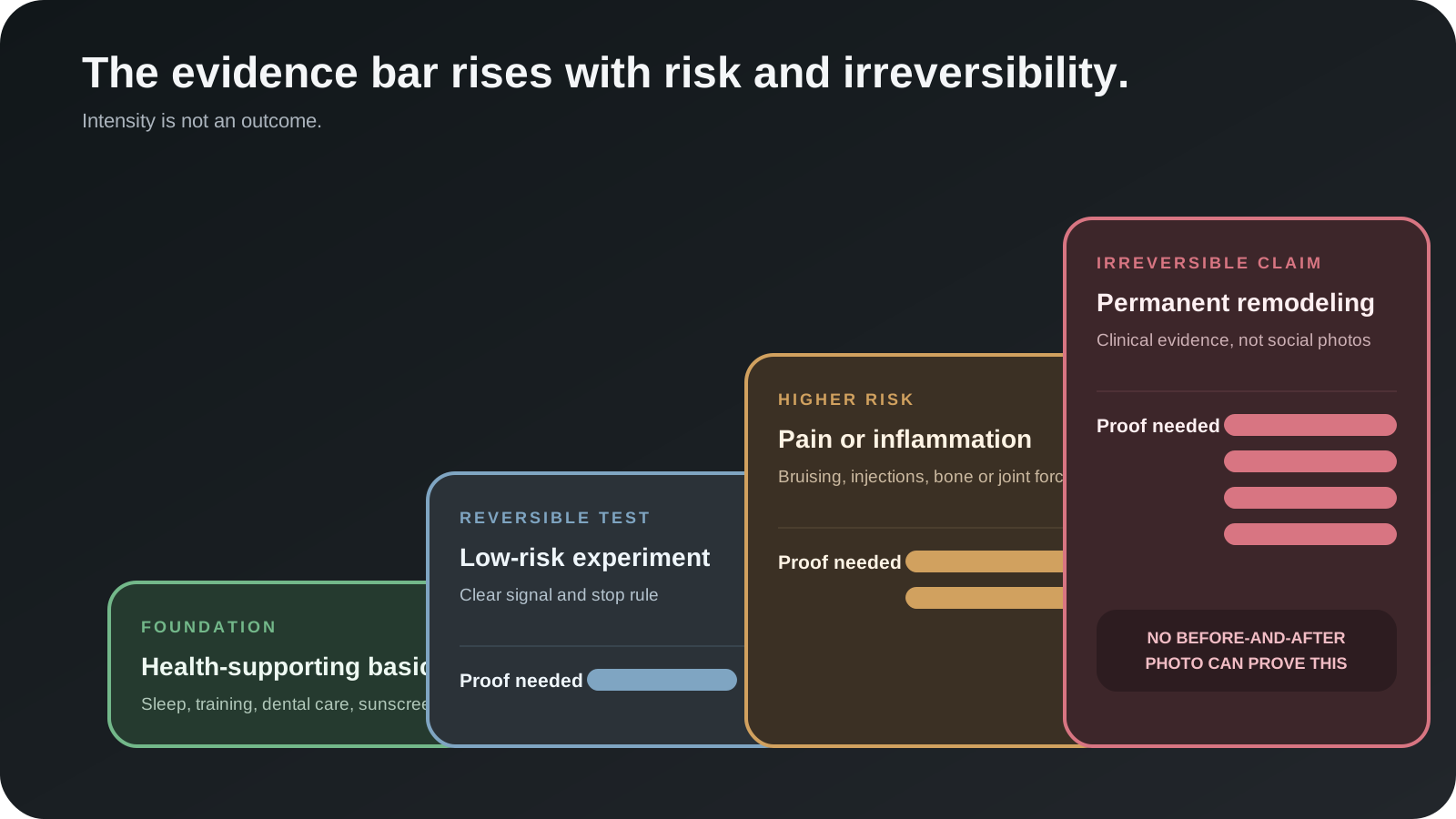
That stop rule matters because online appearance communities tend to reward intensity, not outcomes. Any method involving pain, bruising, repeated inflammation, unverified injections, or force applied directly to bones and joints should have to clear a much higher evidence bar than a topical cream or a habit change. If a claim requires permanently remodeling tissue, the proof behind it needs to be clinical, not a thread of before-and-after photos.
Two popular categories show just how modest the honest results usually are. A trial of a structured 20-week facial exercise program in middle-aged women found a small improvement in appearance as scored by trained raters, and that was after months of near-daily practice. Real, but nothing close to the jaw remodeling promised in online posts. Similarly, a randomized controlled trial measuring facial roller and gua sha massage against facial contour, muscle tone, and skin elasticity gives a useful reality check against the idea that a stone tool sculpts your face.
Chronic stress is one of the more underappreciated drivers of visible appearance changes, mostly because it works slowly and diffusely. If cortisol-related skin issues like puffiness, adult acne, or uneven texture sound familiar, a dedicated cortisol and face guide maps those pathways and practical fixes in more depth. On the dietary side, advanced glycation end-products from excess sugar intake are a separate and well-documented accelerant of skin aging, and a sugar and face guide covers that mechanism specifically.
Does bonesmashing work
No, and medical experts are not split on this one. Wolff's law, which describes bone adapting to sustained mechanical loading such as weight-bearing exercise, does not extend to blunt force trauma from a hammer. Repeated strikes cause microfractures, nerve damage, and malunion, meaning the bone heals incorrectly. The temporary swelling some people mistake for contouring is not remodeling, it is tissue damage resolving. Clinicians have written about the broader looksmaxxing trend specifically so doctors can recognize when self-enhancement has tipped into self-harm.
Does mewing reshape your jaw
There are no peer-reviewed clinical trials showing tongue posture can remodel adult facial bone. The comparison to orthognathic surgery, which shows up in the oral and maxillofacial surgery literature as something the surgical community has had to address directly, does not hold up once you understand what that surgery does to bone structure. Proper tongue posture is part of normal healthy oral function, and there is nothing wrong with practicing it. But the specific claim that it reshapes fully fused adult bone is not supported by the science, and forcing the posture aggressively can aggravate jaw pain or shift tooth alignment.
How to use this without wasting time or money
Use the tier system as a triage tool, not as a green light to stack every plausible method at once. Pick one high-evidence intervention, stay consistent with it long enough to measure a result, and resist the urge to change five variables at the same time. If you are tracking visual changes, keep your photos consistent in lighting, angle, focal length, and time of day. Otherwise normal water retention or camera distortion will look like progress or regression when it is neither.
The most valuable result this kind of checker can give you is often the one that saves you money by ruling something out. Landing in a low-evidence or high-risk tier does not mean you need a more aggressive version of that method. It means the burden of proof sits with the method, not with your face.
There is also a real gap between appearance impact and internet visibility. Some of the highest-impact basics are boring because they compound slowly over months, while some viral methods spread specifically because they generate dramatic stories. This ranking deliberately favors interventions with plausible mechanisms, real human evidence, and manageable downside over whatever is novel and shareable. That bias is intentional. The best long-term appearance plan is the one you can repeat without injury, obsession, or constantly chasing the next product. If a method only makes sense while you are inside a community that rewards escalation, it is not a plan, it is a trend.
Sources
- Looksmaxxing: straddling the inflection between self-enhancement and self-harm
- Mewing: social media's alternative to orthognathic surgery?
- Sunscreen and prevention of skin aging: a randomized trial
- A randomized evaluator blinded study of effect of microneedling in androgenetic alopecia
- A controlled trial of red and near-infrared light treatment for skin aging
- Effects of hydrolyzed collagen supplementation on skin aging: a systematic review and meta-analysis
- GHK peptide as a natural modulator of multiple cellular pathways in skin regeneration
- Association of facial exercise with the appearance of aging
- Comparative effects of facial roller and gua sha massage on facial contour, muscle tone, and skin elasticity
Educational content only. Not medical advice.