Research Updates
A Modified Erythropoietin Study Maps Stress Responses in Mice
A 2025 experiment links a modified protein hormone to behavior and hippocampal signaling. The route of administration is essential to understanding the result.
Published by PeptideSchool Editorial Desk
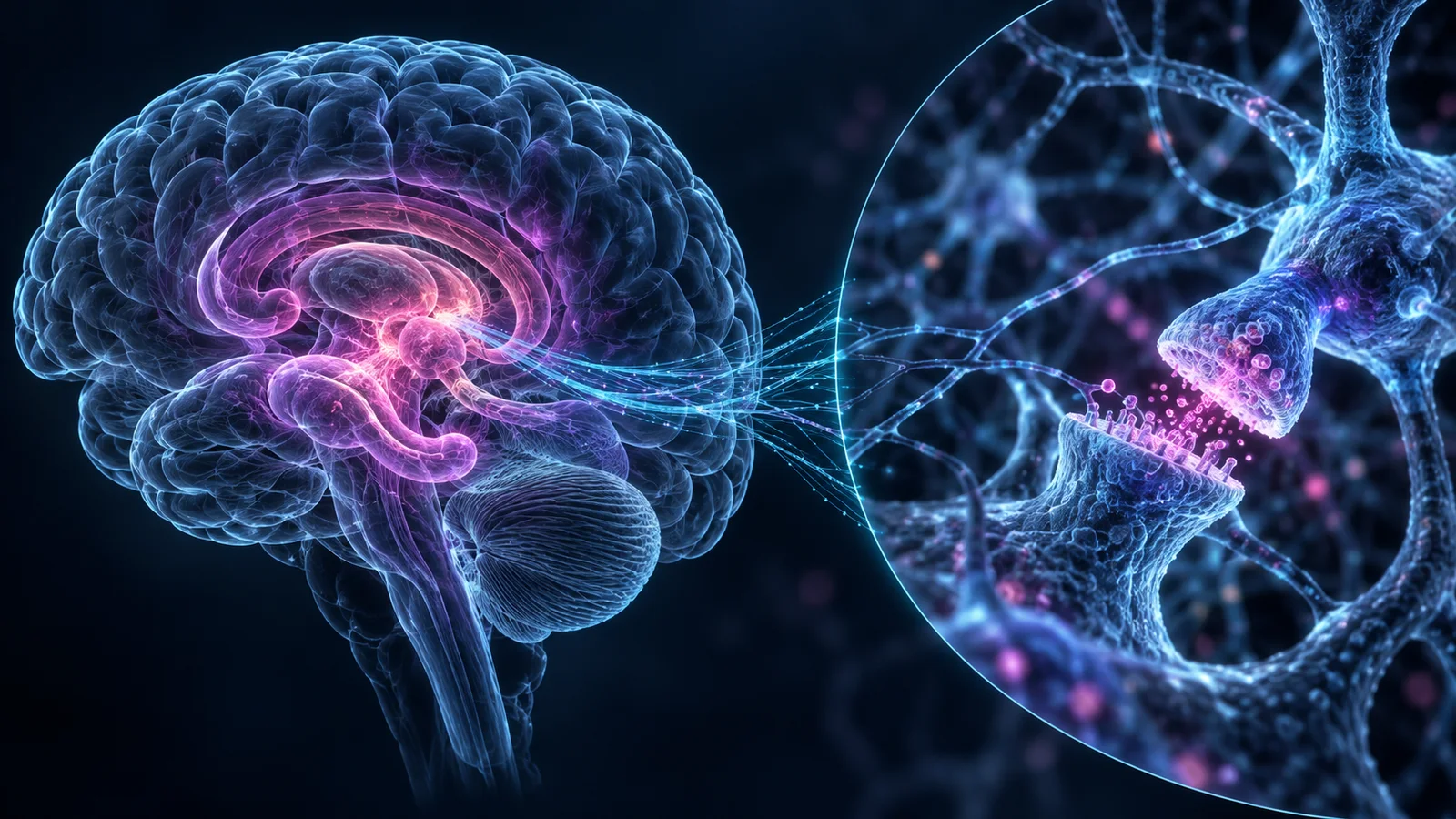
A mouse changing how it responds to an aggressor is a measurable finding. It is not a measure of human happiness. A 2025 erythropoietin experiment is useful precisely because it shows what the researchers measured and where they delivered the compound.
The experiment behind the mood headline
The study used carbamoylated erythropoietin, or cEPo, a modified version of the hormone best known for supporting red blood cell production. The modification was designed to retain neuronal effects without the same red-blood-cell activity.
Male mice underwent a social-stress task with an opportunity to escape an aggressor. Researchers administered cEPo directly into a brain ventricle or the dentate gyrus, a region of the hippocampus. Some mice that previously stayed began escaping. The investigators also examined social preference, fear-related freezing, and molecular signaling. Primary study.
Delivery is part of the finding
A direct brain injection answers a different question from an oral, nasal, or subcutaneous experiment. It places the substance at a location the researchers want to study, bypassing delivery obstacles that matter in a whole person.
The task also measures a particular response to a controlled stressor. Escape behavior can help investigate learning and motivation, but it cannot be converted into a percentage improvement in mood. That conversion would require a human study with a defined population and validated outcomes.
A more useful way to follow the research
Record the compound modification, species, delivery route, behavioral task, and measured brain region together. A claim that omits any of those details is harder to interpret.
The research direction is interesting: a molecule associated with blood production is being modified to investigate brain signaling. The next useful evidence would show whether the result reproduces, which mechanism is necessary, and whether a clinically feasible delivery route can reach the relevant target. This experiment provides a focused mechanistic lead, not a general-purpose peptide for feeling happier.
References
Sources
Educational content only. Not medical advice.